
Catalytic Converter
Have you ever noticed a metal box underneath your car and wondered what it actually does? Or maybe you’ve heard about catalytic converter theft and asked yourself why this part is so valuable. If you own a vehicle—or simply want to understand how cars control pollution—the catalytic converter is one component you should know about.
A catalytic converter is a critical part of your vehicle’s exhaust system. It reduces harmful gases produced by the engine before they exit the tailpipe. Without it, modern vehicles would not meet emissions standards, and air pollution would be significantly worse. This guide explains what a catalytic converter is, how it works, what it’s made of, how long it lasts, common problems, replacement costs, and how to protect it from theft.
What Is a Catalytic Converter?
A catalytic converter is an emissions control device installed in the exhaust system of most cars, trucks, and SUVs. Its main job is to reduce toxic pollutants in exhaust gases and convert them into less harmful substances before they are released into the air.
Location
It is usually found underneath the vehicle, between the engine and the muffler.
Primary Function
It converts harmful gases such as carbon monoxide, nitrogen oxides, and unburned hydrocarbons into carbon dioxide, nitrogen, and water vapor.
Why It Matters
By reducing exhaust pollution, catalytic converters help vehicles meet environmental regulations and improve overall air quality.
Why Catalytic Converters Matter for Health and the Law
When an engine burns fuel, it produces gases that are dangerous to human health and the environment. These pollutants can worsen asthma, contribute to smog, cause acid rain, and damage ecosystems. A catalytic converter significantly reduces these risks.
- Hydrocarbon control: Helps limit smog formation
- Nitrogen oxide reduction: Reduces acid rain and respiratory problems
- Carbon monoxide conversion: Lowers exposure to a highly toxic gas
Because of these benefits, emissions laws require most vehicles to have a working catalytic converter. Removing or tampering with it is illegal in many countries and can result in fines, failed inspections, or mandatory repairs.
Catalytic converters are also used beyond passenger cars, including trucks, motorcycles, industrial equipment, and marine engines, making them a key technology in pollution control.
How Does a Catalytic Converter Work?
A catalytic converter works through a chemical process called catalysis, which speeds up reactions without consuming the materials involved. Inside the converter is a honeycomb-shaped core made of ceramic or metal. This structure provides a large surface area and is coated with precious metals that trigger chemical reactions.
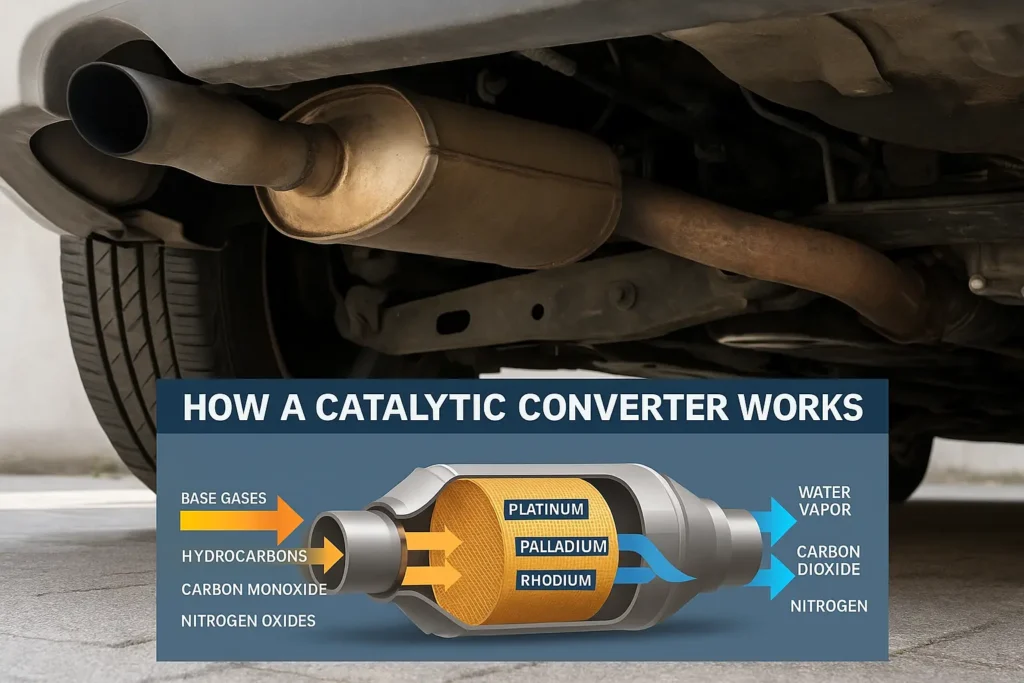
As hot exhaust gases flow through the converter, three main reactions occur:
- Reduction reaction: Nitrogen oxides are broken down into nitrogen and oxygen
- Oxidation reaction: Carbon monoxide is converted into carbon dioxide
- Oxidation reaction: Unburned hydrocarbons are turned into water vapor and carbon dioxide
An oxygen sensor monitors the exhaust and helps the engine adjust the air–fuel mixture so the converter can work efficiently. Together, these systems reduce the toxicity of exhaust emissions and keep the vehicle compliant with emissions standards.
What Are Catalytic Converters Made Of?
The effectiveness of a catalytic converter comes from the materials used inside it, especially the precious metals that act as catalysts.
Key Materials:
- Platinum: Helps oxidize carbon monoxide and hydrocarbons
- Palladium: Assists with oxidation reactions
- Rhodium: Breaks down nitrogen oxides
Main Components:
- Honeycomb core: Provides surface area for reactions
- Washcoat: Holds the catalyst metals in place
- Steel shell: Protects the internal structure from heat and impact
These precious metals are rare and expensive, which is one of the reasons catalytic converters are so valuable—and frequently targeted for theft.
Types of Catalytic Converters
Different engines and fuel types require different catalytic converter designs.
Two-Way Catalytic Converters
Found mainly in older gasoline engines and some diesel applications, these handle:
- Oxidation of hydrocarbons
- Oxidation of carbon monoxide
Three-Way Catalytic Converters
Standard in modern gasoline vehicles, these manage:
- Hydrocarbons
- Carbon monoxide
- Nitrogen oxides
Diesel Oxidation Catalysts (DOC)
Designed for diesel engines, they reduce:
- Carbon monoxide
- Hydrocarbons
- Certain particulate emissions
Each type is engineered to meet specific emissions requirements while maintaining engine efficiency.
How Long Does a Catalytic Converter Last?
Most catalytic converters are designed to last between 70,000 and 100,000 miles, but actual lifespan depends on driving habits, fuel quality, and engine condition. Poor maintenance can shorten its service life significantly.
👉 Find out what affects catalytic converter lifespan and how to make it last longer.
Signs of a Failing Catalytic Converter
A failing catalytic converter often causes noticeable changes in engine performance and exhaust behavior. Warning signs may include reduced power, dashboard alerts, unusual smells, or rattling noises from underneath the vehicle.
👉 See the complete list of warning signs and what they mean.
Catalytic Converter Theft

Catalytic converter theft has become increasingly common due to the high value of precious metals inside the converter. Thieves can remove it in just a few minutes, especially from vehicles with higher ground clearance.
👉 Learn how catalytic converter theft happens and how to protect your vehicle.
How Much Does a Catalytic Converter Cost to Replace?
Replacement costs vary by vehicle type and location.
| Vehicle Type | Estimated Cost (Parts + Labor) |
|---|---|
| Standard car | $900 – $2,500 |
| Hybrid vehicle | $1,500 – $4,000 |
| Luxury or performance car | $3,000 – $7,000+ |
Aftermarket converters are cheaper, but they may not last as long or meet strict emissions standards.
What Happens If You Drive Without a Catalytic Converter?
Driving without a catalytic converter is illegal in many regions and can cause several problems:
- Increased pollution
- Failed emissions inspections
- Reduced engine efficiency
- Fines and legal penalties
Keeping a functional converter protects both your vehicle and the environment.
How Catalytic Converter Technology Has Improved
Modern catalytic converters are more efficient, durable, and compact than earlier designs. Advances in catalyst coatings and materials have reduced emissions further, helping today’s vehicles run cleaner than ever before.
Recent developments include:
- High-flow designs for performance vehicles
- Improved anti-theft solutions
- Research into alternative materials to reduce cost
Conclusion
A catalytic converter is one of the most important components in your vehicle’s exhaust system. By using precious metals like platinum, palladium, and rhodium, it transforms harmful exhaust gases into less dangerous substances, helping protect public health and the environment while keeping your vehicle legal.
Understanding how your catalytic converter works, recognizing early warning signs, and maintaining it properly can save you money and prevent serious problems. This guide serves as the foundation for everything you need to know about catalytic converters—from basic operation to maintenance, replacement, and theft prevention.