How Long Do Catalytic Converters Last? Essential Insights Explained

Many car owners don’t think about their catalytic converter until warning lights appear or expensive repairs are suggested. Unfortunately, a failing converter can lead to poor engine performance, failed emissions tests, and even engine damage. Understanding how long catalytic converters last—and what shortens their lifespan—can help you avoid unnecessary stress and costs.
In most cases, catalytic converter failure isn’t sudden. It’s usually the result of engine problems, clogging, or overheating that develop over time.
How Long Do Catalytic Converters Typically Last?
Most catalytic converters are designed to last the lifetime of the vehicle.
On average, a well-maintained catalytic converter lasts 70,000 to 150,000 miles, which often translates to 10–15 years for many drivers. Some converters last longer, while others fail early due to poor maintenance or unresolved engine issues.
Modern vehicles with advanced fuel and emissions control systems tend to see longer converter lifespans than older models.
What Affects Catalytic Converter Lifespan?
Several factors influence how long a catalytic converter survives
- Driving habits: Frequent short trips prevent the converter from reaching self-cleaning temperatures, increasing the risk of buildup and clogging.
- Engine health: Misfires, oil consumption, or coolant leaks can permanently damage the catalyst.
- Fuel quality: Low-quality fuel and certain additives can contaminate the catalyst material.
- Environment: Road salt, flooding, or undercarriage impacts can physically damage the unit.
Converters that experience repeated overheating or restriction tend to fail much sooner than expected.
Do Catalytic Converters Have a Fixed Service Interval?
No. Catalytic converters do not have a routine replacement schedule like spark plugs or brake pads.
However, emissions regulations provide some protection. According to the Environmental Protection Agency, catalytic converters on new vehicles must meet emissions standards for at least 8 years or 80,000 miles, whichever comes first. After that period, replacement costs typically fall on the owner.
Typical Catalytic Converter Lifespan by Vehicle Type
| Vehicle Type | Expected Lifespan (Miles) | Notes |
|---|---|---|
| Modern gasoline car | 100,000–150,000 | Longer with proper engine maintenance |
| Older gasoline car | 70,000–100,000 | Shorter lifespan due to older engine technology |
| Diesel vehicle | 100,000–200,000 | Depends on DPF and maintenance |
| Hybrid vehicle | 120,000–180,000 | Reduced engine runtime can extend life |
What Causes a Catalytic Converter to Fail Early?
Premature failure is usually preventable. Common causes include:
1. Engine Misfires
Unburned fuel enters the exhaust system, overheats the converter, and melts the internal ceramic structure.
2. Oil or Coolant Contamination
Burning oil or leaking coolant coats the catalyst, reducing efficiency and accelerating failure.
3. Short Trips and Low-Speed Driving
Without enough heat, deposits accumulate inside the converter, leading to restriction and eventual clogging.
4. Fuel Additives and Contaminants
Some chemicals poison the catalyst and permanently reduce its ability to function.
5. Physical Damage or Theft
Road debris, impacts, or attempted theft can crack or destroy the unit. Many of these issues overlap with clogged catalytic converter symptoms, which often appear before complete failure.

What Are the Signs of a Failing Catalytic Converter?
Early detection can save money and prevent engine damage. Watch for:
- Check engine light, often P0420 or P0430
- Sulfur or rotten egg smell from the exhaust
- Loss of power, especially under load or uphill
- Rattling noises from broken internal material
- Failed emissions test
- Decreased fuel economy
In some cases, failure is accompanied by excessive heat. If that happens, see how to fix an overheating catalytic converter safely before further damage occurs.
Can a Catalytic Converter Be Repaired or Cleaned?
Most catalytic converters cannot be repaired—only replaced.
In rare cases, minor carbon buildup may respond to cleaning if caught early. This is more likely before the converter becomes severely clogged or overheated. For a realistic breakdown of when cleaning works and when it doesn’t, see whether catalytic converters can actually be cleaned.
Once the honeycomb melts or collapses, replacement is the only solution.
How Much Does It Cost to Replace a Catalytic Converter?
Replacement costs vary widely:
- Standard vehicles: $900–$2,500+
- Luxury or hybrid vehicles: $3,000 or more
- Aftermarket options: $300–$1,000, but may not meet legal standards everywhere
High prices are driven by the precious metals inside the converter.
How Can You Extend the Life of Your Catalytic Converter?
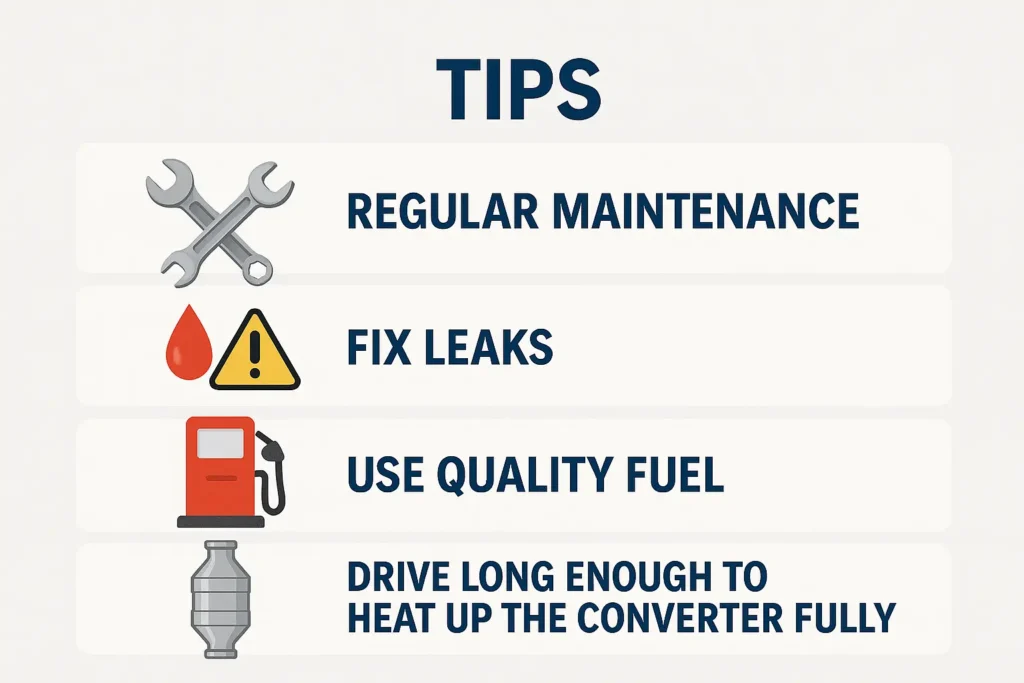
Good habits can add years to a converter’s lifespan:
- Fix misfires, oil leaks, and warning lights immediately
- Use the correct oil and quality fuel
- Take occasional highway drives to fully heat the converter
- Avoid repeated short trips when possible
- Protect the undercarriage from impact damage
Preventive care is far cheaper than replacement.
Are All Catalytic Converters the Same?
No. Designs vary by vehicle and purpose
- High-flow converters: Used in performance applications but may not be street-legal everywhere
- Gasoline vs diesel: Diesel vehicles use different systems such as DOCs or DPFs
- OEM vs aftermarket: OEM converters last longer and meet stricter standards
How Do You Know When Replacement Is Necessary?
A mechanic can test converter efficiency using scan data, temperature readings, or emissions testing. If the converter no longer stores or processes exhaust gases properly, replacement is required to restore performance and pass inspections.
Final Thoughts
A healthy catalytic converter can last 100,000–150,000 miles or more, and in many cases, it lasts the life of the vehicle. Failures usually stem from neglected engine problems rather than the converter itself.
By maintaining your engine, addressing warning signs early, and protecting the exhaust system, you can avoid premature failure and expensive repairs. Waiting too long often turns a manageable issue into a costly one.