How to Fix Overheating Catalytic Converter?

A catalytic converter that overheats can damage your engine, trigger warning lights, and even create dangerous exhaust conditions. Knowing how to fix an overheating catalytic converter helps you protect your vehicle, avoid costly repairs, and maintain proper fuel efficiency.
In most cases, overheating is not the root problem—it’s a symptom of engine issues or exhaust restriction, often linked to a clogged catalytic converter or unburned fuel entering the exhaust system.
What Does It Mean When a Catalytic Converter Overheats?
A catalytic converter normally operates at high temperatures, typically between 400°C and 800°C. This heat allows the catalyst metals—platinum, palladium, and rhodium—to convert harmful gases into less toxic emissions.
When temperatures exceed 1,000°C, the ceramic substrate can melt, crack, or collapse.
Common signs of an overheating catalytic converter include:
- Strong sulfur or “rotten egg” smell
- Dark smoke from the exhaust
- Sluggish acceleration or power loss
- Excessive heat under the vehicle
- Check engine light (often P0420 or P0430)
If ignored, overheating can damage the exhaust system and even cause internal engine failure.
Why Does a Catalytic Converter Overheat?
Several underlying problems can push converter temperatures beyond safe limits.
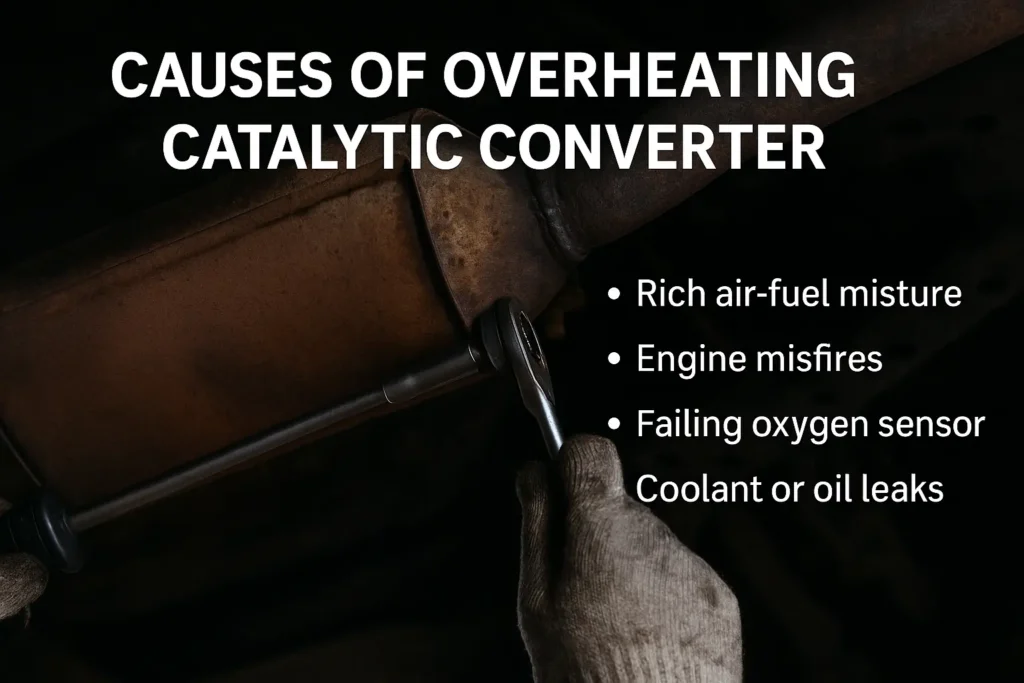
1. Unburned Fuel Reaching the Converter
Engine misfires or rich fuel mixtures allow raw fuel to enter the exhaust, where it ignites inside the converter and creates extreme heat. This is one of the most common causes of overheating.
2. Faulty Oxygen Sensors
Oxygen sensors regulate the air-fuel ratio. When they fail, the engine may run too rich, sending excess fuel into the converter.
3. Exhaust Leaks
Leaks before the converter introduce extra oxygen, causing the catalyst to burn hotter than designed.
4. Oil or Coolant Contamination
Burning oil or leaking coolant coats the catalyst surface, forcing the converter to overwork and overheat.
5. Clogged Catalytic Converter
When exhaust flow is restricted due to soot buildup or melted substrate, heat becomes trapped. This is why overheating often accompanies clogged catalytic converter symptoms.
How Do You Fix an Overheating Catalytic Converter?
Step 1: Diagnose the Root Cause
Scan the vehicle using an OBD-II scanner. Common codes include:
- P0300–P0308 – Engine misfires
- P0171 / P0172 – Lean or rich mixture
- P0420 / P0430 – Catalyst efficiency below threshold
Step 2: Fix Engine Problems First
An overheating converter is usually the result of engine faults. Common repairs include:
- Replacing spark plugs or ignition coils
- Repairing leaking fuel injectors
- Fixing intake or exhaust leaks
- Replacing faulty oxygen sensors
Without correcting these issues, the converter will overheat again—even if replaced.

Step 3: Clean the Converter (Only if Mildly Restricted)
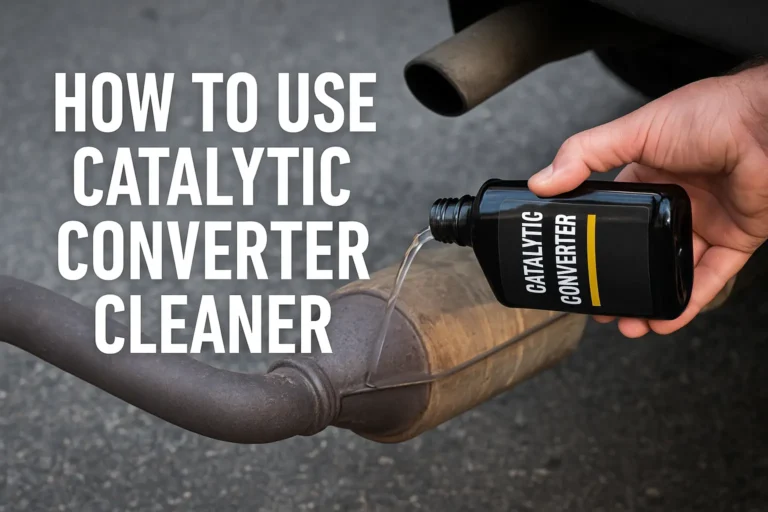
If overheating is caused by light carbon buildup, cleaning may help. A fuel-system catalytic converter cleaner can sometimes restore exhaust flow when used correctly.
For best results, follow a proper guide on how to use a catalytic converter cleaner safely, and combine it with a steady highway drive.
If blockage is more severe, see how to unclog a clogged catalytic converter step by step.
Step 4: Inspect for Physical Damage
Rattling sounds, visible dents, or signs of melted substrate indicate permanent damage. Cleaning will not work in these cases.
Step 5: Replace the Converter if Necessary
Replacement is unavoidable when internal damage has occurred. Options include:
- OEM converters – Best fit and compliance
- Direct-fit converters – Balanced cost and ease
- Universal converters – Cheaper but may require welding
If age is a factor, this guide on how long catalytic converters typically last can help determine whether replacement is expected.
How Much Does It Cost to Fix an Overheating Catalytic Converter?
- Minor engine repairs (sensors, plugs, leaks): $150–$500
- Cleaning with additives: $25–$50
- Universal converter: $200–$800
- OEM converter: $1,000–$2,500+
How Can You Prevent Catalytic Converter Overheating?
- Maintain spark plugs, air filters, and oil regularly
- Fix misfires immediately
- Use quality fuel to reduce deposits
- Avoid driving with a flashing check engine light
- Address oil or coolant leaks early
Safety Warning
If your catalytic converter is glowing red or producing extreme heat, pull over immediately. Continued driving can cause fire hazards or severe engine damage.
Final Words
An overheating catalytic converter is a serious warning sign that something in your engine or exhaust system isn’t working correctly. By identifying the cause early—whether misfires, clogging, or sensor failure—you can often prevent expensive damage.
A properly functioning catalytic converter not only protects your engine but also reduces harmful emissions. According to the Environmental Protection Agency, modern catalytic converters can reduce toxic exhaust gases by up to 90% when operating correctly.