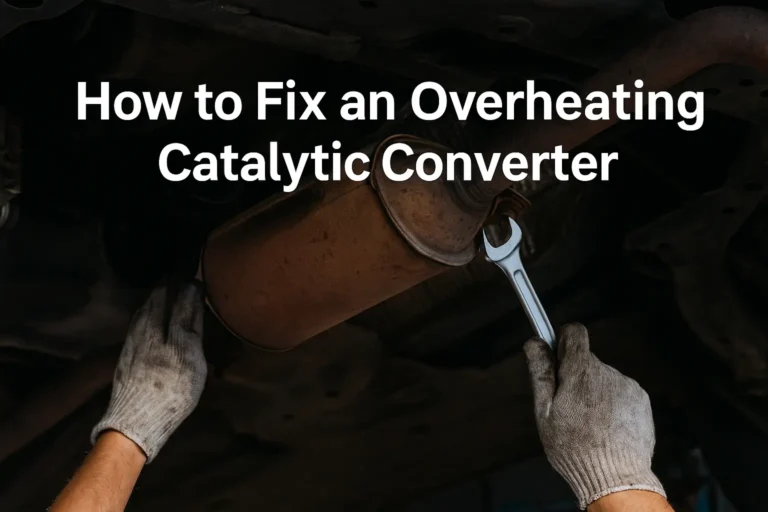
What Is a Clogged Catalytic Converter?

Have you ever wondered why your car suddenly feels sluggish, smells strange, or struggles to start? One commonly overlooked cause is a clogged catalytic converter. This issue can quietly reduce performance, increase emissions, and eventually damage your engine if left untreated.
In this guide, you’ll learn what a clogged catalytic converter is, why it happens, how to recognize the symptoms, and what you can do to fix or prevent it.
What Does a Catalytic Converter Do in Your Car?
A catalytic converter is a critical component of your vehicle’s exhaust system. Its role is to reduce harmful emissions before they exit the tailpipe.
- Location: Installed between the engine and the muffler
- Function: Converts toxic gases—such as carbon monoxide (CO), nitrogen oxides (NOx), and hydrocarbons (HC)—into less harmful substances
- How it works: Exhaust gases pass through a ceramic honeycomb coated with platinum, palladium, and rhodium, triggering chemical reactions that “clean” the exhaust
Without a properly functioning catalytic converter, emissions increase and vehicles often fail inspection tests.
What Does “Clogged” Mean in a Catalytic Converter?
A clogged catalytic converter occurs when the internal honeycomb structure becomes blocked or restricted by:
- Carbon and soot buildup
- Oil or coolant residue
- Melted or collapsed substrate
This blockage restricts exhaust flow, creating backpressure that prevents the engine from breathing properly. Over time, this leads to reduced performance, overheating, and possible engine damage.
Common Causes of Catalytic Converter Clogging
Clogging rarely happens on its own. It’s usually caused by underlying engine problems, such as:
- Oil or coolant leaks entering the exhaust
- Engine misfires, allowing unburned fuel into the converter
- Rich fuel mixtures
- Poor maintenance or worn spark plugs
- Age and high mileage
Many of these issues eventually lead to overheating, which is explained in detail in how to fix an overheating catalytic converter safely.

Symptoms of a Clogged Catalytic Converter
Catching the problem early can prevent costly repairs. Watch for these signs:
- Sluggish acceleration and reduced power
- Decreased fuel economy
- Check engine light (often code P0420)
- Rattling noise under the vehicle
- Rotten egg or sulfur smell
- Hard starting or stalling
| Symptom | Likely Cause | Urgency |
|---|---|---|
| Poor acceleration | Exhaust backpressure | High |
| High fuel use | Engine working harder | Moderate |
| Misfires | Excessive exhaust heat | High |
| Rotten egg smell | Sulfur buildup | High |
| Rattling noise | Broken internal honeycomb | High |
How a Clogged Catalytic Converter Affects Performance
When exhaust flow is restricted:
- Backpressure increases, reducing engine power
- Engine temperature rises, risking internal damage
- Fuel economy drops
- Emissions increase, often causing inspection failure
In severe cases, the converter may overheat and melt internally.

How Is a Clogged Catalytic Converter Diagnosed?
Professional mechanics may use:
- Backpressure testing via oxygen sensor ports
- Infrared temperature checks before and after the converter
- Vacuum gauge testing under load
Accurate diagnosis is important before attempting any fix.
Is It Safe to Drive With a Clogged Catalytic Converter?
Driving with a clogged converter is not recommended.
Risks include:
- Engine overheating
- Converter meltdown
- Stalling in traffic
- Failed emissions tests
- Higher repair costs
Even partial blockage can escalate quickly.
Can a Clogged Catalytic Converter Be Cleaned or Fixed?
Sometimes—but it depends on severity.
- Mild clogging: May respond to cleaning or fuel additives
- Moderate blockage: May require removal and inspection
- Severe clogging or melting: Replacement is the only solution
How to Prevent Catalytic Converter Clogging
Prevention is far cheaper than repair:
- Fix oil, coolant, and fuel issues quickly
- Maintain spark plugs and air filters
- Use quality fuel
- Avoid repeated short trips
- Address check engine lights immediately
With good care, most converters last a long time, as explained in how long catalytic converters typically last.
Conclusion
A clogged catalytic converter is more than an inconvenience—it’s a serious exhaust restriction that can damage your engine and increase emissions. The good news is that early detection and proper maintenance can prevent most failures.
If you notice the warning signs, don’t wait. Addressing the issue early can save you thousands in repairs and keep your car running safely and efficiently.