How to Unclog a Clogged Catalytic Converter?

If your car feels sluggish or the check engine light has turned on, a clogged catalytic converter could be the reason. This component is designed to reduce harmful emissions, but over time it can become blocked by carbon buildup, oil residue, or engine-related problems.
Before attempting any fix, it helps to understand what a clogged catalytic converter is and why it happens, since the underlying cause determines whether cleaning will work or replacement is unavoidable.
What Causes a Catalytic Converter to Get Clogged?
A catalytic converter clogs when contaminants coat or block its internal honeycomb structure. Common causes include:
- Oil or coolant leaks – Burning oil or coolant leaves residue on the catalyst
- Rich fuel mixture – Excess fuel creates unburned hydrocarbons
- Engine misfires – Raw fuel overheats and damages the ceramic core
- Carbon buildup – Soot accumulates over time, especially with short trips
Many of these issues begin elsewhere in the engine and gradually lead to converter blockage.
What Are the Symptoms of a Clogged Catalytic Converter?
A clogged converter restricts exhaust flow and affects engine performance. Common warning signs include:
- Check engine light, often showing code P0420
- Poor acceleration, especially at higher speeds
- Reduced fuel economy
- Dark exhaust smoke or strong sulfur smell
- Excessive heat under the vehicle
- Rattling noise from broken internal material
If several symptoms appear together, the converter may already be severely restricted.
Can You Unclog a Catalytic Converter?
In some cases, yes—but results depend on the severity of the clog.
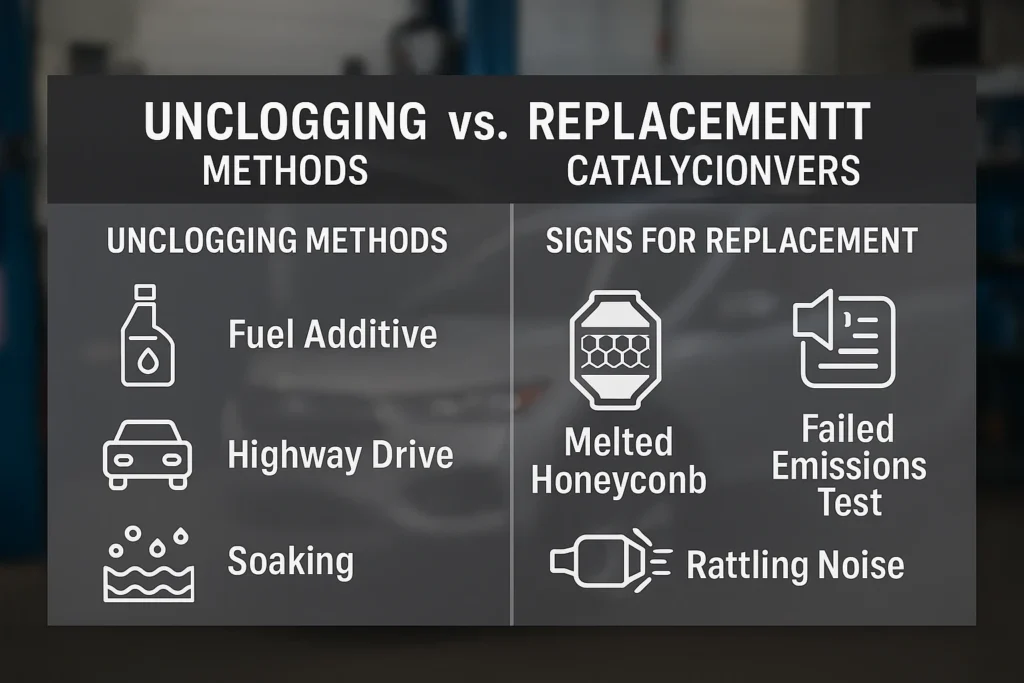
- Mild carbon buildup may respond to cleaning
- Severe clogging or melted material usually requires replacement
This is explained in more detail in our guide on whether catalytic converters can be cleaned and when cleaning actually works.
How to Unclog a Catalytic Converter Without Removing It?
For light blockage, cleaning the converter while it’s still installed may help.
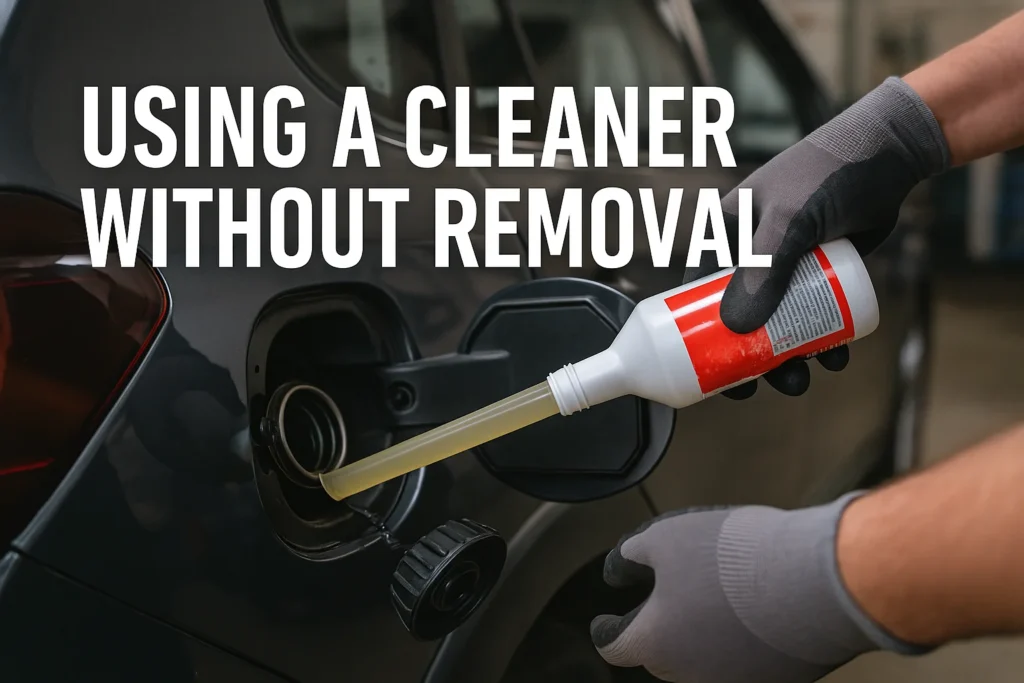
1. Use a Catalytic Converter Cleaner
Add a cleaner designed specifically for catalytic converters to the fuel tank. Then drive for at least 30 minutes at highway speed so heat and chemicals can burn off deposits.
If you’re unsure how to apply these products safely, see how to use a catalytic converter cleaner step by step.
👉 This method works best for early-stage carbon buildup.
2. Perform a High-Temperature Drive
A long highway drive at sustained speed can raise exhaust temperatures enough to burn off some deposits. This is sometimes called an “Italian tune-up.”
How to Unclog a Catalytic Converter by Removing It
If symptoms persist, removal and inspection may be necessary.
Step 1: Remove the Converter
Let the engine cool, then unbolt the converter from the exhaust system.
Step 2: Inspect Internally
If the honeycomb is melted, collapsed, or broken, cleaning will not help.
Step 3: Clean the Converter
Soak it in hot water mixed with degreaser for several hours, then rinse thoroughly and allow it to dry completely.
Step 4: Reinstall and Test
Reinstall the converter and test performance.
⚠️ Cleaning may improve flow but does not guarantee full efficiency.
What Methods Should You Avoid?
Avoid shortcuts that damage the converter or violate emissions laws:
- Drilling or punching holes
- Using leaded fuel or harsh chemicals
- Blasting with high-pressure air or water
These methods can permanently destroy the catalyst.
When Should You Replace Instead of Cleaning?
Replacement is the only option if:
- The ceramic core is melted or collapsed
- The converter rattles internally
- Code P0420 returns repeatedly
- The vehicle fails emissions tests after cleaning
If you’re unsure whether replacement is due to age rather than damage, see how long catalytic converters typically last under normal conditions.
How to Prevent a Catalytic Converter From Clogging
Prevention is far cheaper than replacement:
- Fix misfires, oil leaks, and fuel issues early
- Use quality fuel
- Replace spark plugs, oxygen sensors, and air filters on time
- Avoid repeated short trips that prevent proper heating
Many overheating problems originate from restriction, which is explained in how to fix an overheating catalytic converter.
How Does a Clogged Catalytic Converter Affect the Environment?
A clogged converter allows harmful gases to pass through, including carbon monoxide, nitrogen oxides, and unburned hydrocarbons. According to the Environmental Protection Agency, a healthy catalytic converter can reduce harmful emissions by up to 90%. When clogged, that efficiency drops sharply.
Final Thoughts
Unclogging a catalytic converter can sometimes restore performance and save money, but it isn’t always a permanent fix. Mild blockages may respond to cleaners or heat, while severe damage requires replacement.
The best approach is prevention—address engine problems early, use quality fuel, and maintain your vehicle properly. A healthy catalytic converter helps your car run efficiently, pass emissions tests, and protect the environment.