What Is a Catalytic Converter Heat Shield?

A catalytic converter heat shield is a thin metal cover that sits around or near the catalytic converter to block extreme heat from spreading to other parts of your vehicle. Its main job is to protect the car’s body, fuel lines, wiring, and even the ground under the vehicle from dangerously high temperatures produced by the exhaust system.
What Does a Catalytic Converter Heat Shield Do?
It prevents heat damage and lowers fire risk. The catalytic converter runs extremely hot while cleaning exhaust gases. The heat shield acts like a barrier, redirecting that heat away from sensitive components. Without it, nearby parts can dry out, melt, or fail sooner than expected. It also reduces heat transfer to the cabin floor, which helps keep the interior more comfortable during long drives.
Why Does a Catalytic Converter Need a Heat Shield?
Catalytic converters operate at extremely high temperatures—often between 800°F and 1,600°F (430°C–870°C). These high temps are needed to break down harmful emissions, but they also pose risks:
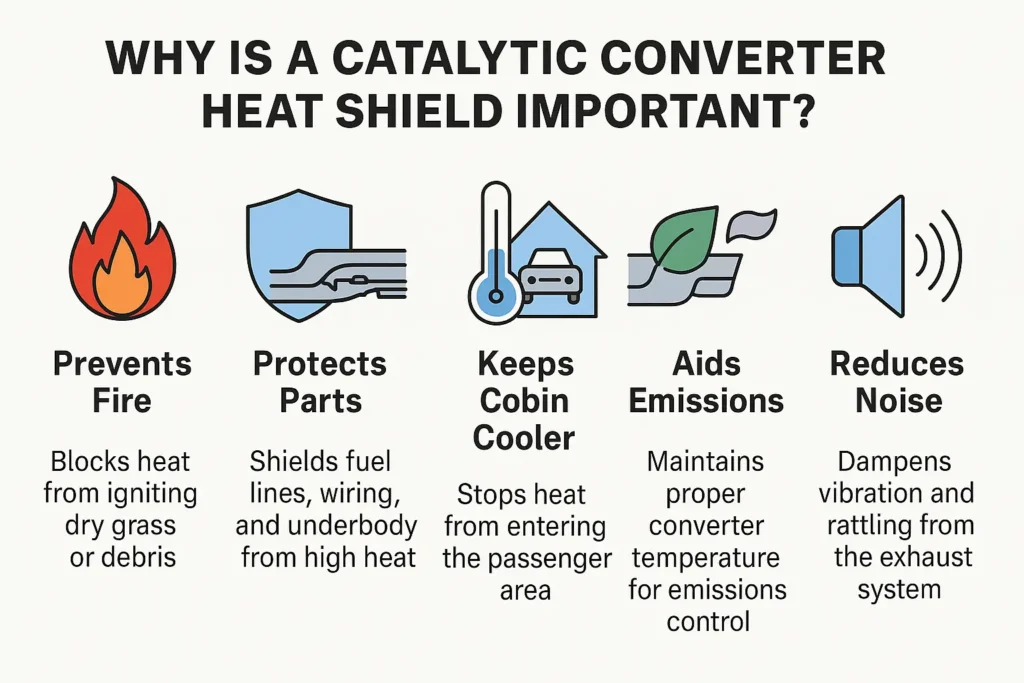
- Fire safety: Prevents dry grass, leaves, or other flammable materials from igniting under the vehicle
- Component protection: Shields fuel lines, wiring, and floor panels from heat damage
- Passenger comfort: Reduces the amount of heat that enters the cabin
- Performance: Maintains the converter’s optimal temperature for efficient emissions control
How Does a Catalytic Converter Heat Shield Work?

The heat shield acts as a thermal barrier:
- Reflects heat: The metallic surface reflects radiant heat away from sensitive parts.
- Dissipates heat: Some shields have cooling fins or vents to help disperse heat more effectively.
- Insulates: In multilayered designs, the shield may also insulate by trapping air, further reducing heat transfer.
| Heat Shield Type | Main Function | Typical Location |
|---|---|---|
| Wrap-around shield | Reflects and dissipates heat | Surrounds catalytic converter |
| Underbody plate | Protects car floor, cabin, fuel lines | Between exhaust and car body |
| Composite/insulated | Extra insulation for high-temp areas | Directly above converter |
What Happens if a Catalytic Converter Heat Shield Is Missing or Damaged?
A missing or damaged heat shield can cause several problems:
- Risk of fire: Hot exhaust components can ignite grass, leaves, or road debris.
- Heat damage: Wiring, plastic parts, or floor mats above the exhaust may melt or catch fire.
- Cabin discomfort: The interior of the car can get hotter, especially on long drives or hot days.
- Strange noises: Loose or broken shields often rattle, especially at low speeds or when starting the engine.
If you notice rattling noises or excessive heat from under your car, you may also spot other signs of a bad catalytic converter that shouldn’t be ignored. These can include a check engine light, sulfur smells, loss of power, or trouble passing emissions tests.
Example:
A 2019 insurance study found that cars with missing heat shields had a 3x higher risk of fire damage after parking on dry grass.
Why Do Heat Shields Rattle or Fall Off?
The most common complaints about heat shields are rattling noises or finding a loose shield under the car. This happens due to:
- Corrosion: Road salt, moisture, and age can rust bolts and brackets.
- Physical damage: Hitting a curb, speed bump, or debris can bend or break the shield.
- Worn fasteners: Over time, nuts and bolts loosen from vibration and heat cycles.
- Manufacturing defects: In some vehicles, poor fitment can cause premature failure.
Loose or missing heat shields are just one of several reasons why your catalytic converter might be so loud, along with leaks and internal damage. If your car suddenly gets much louder or develops a new rattle, be sure to check both the converter and its heat shield for problems.
Can I Drive Without a Catalytic Converter Heat Shield?
You can, but it is not a good idea. The car may still run, but the risk rises. Heat exposure can shorten the life of nearby parts and raise fire concerns in hot conditions. Replacing or repairing the shield is usually inexpensive compared to fixing heat-related damage later.
How Is a Damaged Heat Shield Repaired or Replaced?
Step-by-step:
- Diagnosis: Mechanic inspects the shield for rust, cracks, or missing fasteners.
- Remove or repair: Loose shields can sometimes be re-secured with new bolts or heat-resistant clamps.
- Replace if needed: Severely rusted or damaged shields must be replaced with OEM or aftermarket parts.
- Check for related damage: Technician checks surrounding parts for signs of heat exposure or melting.
Tip: If you hear a rattle, get it checked early—sometimes it’s a simple, inexpensive fix.
Are There Aftermarket or DIY Catalytic Converter Heat Shields?
Yes! Aftermarket heat shields are available and can be custom-fitted to most vehicles. These are often used for:
- Performance cars: Upgraded shields to handle higher exhaust temps.
- Catalytic converter theft prevention: Some shields double as anti-theft devices, covering the converter to make theft harder.
DIY: Temporary repairs can be made with heat-resistant metal tape or brackets, but a full replacement is best for long-term safety.
How Much Does It Cost to Replace a Catalytic Converter Heat Shield?
- Reattachment of loose shield: $30–$75 (labor + new hardware)
- OEM replacement shield: $100–$350 (parts + labor)
- Aftermarket anti-theft shield: $200–$800 (parts + labor)
Sources: NAPA Auto Parts, national repair shops
How Can You Prevent Heat Shield Problems?
- Regular inspections: Check under your car during oil changes or tire rotations.
- Park carefully: Avoid driving over debris or high curbs.
- Address noises early: A small rattle can turn into a big problem if ignored.
- Protect from corrosion: Rinse your car’s underbody, especially in winter, to remove salt.
Conclusion
A catalytic converter heat shield may look simple, but it plays a critical role in vehicle safety and longevity. It controls heat, prevents damage, and reduces fire risk, all without affecting how the engine runs. Keeping it in place and in good condition is a small step that helps avoid bigger problems down the road.