What Is Catalytic Converter Etching?

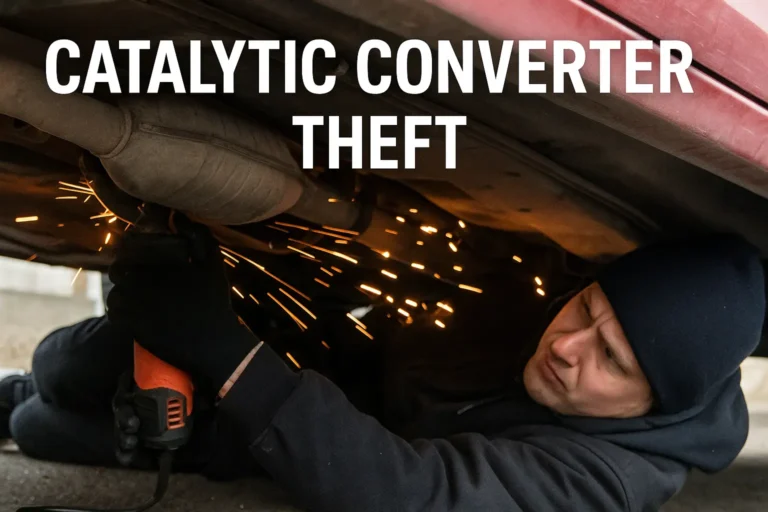
If you own a car, you’ve probably heard about catalytic converter theft. One effective way to deter thieves is catalytic converter etching. But what does it actually mean, how does it work, and why are more drivers and repair shops talking about it now? Let’s break it all down, step by step, so you know how to protect your vehicle and why etching matters for your peace of mind.
What Is Catalytic Converter Etching?
Catalytic converter etching is the process of marking your vehicle’s catalytic converter with a unique identifier, usually your car’s VIN (Vehicle Identification Number) or a registration code. This is done by physically engraving or chemically etching numbers or characters onto the metal surface of the converter.
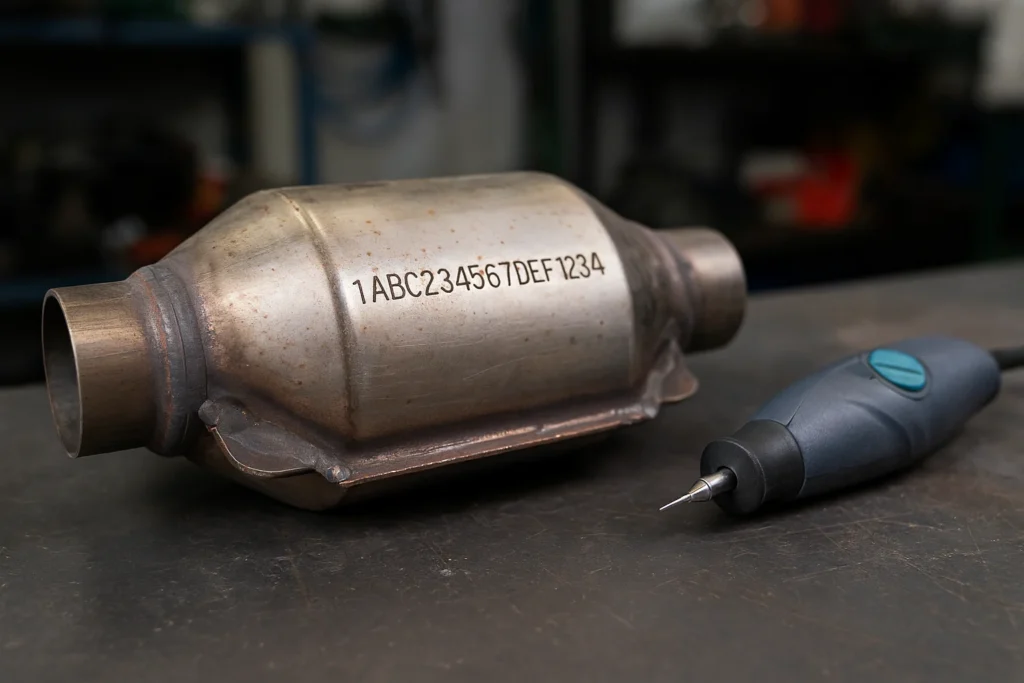
The main goal? To make your catalytic converter traceable and less attractive to thieves. When a converter is etched, law enforcement or scrap dealers can quickly identify if it’s stolen.
Why Do Thieves Target Catalytic Converters?
Thieves often target catalytic converters because they contain precious metals like platinum, palladium, and rhodium. These metals have significant value in the scrap metal market. Some converters can be stolen in under two minutes, and a single stolen unit can fetch hundreds of dollars at a recycling yard.
SUVs, trucks, and hybrid vehicles are frequent targets, as their converters are easier to access or contain higher amounts of precious metals. According to the National Insurance Crime Bureau (NICB)https://www.nicb.org/, catalytic converter thefts have risen dramatically in recent years, making prevention more urgent than ever.
How Does Catalytic Converter Etching Work?
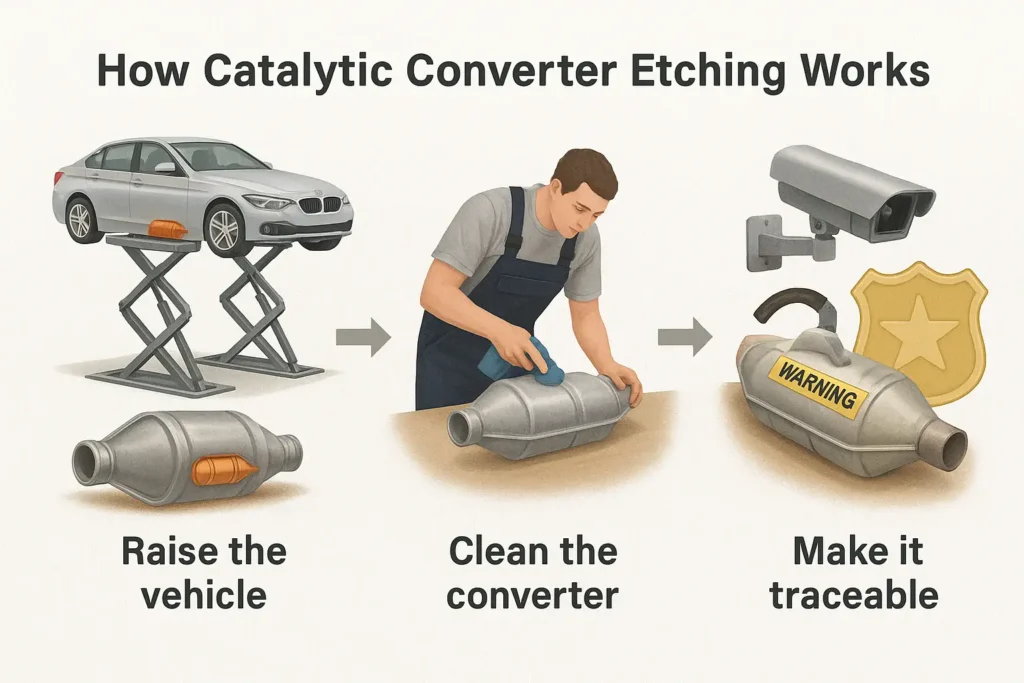
The etching process is straightforward. Here’s how it usually happens:
- Preparation: The mechanic or car owner cleans the surface of the converter.
- Etching: Using a special tool or chemical, the technician engraves the VIN or unique code onto the metal shell of the converter.
- Documentation: The information is often recorded in a national or local database.
- Warning Sticker: Many etching programs supply a window sticker to alert potential thieves that the converter is marked and traceable.
Some law enforcement agencies and community groups even host free etching events to help drivers protect their vehicles.
What Are the Benefits of Catalytic Converter Etching?
Etching provides several important benefits:
- Deters Theft: Thieves are less likely to steal a marked converter because it’s harder to sell.
- Assists Law Enforcement: Etched codes make it easier for police to track and return stolen converters.
- Helps Scrap Dealers: Dealers can check etched numbers against theft databases and avoid buying stolen property.
- Supports Insurance Claims: Having a record of the etched code may streamline claims if a theft occurs.
Is Catalytic Converter Etching Required by Law?
Currently, etching is not legally required in most states or countries, but it’s highly recommended by many police departments, insurance companies, and auto clubs. Some local governments and law enforcement agencies even partner with repair shops to offer free or discounted etching services.
Can Etching Damage the Converter or Affect Performance?
When done correctly, etching does not damage the catalytic converter or impact how it works. The etching is shallow and only marks the outer metal casing, far from the precious metal catalyst or the internal honeycomb structure that actually cleans your exhaust gases.
It’s important to use a reputable shop or a community program that understands the proper technique. Avoid aggressive engraving that could weaken the converter’s structure.
How Much Does Catalytic Converter Etching Cost?
Costs vary depending on where you live and whether you use a professional shop, dealership, or DIY kit. Here are typical options:
- Community Events: Often free or low-cost.
- Repair Shops: Usually $30–$80, including etching and a registration sticker.
- DIY Kits: Available online for $20–$50, but make sure you follow all safety guidelines.
Many insurance companies and police departments recommend etching as a low-cost theft deterrent, especially compared to the high expense of replacing a stolen converter.
What Else Should I Do to Prevent Catalytic Converter Theft?
Etching is a great first step, but it works best as part of a broader security strategy. Here are additional tips:
- Install a Catalytic Converter Shield: A metal cage or shield makes it much harder to remove the converter.
- Park in Well-Lit Areas: Thieves prefer dark, isolated spots.
- Use Security Cameras: Visible cameras can deter theft.
- Engrave Your VIN: In addition to etching, engrave or paint your VIN on the converter and elsewhere on your car.
- Report Suspicious Activity: Alert local law enforcement if you see someone working under a car late at night.
Are There Alternatives to Etching?
Yes, but etching remains the most practical and widely recommended method. Other options include:
- High-Temperature Paint: Painting the converter bright colors can draw attention and make resale harder.
- Converter Clamps and Cages: Add extra physical barriers.
- Electronic Tracking: Some aftermarket devices let you track your converter, but these are less common.
Etching, when combined with one or more of these methods, provides the highest level of protection.
Comparison of Catalytic Converter Theft Prevention Methods
| Method | Cost | Effectiveness | Ease of Use | Notes |
|---|---|---|---|---|
| Etching | Low | High | Easy | Visible deterrent, police can identify parts |
| Shield/Cage | Medium | Very High | Moderate | Physical barrier, best for high-risk vehicles |
| Parking Strategies | Free | Moderate | Easy | Combine with other methods |
| Security Cameras | Medium | Moderate | Easy | Visual deterrent, evidence for police |
| High-Temp Paint | Low | Moderate | Easy | Best used with etching |
| Electronic Tracking | High | Moderate | Complex | Expensive, not widely adopted |
Can I Etch My Catalytic Converter Myself?
Many drivers choose to etch their own converters using a basic engraving tool or chemical kit. Here’s how:
- Safety First: Make sure the exhaust system is cool.
- Locate the Converter: Find the metal shell—usually under the car, between the engine and muffler.
- Clean the Surface: Wipe away dirt or grease.
- Etch the Code: Use the kit to engrave your VIN or a registration number clearly.
- Apply a Warning Sticker: Place it on your window or bumper to alert potential thieves.
If you’re unsure, ask your mechanic or check for local etching events.
Who Offers Catalytic Converter Etching Services?
- Auto Repair Shops and Dealerships: Many offer this service for a small fee.
- Community Etching Events: Some police departments and community groups provide free etching days.
- Insurance Companies: Some insurers sponsor etching programs to help reduce theft claims.
Search online or ask your local mechanic about etching options in your area.
Is Catalytic Converter Etching Worth It?
For most drivers, etching offers a simple, affordable way to reduce the risk of theft. While it can’t physically stop a determined thief, it adds a powerful deterrent—thieves generally avoid marked converters, and scrap dealers who spot etched codes are less likely to buy suspicious parts.
Given the high cost and inconvenience of replacing a stolen converter, etching is a smart choice.
Conclusion
Catalytic converter etching is one of the most cost-effective, proactive steps you can take to protect your vehicle from theft. It’s simple, affordable, and widely recommended by law enforcement, mechanics, and insurance providers. By etching your converter, you make it traceable, discourage thieves, and make it easier for the authorities to recover stolen parts. Combine etching with other theft-prevention measures for the best results.