What Is a Catalytic Converter Kit?
Every modern vehicle depends on its exhaust system to stay clean and legal, but few drivers know exactly what keeps harmful gases out of the air. If you’re fixing, upgrading, or replacing your exhaust, you’ll probably come across the term catalytic converter kit. But what does it really include? How does it work? And who actually needs one?
What Is a Catalytic Converter Kit?
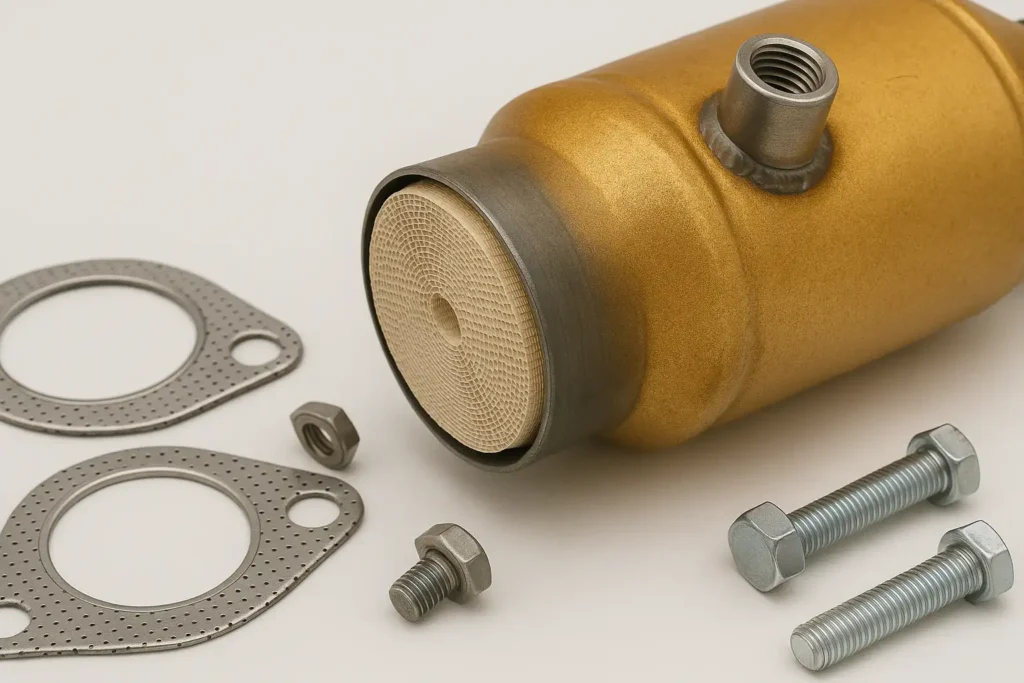
A catalytic converter kit is a packaged set of parts designed to help you install, replace, or repair the catalytic converter section of your vehicle’s exhaust system. It usually includes the catalytic converter itself, as well as essential installation hardware—such as gaskets, clamps, mounting brackets, and sometimes heat shields or oxygen sensor adapters.
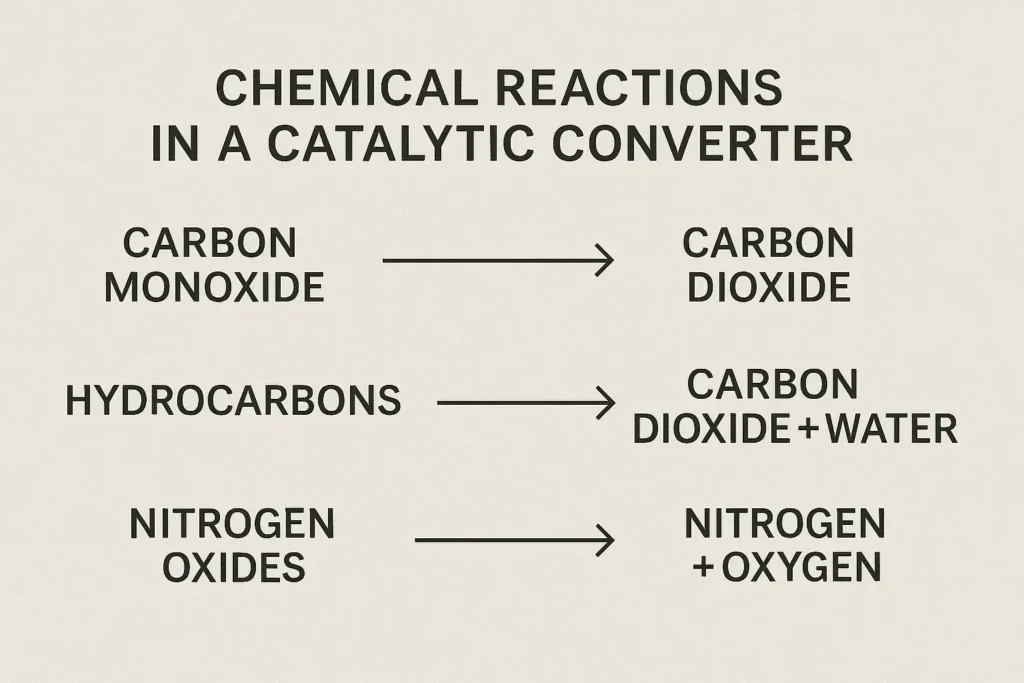
Most vehicles on the road today use a catalytic converter to reduce dangerous exhaust emissions, such as carbon monoxide (CO), nitrogen oxides (NOx), and hydrocarbons (HC). The converter does this by triggering chemical reactions that convert these pollutants into less harmful substances—mainly carbon dioxide (CO₂), nitrogen (N₂), and water vapor.
Why Would You Need a Catalytic Converter Kit?
Is Your Converter Failing?
Your vehicle may need a new catalytic converter kit if:
- Your check engine light is on and the codes point to an emissions issue.
- There’s a strong sulfur or “rotten egg” smell coming from the exhaust.
- The vehicle fails an emissions test.
- You notice a decrease in performance or fuel efficiency.
- There’s rattling or metallic noise from under the car.
Often, damage comes from engine misfires, oil or coolant leaks, or using leaded fuel or certain fuel additives. Over time, these can clog or poison the precious metals (like platinum, palladium, and rhodium) inside the converter, making it less effective.
Repairing, Upgrading, or Restoring
Catalytic converter kits are also popular when:
- Replacing a stolen converter (theft is a growing problem).
- Restoring classic or imported vehicles to meet local emission laws.
- Upgrading for better performance or to fit aftermarket exhaust systems.
- Converting a diesel engine vehicle to meet new emissions standards.
Some drivers choose performance-oriented options, which raises the question of when a high-flow catalytic converter makes sense—and when it doesn’t.
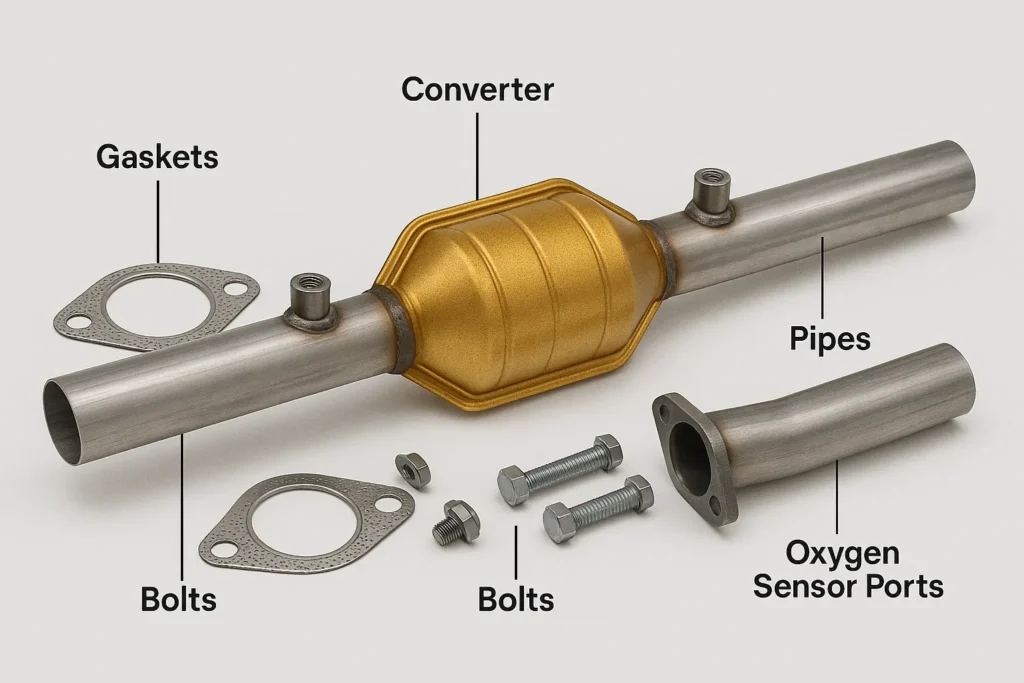
What’s Inside a Catalytic Converter Kit? Key Components Explained
Let’s take a closer look at what’s included:
- Main Converter Unit: Houses the honeycomb catalyst substrate coated in platinum, palladium, and rhodium. This is the device that uses catalysis to neutralize emissions.
- Mounting Hardware: Bolts, clamps, and brackets designed for a tight fit—essential to prevent leaks and keep everything in place.
- Gaskets: Specialized seals that sit between flanges, blocking leaks and keeping emissions under control.
- Oxygen Sensor Ports: Allow you to reinstall or add sensors, vital for modern engine management systems.
- Pipes and Adapters: Sometimes included in universal kits, these help fit the converter to different exhaust system designs.
- Detailed Instructions: Guide users through safe, compliant installation.
Quality kits are designed to meet or exceed EPA or CARB standards, which is especially important for vehicles operating in areas with stringent regulations.
| Component | Function |
|---|
| Catalytic Converter | Reduces emissions via chemical reaction |
| Gaskets | Seals exhaust joints |
| Clamps/Brackets | Mounts converter securely |
| Heat Shield | Protects surrounding parts from heat |
| Sensor Adapters | Integrate oxygen sensors for emissions |
How a Catalytic Converter Kit Works
A catalytic converter kit converts exhaust pollutants into less harmful gases using a series of chemical reactions on the catalyst substrate. I see precious metal coatings—platinum, palladium, and rhodium—on the substrate start these reactions as hot exhaust gases contact the converter.
Chemical reactions occur in three main stages inside the catalytic converter kit:
- Oxidation of Carbon Monoxide: Platinum and palladium push carbon monoxide (CO) into forming carbon dioxide (CO₂). I note reduced toxic gas output as the reaction removes CO from the exhaust.
- Oxidation of Hydrocarbons: Unburned fuel vapors (hydrocarbons) get converted to carbon dioxide and water after contacting the catalyst. My catalytic converter kit handles a portion of raw fuel that escapes combustion, supporting cleaner emissions.
- Reduction of Nitrogen Oxides: Rhodium enables the breaking down of nitrogen oxides (NOₓ) into nitrogen and oxygen gases. I rely on this function to lower the most significant smog-forming emissions.
Sensor ports within some kits provide a spot for oxygen sensors, which let the engine control module monitor exhaust conditions and adjust air-fuel ratios for optimal conversion efficiency.
Mounting hardware and gaskets included in the kit create a tight seal, eliminating exhaust leaks that would lower catalytic converter efficiency and emissions compliance.
Direct-fit kits fit specific vehicle models, which means I don’t make modifications when replacing original converters. Universal kits, on the other hand, get cut and welded to fit various configurations, and I match them against local emissions requirements before installation.
Every step in the process ensures the vehicle continues to meet regulatory standards after repair or upgrade with a catalytic converter kit.
What Types of Catalytic Converter Kits Are There?
Universal vs. Direct-Fit
- Universal Kits: Fit a wide range of vehicles with some modification. They’re more affordable but usually require welding or extra fitting.
- Direct-Fit Kits: Designed for specific makes, models, and years. These bolt right into the existing exhaust system—no modifications needed.
OEM vs. Aftermarket
- OEM (Original Equipment Manufacturer): Matches the exact specs of your original converter, guaranteeing the same fit and emissions performance.
- Aftermarket: Often less expensive, may offer additional features, but quality can vary. Always check for EPA or CARB compliance.
Specialty Kits
Some kits are made for:
- Diesel engines (to meet diesel emission standards)
- Off-road vehicles
- High-performance upgrades
- Theft prevention (including anti-theft cages or shields)
What Should You Consider Before Buying a Catalytic Converter Kit?
Legal Compliance (EPA, CARB, Euro Standards)
- In the US, all new catalytic converters must meet EPA standards.
- California and New York have stricter rules (CARB).
- Fitting a non-compliant converter can mean fines or a failed inspection.
- In Europe, the converter must meet Euro 5/6 standards.
- Always check your state or country’s requirements before buying.
Fitment
- Know your vehicle’s make, model, year, engine type, and VIN.
- Direct-fit kits are easiest for most people.
- Universal kits are cheaper, but may require welding, cutting, or custom brackets.
Material & Quality
- Look for kits with high-quality stainless steel and dense, precious metal coating for durability.
- Always check warranty—good brands offer at least 5 years or 50,000 miles.
Price & Budget
- OEM is usually most expensive but gives guaranteed performance.
- Quality aftermarket kits are available at various price points.
- Beware of ultra-cheap kits—they may not last or pass emissions.
Common Problems With Catalytic Converter Kits (and How to Avoid Them)
Cheap, Non-Compliant Kits
- Some low-cost kits lack enough precious metal catalyst, so they don’t clean emissions properly and will fail inspection.
- Always buy EPA or CARB certified kits.
Poor Fitment
- Universal kits may not align perfectly with your exhaust system.
- Double-check measurements and consider professional installation if you’re not experienced.
Sensor Errors
- Incorrect placement or damaged oxygen sensor ports can trigger error codes or poor performance.
- Always use included adapters or plugs and follow instructions.
Premature Failure
- Often caused by engine issues (like burning oil or coolant).
- Fix any underlying engine problems before installing your new kit.
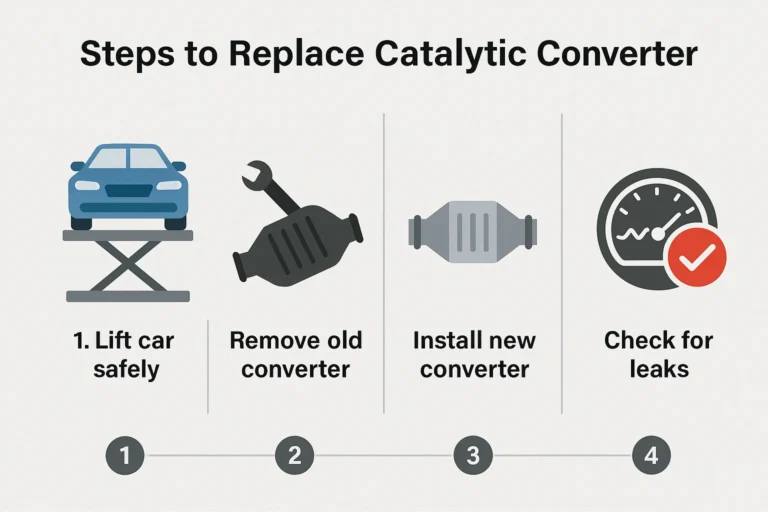
How to Install a Catalytic Converter Kit?
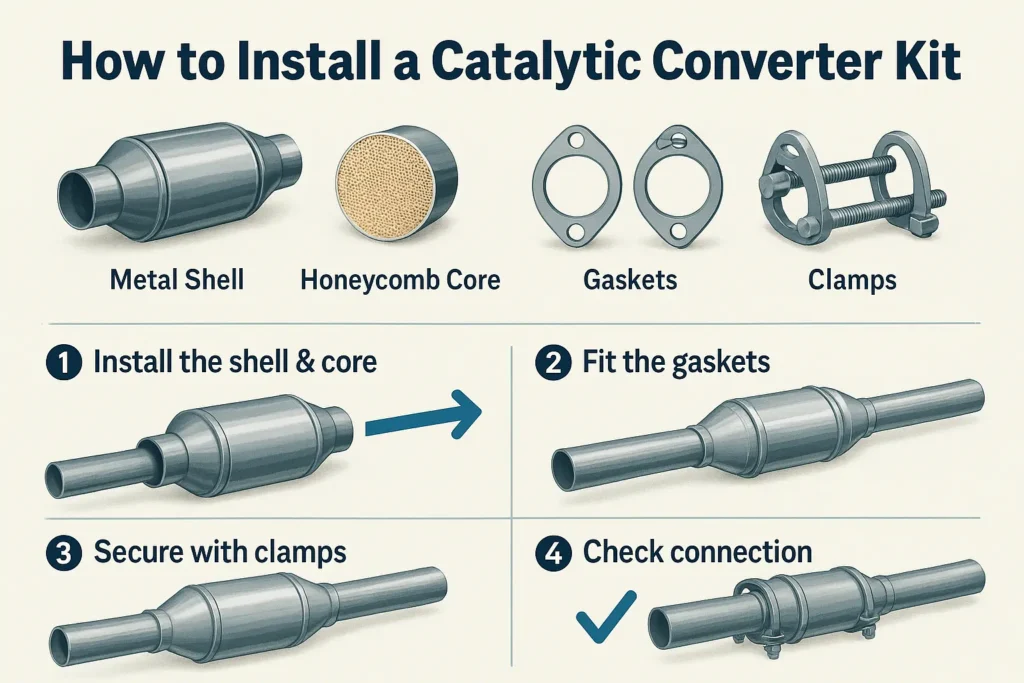
General Steps (Always follow the kit’s manual):
- Lift and safely support the vehicle.
- Remove the old converter and any damaged hardware.
- Clean exhaust pipe ends.
- Fit new gaskets, then the converter.
- Attach clamps/brackets securely.
- Install oxygen sensors and any heat shields.
- Lower the vehicle and start the engine. Check for leaks or warning lights.
If you’re unsure, have a professional install your kit to guarantee safety and legal compliance. Most kits are designed for straightforward installation, especially if you understand how catalytic converters are replaced step by step.
Are Catalytic Converter Kits Worth It?
A good catalytic converter kit helps:
- Restore or maintain emission control for your car, truck, or SUV.
- Pass local emissions tests and avoid legal trouble.
- Reduce your car’s environmental impact.
- Save money compared to buying all parts separately.
Replacing the entire kit can be more efficient than swapping only the converter, especially if mounting hardware or gaskets are damaged or corroded.
What Are the Signs You Need to Replace a Catalytic Converter Kit?
- Check engine light (related to emissions codes)
- Failed emissions test
- Loss of power or poor acceleration
- Rattling or strange noises under the car
- Visible damage, rust, or theft of the converter
Always diagnose the root cause before replacement. Sometimes, fixing an engine problem first (like a misfire) can save your new converter from early failure.
Conclusion
Keeping your car compliant and running clean has never been more important, both for your own peace of mind and for the natural environment. A properly selected and installed catalytic converter kit doesn’t just help you pass inspection—it ensures your vehicle isn’t adding more pollution to the air we all breathe. Whether you’re repairing after a theft, upgrading an older car, or just maintaining your daily driver, always choose a kit that meets the standards for your region and vehicle type.
FAQ
What is included in a catalytic converter kit?
Most kits include the converter, gaskets, clamps, brackets, and sometimes heat shields or sensor adapters. Always check the product listing for details.
Can I install a catalytic converter kit myself?
Some universal kits are DIY-friendly, but most direct-fit or welded installations are best left to professionals to ensure safety and proper function.
Are aftermarket kits as good as OEM?
Aftermarket kits can perform well if they meet EPA or CARB standards. OEM kits offer the exact fit and guaranteed compliance but may cost more.
How do I know if my catalytic converter is failing?
Watch for symptoms like a check engine light, rattling noises, poor performance, or failed emissions tests.
How can I prevent catalytic converter theft?
Install anti-theft shields, park in secure areas, and etch your VIN on the converter for better traceability.