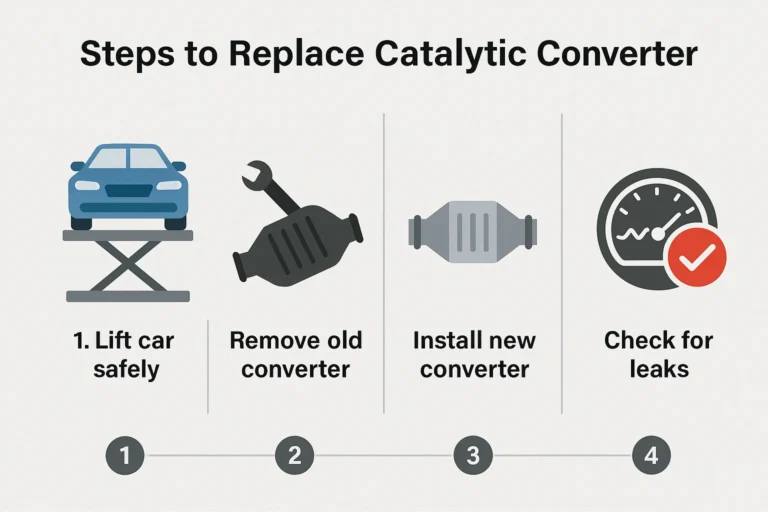
Can You Drive Without a Catalytic Converter?

If your catalytic converter has been stolen, damaged, or failed, you might wonder whether you can keep driving without replacing it. While your car will technically still run, driving without a catalytic converter is not just a mechanical decision—it’s a legal, environmental, and safety issue.
In this guide, we’ll answer the most common questions about driving without a catalytic converter, explain the consequences, and give you the facts so you can make an informed choice.
What is a Catalytic Converter?
A catalytic converter is a vital part of your car’s exhaust system. Its main job is converting harmful pollutants like carbon monoxide, nitrogen oxides, and hydrocarbons into less harmful gases such as carbon dioxide, nitrogen, and water vapor.
This conversion occurs through chemical reactions inside the catalytic converter, using precious metals like platinum, palladium, and rhodium as catalysts.
Can You Legally Drive Without a Catalytic Converter?

In the United States
Driving without a catalytic converter is illegal in all 50 states for vehicles originally equipped with one. Federal law under the Clean Air Act requires it to be present and functioning. States like California (through CARB regulations) have even stricter rules.
If you remove your catalytic converter or drive without one, you could face:
- Fines up to $2,500 (federal) or more at the state level
- A failed emissions inspection
- Vehicle registration refusal
In the UK and Europe
Similar laws apply. If your vehicle was manufactured after 1992 in the UK (for petrol cars) or 2001 for diesels, it must have a functioning catalytic converter to pass the MOT. In the EU, regulations require compliant exhaust systems to meet Euro emissions standards.
Bottom line: In most countries, driving without a catalytic converter is illegal if your car was originally fitted with one.
Before risking fines or inspection failure, it’s worth exploring the cheapest legal way to fix a catalytic converter.
Will Your Car Still Run Without a Catalytic Converter?
Yes, your engine will run without a catalytic converter. However, there are trade-offs:
- Louder exhaust noise – The catalytic converter also dampens some exhaust sound. Without it, your car will be noticeably louder.
- Possible check engine light – The oxygen sensors may detect incorrect emissions levels, triggering a warning light.
- Potential drivability issues – While some cars run smoothly, others may experience rough idling or decreased fuel efficiency due to altered exhaust backpressure.
What Happens if You Drive Without a Catalytic Converter?
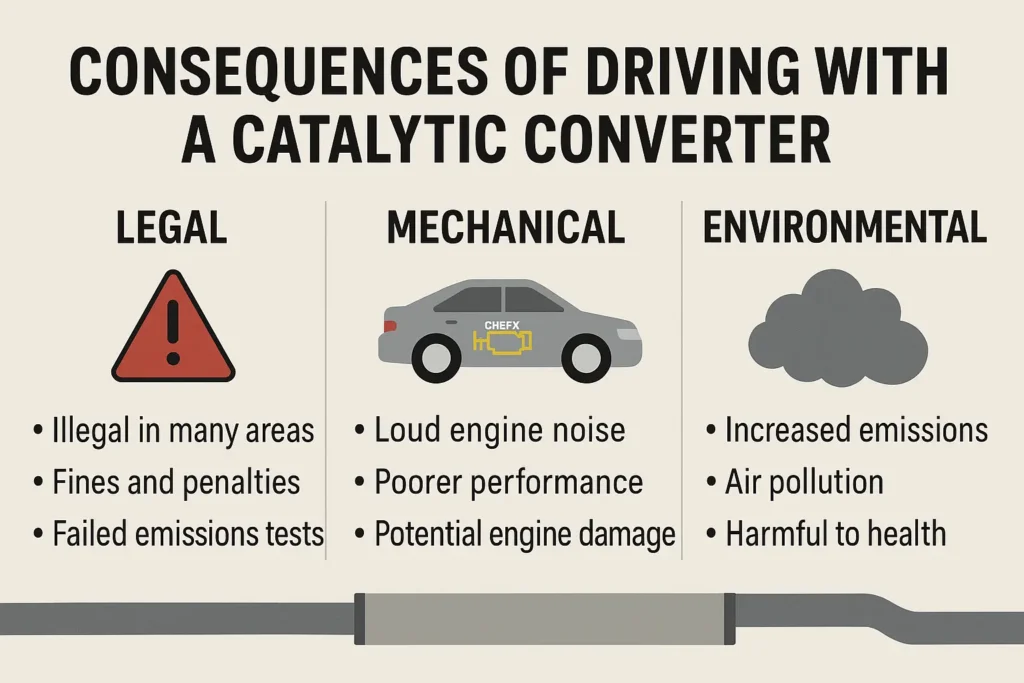
Driving your car without a catalytic converter causes several problems:
1. Loud Exhaust Noise
The catalytic converter helps muffle exhaust noise. Without it, your car will sound significantly louder, often described as similar to a race car or motorcycle.
2. Increased Pollution
Your car will release significantly more harmful pollutants into the air. Studies show catalytic converters reduce harmful emissions by more than 90%, significantly improving air quality.
3. Poor Engine Performance
Without proper back-pressure control, your engine’s performance and efficiency suffer, leading to reduced power and fuel economy.
4. Check Engine Warning
Modern vehicles will trigger the check engine light when the catalytic converter is missing or malfunctioning. The car’s engine management system relies on readings from oxygen sensors placed before and after the catalytic converter.
How Long Can You Drive Without a Catalytic Converter?
Technically, a vehicle can run indefinitely without a catalytic converter. However, driving without one for prolonged periods is dangerous, harmful to the environment, and usually illegal. It can also lead to more costly repairs due to damaged exhaust system components or engine trouble.
The best advice is to minimize driving until you replace your catalytic converter.
Does Removing the Catalytic Converter Improve Performance?
Some people mistakenly believe removing the catalytic converter improves performance. While it’s true that exhaust gases flow more freely without the converter, modern vehicles are specifically engineered to run efficiently with a properly functioning catalytic converter.
Removing the converter can lead to:
- Reduced fuel efficiency
- Potential engine management issues
- Legal complications due to environmental regulations
In reality, removing your catalytic converter offers minimal performance gains and significant drawbacks.
What are the Costs to Replace a Catalytic Converter?
If your catalytic converter is damaged or stolen, replacement costs typically range from $900 to $2,500, depending on your vehicle model and labor costs.
| Vehicle Type | Replacement Cost (Approx.) |
|---|---|
| Economy vehicles | $900–$1,500 |
| SUVs and Trucks | $1,200–$2,500 |
| Hybrids & Luxury | $1,500–$3,000 |
Comprehensive auto insurance may cover replacement costs, especially in cases of theft.
How Can You Tell If Your Catalytic Converter is Missing or Removed?
Identifying a missing or stolen catalytic converter is straightforward. Common signs include:
- A noticeably loud noise when starting your vehicle
- Reduced vehicle acceleration and performance
- A check engine light appearing suddenly
- Visual confirmation: Looking underneath the car and noticing a missing section of the exhaust pipe
If you suspect your catalytic converter is missing, take your vehicle to a mechanic immediately.
How Can You Prevent Catalytic Converter Theft?
Catalytic converter theft is rising due to high precious-metal values. You can prevent theft by:
- Installing protective shields or cages
- Parking in well-lit, secure areas or garages
- Etching your VIN onto your converter for traceability
- Installing alarms triggered by vibrations or motion underneath the vehicle
Can You Replace a Catalytic Converter Yourself?
Replacing a catalytic converter is usually best left to professionals due to specialized tools, knowledge, and legal considerations. Improper installation can cause serious exhaust leaks, emissions test failures, and even potential vehicle fires.
For safe and compliant installation, always choose a reputable automotive professional. In many cases, replacement parts are sold as a package, which is why knowing what actually comes in a catalytic converter kit matters.
Are There Alternatives to Replacing a Catalytic Converter?
If you face high replacement costs, you may wonder if there are alternatives. Unfortunately, very few legal alternatives exist:
- Catalytic converter cleaning: Sometimes possible if mildly clogged, but ineffective for missing or severely damaged converters.
- Aftermarket catalytic converters: Cheaper options, but they must comply with local emissions laws and standards.
Ultimately, complete replacement with a compliant converter remains the best long-term solution.
Why Is the Catalytic Converter So Important?
Catalytic converters are critical for environmental health and public safety. They drastically reduce harmful emissions, contributing to better air quality and reducing respiratory illnesses and environmental harm.
Removing or driving without a catalytic converter is harmful, irresponsible, and typically illegal.
Conclusion
While your car can run without a catalytic converter, it’s unsafe, environmentally harmful, and illegal in most jurisdictions. The increased noise, decreased performance, and severe legal consequences strongly outweigh any minor short-term benefits.
If your catalytic converter is missing or damaged, address the problem immediately. Seek professional help to maintain vehicle compliance, environmental safety, and long-term engine health. If replacement becomes unavoidable, understanding what replacing a catalytic converter really involves can help you plan your next step