Cheapest Way to Fix a Catalytic Converter

A failing catalytic converter can set off your check engine light and cause your car to run rough or even fail emissions testing. But the cost of a new catalytic converter can be overwhelming. So, what’s the cheapest way to fix a catalytic converter without sacrificing reliability or breaking the law? Let’s explore your real-world options.
What Is a Catalytic Converter and Why Do Repairs Cost So Much?
A catalytic converter is a vital part of your vehicle’s exhaust system. It transforms toxic gases like carbon monoxide and nitrogen oxides into less harmful emissions. This process keeps your car legal and safer for the environment.
Why are repairs expensive? Catalytic converters use precious metals like platinum, palladium, and rhodium to break down pollutants. These metals are costly, and strict emission standards mean even the cheapest replacement parts still require a minimum quality.
How Do I Know If My Catalytic Converter Needs Fixing?
Common signs of catalytic converter problems include:
- Check engine light (often code P0420 or P0430)
- Reduced engine performance or sluggish acceleration
- Rotten egg (sulfur) smell from the exhaust
- Failed emissions test
- Rattling noise from under the car
Can I Fix a Catalytic Converter Without Replacing It?
Try a Catalytic Converter Cleaner
One of the cheapest and easiest ways to attempt a fix is using a catalytic converter cleaner. These fuel additives are designed to clean out carbon buildup and other deposits. Here’s how it works:
- Add the cleaner to a full tank of gas, following the product instructions.
- Drive the vehicle for at least 30-50 miles at highway speeds.
- In some cases, this can clear mild clogs and turn off the check engine light.
Note: This method only works if the converter is not physically damaged or melted inside.
Fix the Root Cause of Failure
Many catalytic converter failures are caused by engine problems like:
- Faulty oxygen sensors
- Misfiring spark plugs
- Oil or coolant leaks
Fixing these issues before replacing the converter can sometimes restore normal function, especially if caught early. Always fix the underlying problem first to avoid ruining a new converter.
Is It Legal to Bypass or Remove a Catalytic Converter?
No.
Bypassing, removing, or “gutting” a catalytic converter is illegal in the U.S., Canada, UK, Australia, and many other regions. This can result in hefty fines, failed inspections, and even vehicle impoundment.
Always look for a legal, emissions-compliant solution. Trying to bypass repairs may seem tempting, but what really happens if you keep driving without a catalytic converter often leads to bigger problems.
Can I Repair a Catalytic Converter Myself?
Welded Repairs or Patch Jobs
If your converter is leaking at a weld or joint, a muffler shop may be able to patch small holes or replace a flange for a fraction of the cost of a new unit. However, this only works if the converter’s internal “honeycomb” is still intact.
Professional Cleaning (Off-Car Cleaning)
Some specialist shops offer ultrasonic or chemical cleaning of the catalytic converter. This involves removing the part and using machines or solutions to clear stubborn clogs.
- Success rates are mixed.
- Cost is generally less than full replacement, but may not work if the core is melted or physically damaged.
What’s the Cheapest Legal Replacement Option?
Aftermarket (Universal) Catalytic Converters
If cleaning or minor repair isn’t possible, the most affordable legal replacement is often a universal aftermarket catalytic converter:
- These parts fit a wide range of vehicles, and a mechanic can weld or clamp them in place.
- Cost can be 60–80% less than an OE (original equipment) part.
- Always ensure the part is EPA- or CARB-compliant for your state or region.
Many budget-friendly replacements are sold as kits, so it helps to understand what actually comes in a catalytic converter kit before buying.
Cheapest Ways to Fix a Catalytic Converter
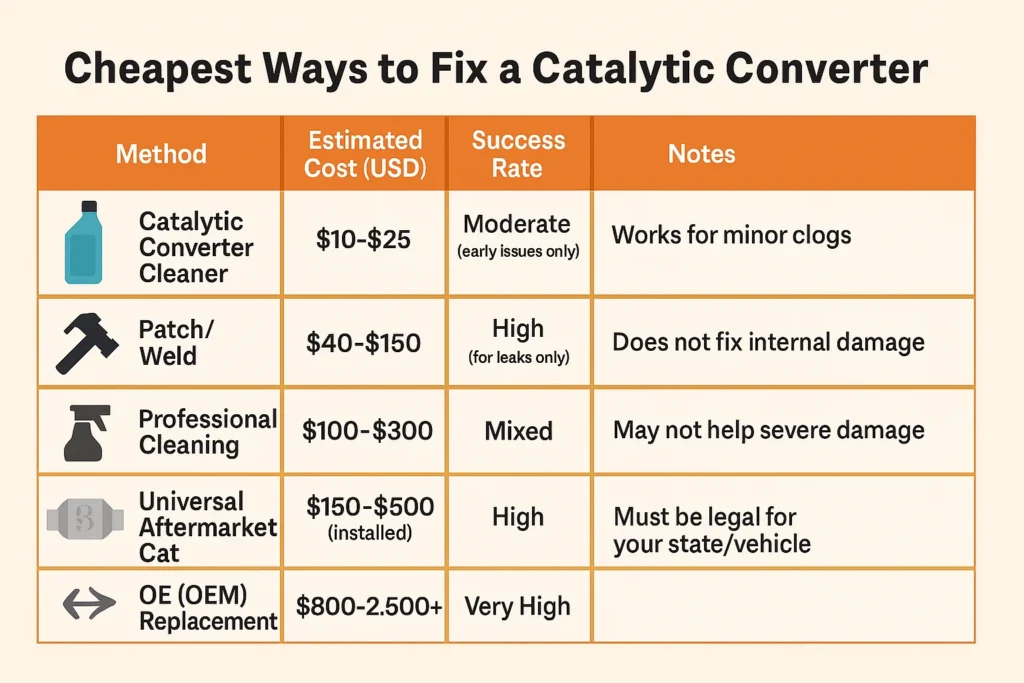
| Method | Estimated Cost (USD) | Success Rate | Notes |
|---|---|---|---|
| Catalytic Converter Cleaner | $10–$25 | Moderate (early issues only) | Works for minor clogs |
| Patch/Weld Repairs | $40–$150 | High (for leaks only) | Does not fix internal damage |
| Professional Cleaning | $100–$300 | Mixed | May not help severe damage |
| Universal Aftermarket Cat | $150–$500 (installed) | High | Must be legal for your state/vehicle |
| OE (OEM) Replacement | $800–$2,500+ | Very High | Best for newer/valuable vehicles |
If you’re considering installing the part yourself, knowing whether you can replace a catalytic converter yourself is essential.
Can a Bad Catalytic Converter Be Repaired Instead of Replaced?
If the internal substrate is melted, broken, or severely clogged, replacement is the only reliable fix. Cleaning or patching will not restore function in these cases. Always diagnose the root cause before spending on repairs.
Should I Buy a Used Catalytic Converter?
Most experts do not recommend buying used converters. Used parts may already be close to failing, and it’s illegal to sell used catalytic converters for emissions repairs in many places. Stick to new, certified aftermarket or OE replacements.
How Can I Prevent Future Catalytic Converter Problems?
- Keep your engine tuned (fix misfires, replace oxygen sensors, and perform regular oil changes)
- Address oil or coolant leaks immediately
- Use quality fuel and avoid running the car rich or with excessive additives
- Drive the car long enough for the converter to heat up fully (short trips can cause carbon buildup)
Conclusion
The cheapest way to fix a catalytic converter depends on your car’s condition and local laws. Start by diagnosing the real problem—sometimes a simple cleaner or minor repair is all you need. If replacement is necessary, a legal, universal aftermarket converter is the best budget-friendly solution. Always address engine problems first and consult a trusted mechanic for lasting results.