What Is a High Flow Catalytic Converter?

If you’re interested in boosting your car’s performance, you might have come across the term “high flow catalytic converter.” But what does it actually mean? Is it just hype, or does it make a real difference to your vehicle’s exhaust system? Let’s answer your questions and clear up common misconceptions—so you can decide if a high flow cat is right for your car.
What Is a High Flow Catalytic Converter?

A high flow catalytic converter is a type of exhaust emission control device designed to reduce pollutants—just like a standard catalytic converter—but with a focus on improved exhaust gas flow. These converters use a less restrictive internal structure, allowing exhaust gases to pass through more easily. As a result, they can help increase engine efficiency and horsepower, especially in performance vehicles or modified cars.
Instead of the denser honeycomb structure found in traditional converters, a high flow cat features a more open design. This reduces backpressure, which means your engine doesn’t have to work as hard to push exhaust gases out. The core is still coated with precious metals like platinum, palladium, and rhodium, which help break down harmful emissions into less toxic compounds.
How Does a High Flow Catalytic Converter Work?
Just like a standard catalytic converter, a high flow cat performs three main chemical reactions:
- Reduction of Nitrogen Oxides (NOx): Breaks down NOx into nitrogen and oxygen.
- Oxidation of Carbon Monoxide (CO): Converts carbon monoxide into carbon dioxide.
- Oxidation of Hydrocarbons (HC): Turns unburned fuel (hydrocarbons) into carbon dioxide and water vapor.
What makes a high flow catalytic converter different is its core design. The internal honeycomb or mesh has larger cells, reducing airflow restriction (or backpressure). This is especially useful in cars with upgraded exhaust systems or turbochargers, where standard converters can become a performance bottleneck.
Oxygen sensors are still part of the system, measuring exhaust gases before and after the converter to help the engine maintain an optimal air-fuel ratio. The high flow cat is usually built from stainless steel, with a ceramic or metallic substrate coated in the same catalytic precious metals as OEM units.
Why Do Enthusiasts and Performance Drivers Use High Flow Catalytic Converters?

Many car owners switch to high flow catalytic converters when upgrading their exhaust system for better sound, increased power, or improved throttle response. Standard catalytic converters can sometimes restrict airflow, especially when paired with performance modifications like:
- Aftermarket exhaust systems
- High-performance headers
- Turbochargers or superchargers
- Engine remapping or tuning
A high flow cat helps ensure that these modifications deliver maximum benefit, without causing excessive exhaust backpressure. This leads to:
- Better horsepower and torque
- Faster engine response
- A sportier exhaust note
Are High Flow Catalytic Converters Legal?
It depends on your location and the specific product.
- United States: The EPA and California Air Resources Board (CARB) have strict standards. Many aftermarket high flow catalytic converters are not legal for road use unless they are CARB-compliant and carry an Executive Order (EO) number. Non-compliant units are for off-road or track use only.
- Other Regions: European emission standards and similar laws in other countries also govern the use of aftermarket converters.
Always check local regulations before purchasing or installing a high flow cat. Failing an emissions test or violating emission standards can result in fines or failed inspections. While high-flow units improve exhaust flow, why removing your catalytic converter can cost you more later is something every driver should understand.
Do High Flow Catalytic Converters Improve Performance?
Yes—in the right setup. High flow catalytic converters help performance cars by reducing exhaust restrictions, but the gains depend on your engine, modifications, and the overall exhaust system.
- Stock Vehicles: Minimal improvement, since the factory exhaust system is already tuned for efficiency.
- Modified Cars: Noticeable gains when paired with headers, larger exhaust pipes, turbochargers, or aggressive camshafts.
- Racing or Off-Road Use: High flow cats are popular for track cars, race vehicles, or off-road trucks where emission regulations may be less strict.
What Are the Key Features of a High Flow Catalytic Converter?

Here’s a quick breakdown:
| Feature | High Flow Cat | Standard Cat |
|---|---|---|
| Core Design | Larger, less restrictive cells | Denser honeycomb structure |
| Materials | Stainless steel, ceramic/metal substrate | Same as OEM |
| Emissions Reduction | Effective, but may not meet strictest regs | Highly regulated |
| Performance | Increases flow, horsepower, sound | Focus on emissions |
| Use Case | Modified cars, racing, off-road | Daily drivers, stock cars |
Core components include the metal shell, honeycomb or mesh core, precious metals (platinum, palladium, rhodium), and oxygen sensor fittings.
What does a High Flow Cat do to Change A Cars Performance?
A high flow catalytic converter (high flow cat) is designed to allow exhaust gases to pass through more easily than a standard catalytic converter. Here’s how it changes a car’s performance:
- Improves Exhaust Flow: Less restriction means exhaust gases exit faster, which can slightly boost horsepower and torque, especially on modified engines.
- May Change Sound: High flow cats often produce a deeper, sportier exhaust note compared to standard cats.
- Potential Emissions Impact: While many high flow cats still meet basic emissions standards, some may not pass strict inspections or tests in areas with tough regulations.
How Does a High Flow Cat Compare to an OEM Converter?
Flow and Performance
- High flow cats increase exhaust flow, helping modified engines “breathe” better.
- OEM cats are optimized for emissions first, sometimes sacrificing flow.
Emissions Compliance
- OEM converters are required to meet all local emission standards.
- High flow cats may or may not be street-legal; check certification before installing.
Longevity
- High flow units are durable, but may have a shorter lifespan in harsh conditions or if installed on a poorly tuned engine.
- OEM units are designed for maximum reliability under normal driving conditions.
Cost
- High flow catalytic converters can cost more than standard replacements, but are usually less expensive than genuine OEM parts
Who Should Use a High Flow Catalytic Converter?
A high flow catalytic converter is ideal for:
- Performance car owners with upgraded engines or exhausts.
- Drivers seeking a sportier exhaust sound.
- Track-day or off-road enthusiasts who need more power and better throttle response.
- Anyone with a heavily modified or turbocharged engine.
It’s usually not necessary for most daily drivers, hybrids, or newer stock vehicles.
What Are the Downsides of a High Flow Catalytic Converter?
While high flow cats offer benefits, they come with trade-offs:
- Potential for Emissions Failure: If your converter isn’t certified for street use, you may fail a vehicle emissions test.
- Check Engine Lights: Some cars may trigger O2 sensor warnings after installation.
- Legal Risks: Using a non-compliant converter on public roads can result in fines.
- Warranty Concerns: Aftermarket exhaust changes may void parts of your vehicle warranty.
How Do You Install a High Flow Catalytic Converter?
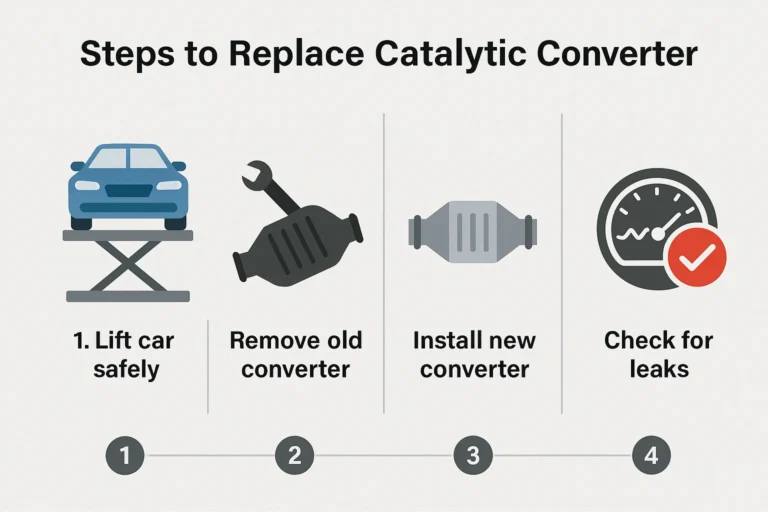
Installation Steps:
- Remove the old converter by unbolting or cutting it from the exhaust.
- Fit the new high flow unit into the same space—universal and direct-fit versions are available.
- Secure with clamps or welds and ensure all sensors are reconnected.
- Check for leaks and scan for any engine codes.
Even performance units follow the same basic process, so it helps to know what replacing a catalytic converter really involves.
Do High Flow Catalytic Converters Affect Vehicle Sound?
Yes. High flow catalytic converters often provide a slightly deeper, sportier exhaust note, especially when combined with performance mufflers or a cat-back exhaust system. They won’t make your car “loud,” but the sound is more aggressive than with a standard converter.
Are There Different Types of High Flow Catalytic Converters?
Yes! Here are the main types:
- Direct-Fit High Flow Cats: Designed to replace your original converter, with all mounting points matched.
- Universal High Flow Cats: More flexible for custom exhaust builds; require welding or extra fitting.
- Metallic vs. Ceramic Substrates: Metallic cores withstand higher temperatures and are often used in racing applications, while ceramic is standard for street cars.
Are High Flow Catalytic Converters Safe for the Environment?
High flow cats are designed to reduce emissions, but may not always meet the strictest local standards, especially in places like California. However, they are much cleaner than “test pipes” or straight pipes, which remove the converter entirely.
Always choose a catalytic converter (high flow or standard) over removing one completely. It helps protect air quality and meets legal requirements.
How Do You Choose the Right High Flow Catalytic Converter?
Consider these factors:
- Vehicle Make and Model: Some units are universal, others are direct-fit.
- Legal Compliance: Look for CARB/EPA certification if you need to pass emissions.
- Engine Size and Modifications: Match the converter to your engine’s horsepower and exhaust flow.
- Material Quality: Stainless steel and metallic substrates last longer.
- Warranty: Choose a product with a good warranty for peace of mind.
What Does the Research Say?
According to a study from SEMA Garage and emissions testing labs, properly designed high flow catalytic converters can significantly reduce emissions compared to running without a converter, while delivering measurable gains in exhaust flow. However, real-world compliance always depends on local laws and installation quality.
Conclusion
A high flow catalytic converter can offer real benefits if you have a modified, high-performance car or truck. It helps boost horsepower, enhances sound, and allows your engine to breathe better. However, always check your local laws, make sure the unit is certified, and have it professionally installed for best results. For daily drivers with stock setups, a standard OEM converter is usually the better choice.