OEM Catalytic Converters

Catalytic converters play a critical role in reducing harmful vehicle emissions. When searching for a replacement, many car owners come across terms like OEM catalytic converter, aftermarket converter, or direct-fit converter, which can quickly become confusing.
If you’re wondering what an OEM catalytic converter is, how it works, and whether it’s worth the higher price, this guide explains everything in simple, clear language—so you can make the right decision for your car and your budget.
What Is an OEM Catalytic Converter?
An OEM (Original Equipment Manufacturer) catalytic converter is the same type of converter that was originally installed on your vehicle at the factory. It is either made by the car manufacturer itself or by an approved supplier that meets the manufacturer’s exact specifications.
In simple terms:
- OEM = factory standard
- Exact fit with no modification required
- Guaranteed emissions compliance
Unlike many aftermarket options, OEM converters are designed specifically for your vehicle’s engine, exhaust layout, and emissions system.
👉 Example:
If you drive a Toyota Camry, an OEM catalytic converter is supplied by Toyota or a manufacturer officially approved by Toyota.
How Does an OEM Catalytic Converter Work?
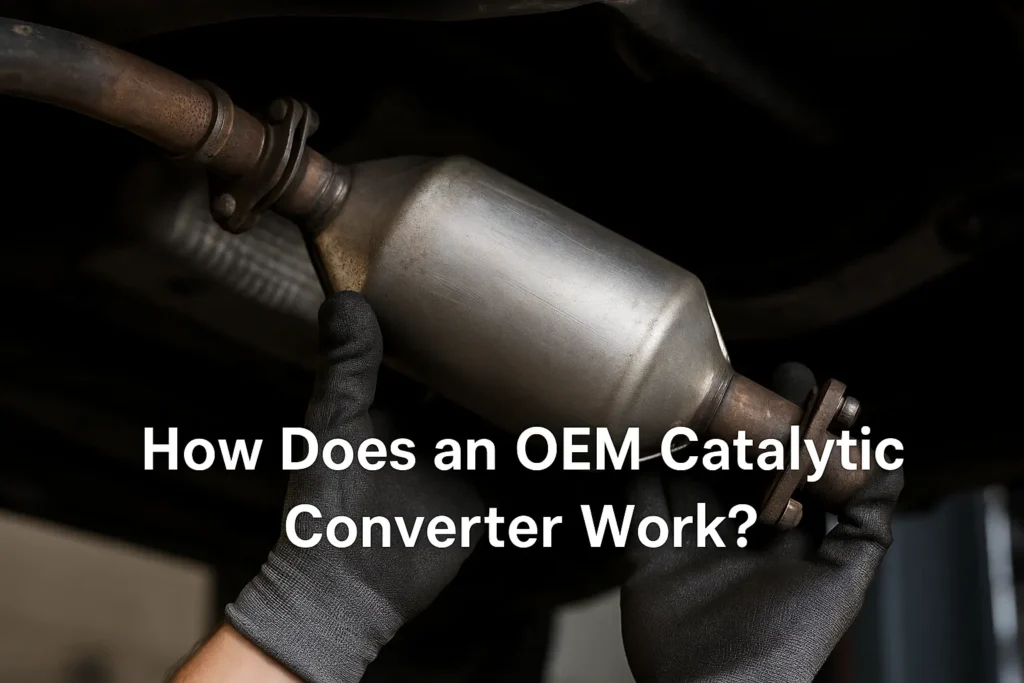
An OEM catalytic converter works by converting toxic exhaust gases into less harmful emissions before they exit your tailpipe.
Inside the converter is a ceramic honeycomb substrate coated with precious metals such as:
- Platinum
- Palladium
- Rhodium
These metals trigger chemical reactions that transform:
- Carbon monoxide (CO) → Carbon dioxide
- Nitrogen oxides (NOx) → Nitrogen + oxygen
- Unburned hydrocarbons → Water vapor + carbon dioxide
Because OEM converters are engineered to factory tolerances, they deliver consistent emissions control, helping your vehicle pass inspections and run efficiently.
Why Is an OEM Catalytic Converter Important?
Using an OEM catalytic converter matters for several reasons:
1. Legal Compliance
In many U.S. states—especially California and New York—only OEM or CARB-approved catalytic converters are legal. Installing a non-compliant unit can result in failed inspections or fines.
2. Engine Performance
OEM converters are tuned to your engine’s exact air-fuel ratio, helping maintain proper exhaust flow and performance.
3. Durability
Most OEM catalytic converters last 10 years or more, far longer than low-quality aftermarket alternatives.
4. Warranty Protection
Installing a non-OEM converter may, in some cases, affect your vehicle’s warranty coverage.
Think of it like using an original charger for your phone—it may cost more, but it ensures safety, compatibility, and long-term reliability.
OEM vs. Aftermarket Catalytic Converters: What’s the Difference?
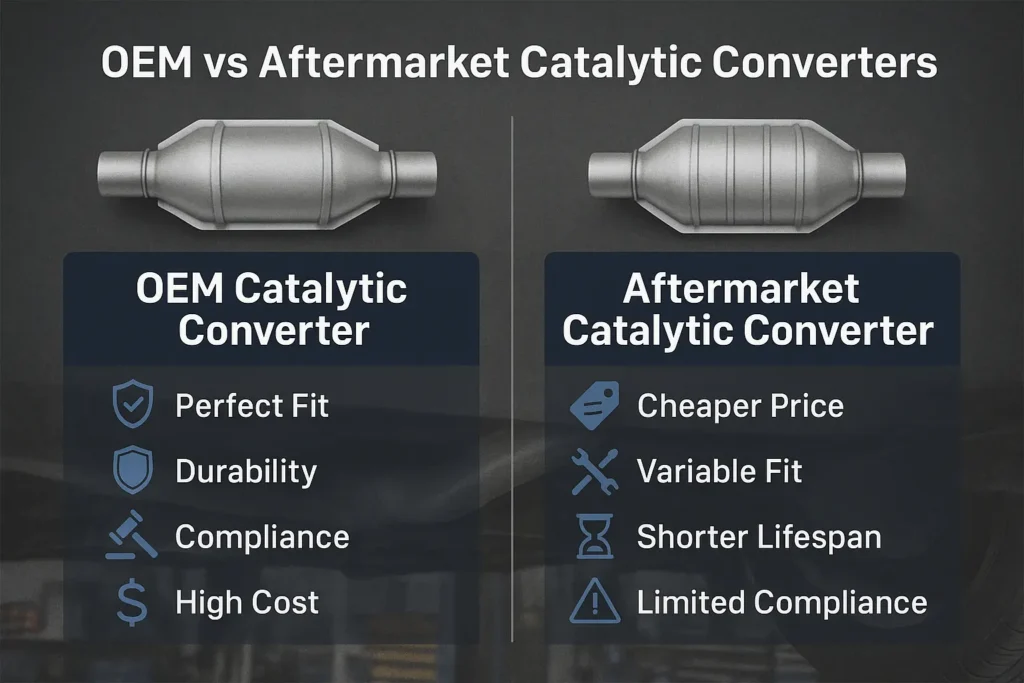
This is one of the most common questions drivers ask.
| Feature | OEM Catalytic Converter | Aftermarket Catalytic Converter |
|---|---|---|
| Fit | Perfect factory fit | May require adjustment |
| Durability | Long-lasting (10+ years) | Shorter lifespan |
| Compliance | Meets EPA & CARB rules | Some don’t meet CARB |
| Price | $800–$2,500+ | $200–$1,000 |
| Performance | Engine-specific tuning | May reduce efficiency |
👉 If you live in a CARB state, an OEM or CARB-approved converter is mandatory. In other states, aftermarket options may be legal but often wear out faster.
Are OEM Catalytic Converters Heavier Than Aftermarket Ones?
Yes. OEM catalytic converters are usually heavier than aftermarket units because they contain:
- Larger ceramic substrates
- Higher precious-metal loading
This added mass improves emissions control and durability. It also explains why OEM units are more valuable for recycling.
Understanding the average catalytic converter weight helps explain these differences and why factory converters perform better over time.
How Much Does an OEM Catalytic Converter Cost?
Prices vary by vehicle, but typical ranges include:
- Compact cars: $800–$1,200
- Sedans & SUVs: $1,200–$2,000
- Luxury or performance vehicles: $2,000–$3,500
OEM converters are expensive because they use higher amounts of platinum, palladium, and rhodium—metals whose prices fluctuate heavily.
💡 Tip:
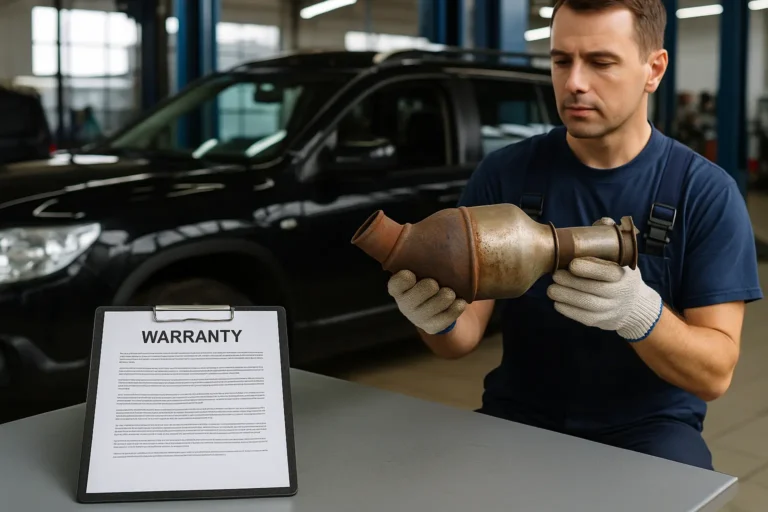
In the U.S., catalytic converters are often covered by the federal emissions warranty for 8 years or 80,000 miles, so check your coverage before replacing one.
When Should You Replace an OEM Catalytic Converter?
Catalytic converters usually fail gradually. Common warning signs include:
- Check engine light (often code P0420)
- Failed emissions test
- Poor acceleration or reduced fuel economy
- Rotten egg (sulfur) smell from exhaust
- Rattling noise from broken ceramic inside
Once damaged or clogged, replacement is the only reliable fix. For strict-emission states, repair shops often recommend OEM parts to avoid compliance issues.
Are OEM Catalytic Converters Worth the Price?
OEM catalytic converters are worth the cost if:
- You live in a state with strict emissions laws
- You plan to keep your vehicle long-term
- You want to avoid repeat replacements
For older vehicles with lower resale value, some drivers choose aftermarket converters to save money. If you go that route, always ensure the unit is EPA- or CARB-compliant.
Can You Install an OEM Catalytic Converter Yourself?
Technically, yes—but it’s usually not recommended.
Reasons include:
- OEM converters are often integrated with the exhaust manifold
- Installation requires specialized tools
- Incorrect installation can cause leaks or engine faults
- Some states require professional documentation
👉 Best practice:
Have an OEM catalytic converter installed by a licensed mechanic or authorized dealer.
Why Are OEM Catalytic Converters Targeted by Thieves?
OEM catalytic converters are frequently stolen because they contain higher precious-metal content than many aftermarket units.
- Thieves can remove them in minutes
- Scrap value is higher
- SUVs and trucks are easier targets due to ground clearance
🔒 Prevention tip:
If you own a high-risk vehicle (such as a Prius, Accord, or F-150), consider a catalytic converter shield or anti-theft cage.
How to Identify a Genuine OEM Catalytic Converter?
To avoid counterfeits, look for:
- Engraved serial or part numbers
- Clean, professional welds
- Manufacturer labels or stamps
- Original packaging from authorized sellers
If a “brand-new OEM converter” is priced unusually low, it’s likely not genuine.
Where Can You Buy OEM Catalytic Converters?
The safest options include:
- Authorized dealerships
- Certified auto-parts retailers
- Reputable repair shops that source OEM parts
Avoid unknown sellers on auction platforms—counterfeit converters are common and may fail emissions tests.
Final Thoughts
An OEM catalytic converter ensures your vehicle meets emissions laws, performs correctly, and lasts longer. While it costs more than aftermarket options, the investment often pays off in reliability, compliance, and peace of mind.
For newer vehicles or those in strict-emission states, OEM is the safest choice. For older cars, aftermarket converters may be acceptable—but only if they meet required standards.