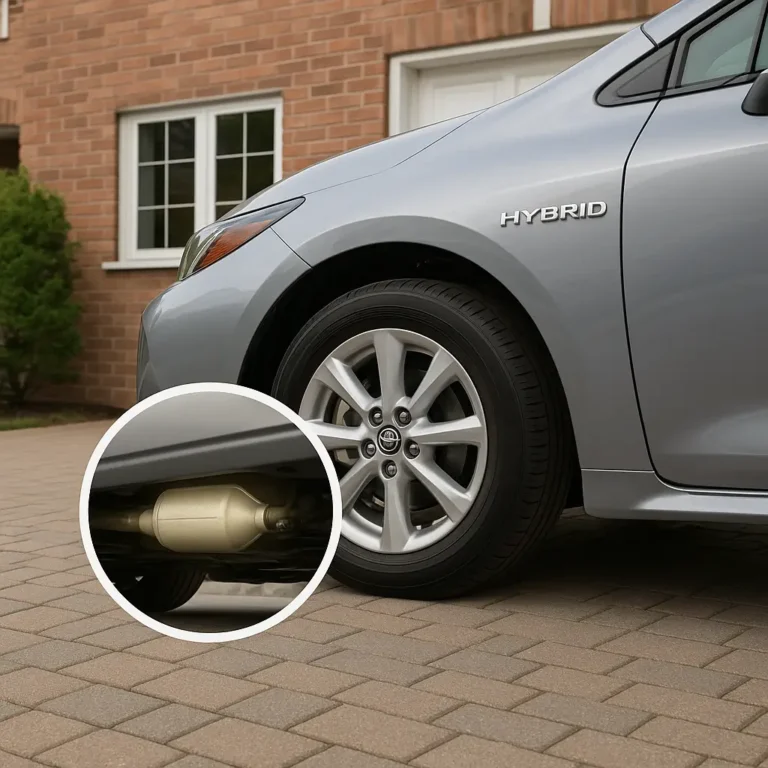
How Much Rhodium In Catalytic Converter?

A catalytic converter contains a very small amount of rhodium, usually measured in fractions of a gram. While the quantity is tiny, rhodium plays a critical role in reducing harmful emissions and is one of the main reasons catalytic converters have high scrap value.
Despite its small presence, rhodium is one of the rarest and most expensive precious metals, which explains why catalytic converters are valuable and often targeted for theft. Understanding how much rhodium is inside a catalytic converter helps car owners, recyclers, and buyers better understand its worth.
For a broader overview of catalytic converters, common problems, and repair options, see our catalytic converter guide.
Key Takeways
- Most catalytic converters contain about 0.1 to 0.5 grams of rhodium
- Some larger, older, or hybrid vehicles may contain up to 1 gram or slightly more
- Rhodium is mainly used to reduce nitrogen oxide (NOx) emissions
- Even small amounts significantly affect converter value and recycling prices
What Is Rhodium and Why Is It Used in Catalytic Converters?
Rhodium is a silvery-white precious metal belonging to the platinum-group metals (PGMs). It is highly resistant to heat and corrosion, making it ideal for harsh exhaust environments.
Inside catalytic converters, rhodium’s primary function is to reduce nitrogen oxides (NOx) into harmless nitrogen and oxygen. These reactions help vehicles meet emissions regulations and reduce smog-forming pollutants.
Key facts about rhodium:
- Melting point: ~1,964 °C (3,567 °F)
- Rarity: One of the rarest elements on Earth
- Value: Often the most expensive PGM during market peaks
Rhodium works alongside platinum and palladium, each handling different exhaust gases.
How Much Rhodium Is in a Catalytic Converter?
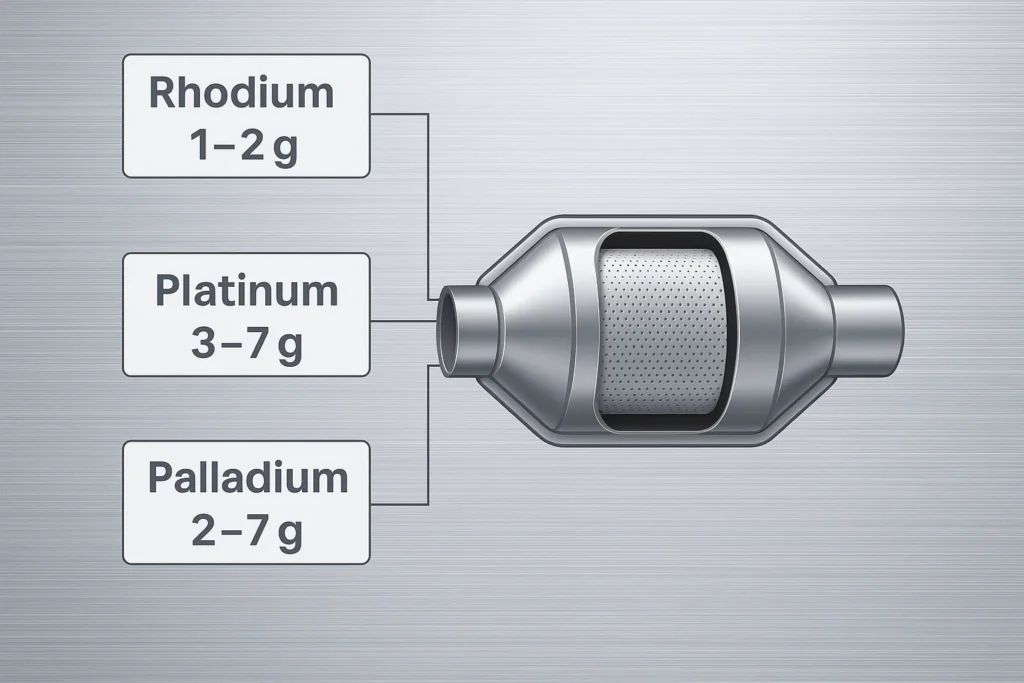
The amount of rhodium varies depending on vehicle type, emissions standards, and converter design.
Typical Rhodium Content by Vehicle Type
| Vehicle Type | Approximate Rhodium Content |
|---|---|
| Standard gasoline cars | ~0.1–0.5 g |
| Hybrids & larger vehicles | ~0.3–1.0 g |
| Older or specialty converters | Up to ~1–2 g (rare) |
Most modern passenger vehicles contain less than one gram of rhodium. Amounts above this range are uncommon and usually limited to older, larger, or specialty converters.
Even these small quantities can significantly influence value, which helps explain why catalytic converters are so expensive.
Why Do Different Converters Have Different Rhodium Amounts?
Not all catalytic converters are built the same. Several factors influence rhodium content:
Vehicle Size and Engine Output
Larger engines generate more emissions, which may require slightly higher rhodium loading.
Emissions Standards
Stricter regulations in regions like the U.S. and EU often lead manufacturers to use more efficient catalyst formulations.
Manufacturer Design
Automakers carefully balance performance and cost, using the minimum amount of rhodium needed to meet emissions rules.
Vehicle Age
Some older converters contained higher precious-metal loads compared to modern, more efficient designs.
Types of Catalytic Converters and Rhodium Levels
Three-Way vs Two-Way Catalytic Converters
Three-way catalytic converters, used in most gasoline vehicles, reduce:
- Carbon monoxide
- Hydrocarbons
- Nitrogen oxides
These typically contain small amounts of rhodium (often under 0.5 g) to target nitrogen oxides.
Two-way converters, found in older vehicles, focus on carbon monoxide and hydrocarbons and often contain little or no rhodium.
High-Performance and Specialty Converters
High-performance or specialty converters may contain slightly more rhodium to handle higher exhaust temperatures and stricter emissions demands. These are generally more expensive and less common.
How Rhodium Works Inside a Catalytic Converter
Rhodium functions as a reduction catalyst, breaking down nitrogen oxides into harmless gases. It is not consumed during the reaction, allowing it to work continuously over the converter’s lifespan.
Synergy With Platinum and Palladium
- Rhodium: Reduces nitrogen oxides (NOx)
- Platinum & Palladium: Oxidize carbon monoxide and hydrocarbons
This combination allows catalytic converters to clean exhaust efficiently and meet environmental standards.
Why Rhodium Makes Catalytic Converters Valuable
Although rhodium is present in small amounts, its high price means it often accounts for a large portion of a converter’s scrap value.
For example:
- At high market prices, even a fraction of a gram of rhodium can significantly increase recycling value
- Combined with platinum and palladium, total converter prices can range from hundreds to over a thousand dollars, depending on model
This value is also why catalytic converter theft has become a growing problem.
How Can You Tell How Much Rhodium Is in Your Converter?
You cannot visually determine rhodium content. Common methods include:
- Manufacturer codes: Used by recyclers to estimate value
- Professional assays: Industrial testing during recycling
- Vehicle research: Scrap databases estimate content by make and model
⚠️ Attempting to extract rhodium yourself is unsafe and illegal without proper equipment.
Are Some Cars Known for Higher Rhodium Content?
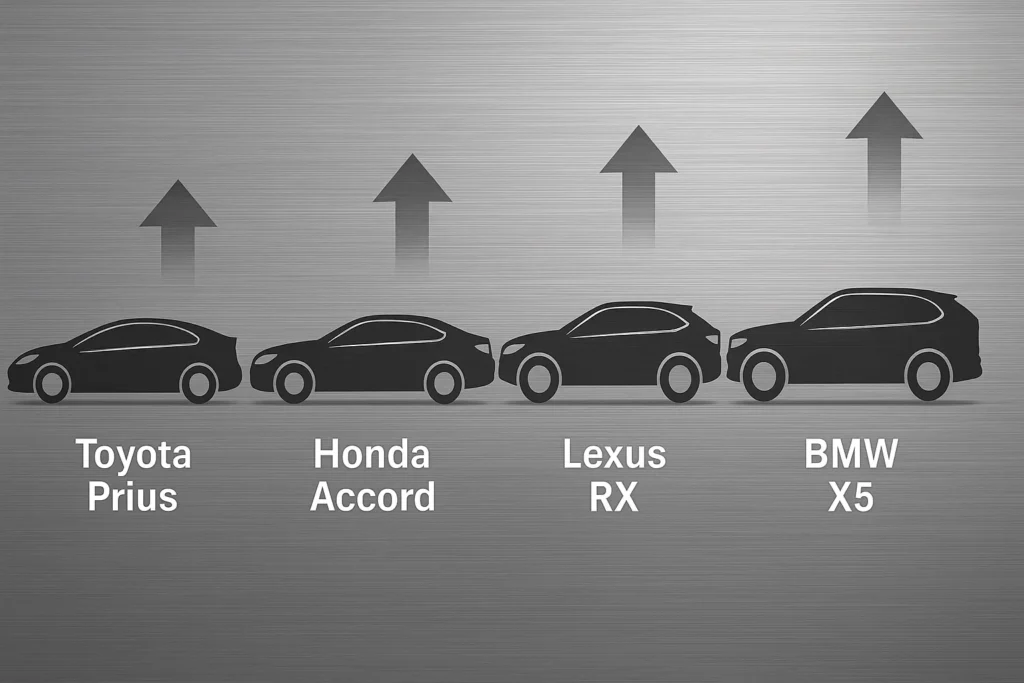
Some vehicles are known to have relatively higher precious-metal content, including:
- Toyota Prius (older hybrid models)
- Honda Accord and Odyssey
- Luxury vehicles such as Lexus, BMW, and Mercedes
Always follow local laws and avoid buying or selling stolen converters.
Is Rhodium Content Changing in Modern Converters?
Yes. Automakers are:
- Improving catalyst efficiency to use less rhodium
- Substituting palladium where possible
- Designing exhaust systems to meet stricter rules with lower metal loads
Despite these changes, rhodium remains essential for gasoline emissions control.
Future Outlook for Rhodium in Emission Systems
Stricter emissions regulations worldwide continue to support rhodium demand. While electric vehicles may reduce long-term usage, internal combustion engines will remain common for many years.
Recycling will play a growing role in supplying rhodium while reducing environmental impact.
Conclusion
So, how much rhodium is in a catalytic converter?
Usually between 0.1 and 0.5 grams, with higher amounts found only in certain vehicles.
Although the quantity is small, rhodium’s rarity and value make it one of the main reasons catalytic converters are expensive and heavily recycled. Understanding this helps car owners recognize both the financial and environmental importance of proper catalytic converter handling.
If replacement becomes necessary, understanding the cheapest way to fix a catalytic converter can help reduce costs.