What is A Universal Catalytic Converter

When dealing with exhaust repairs or emissions rules, you may hear the term “universal catalytic converter.” But what does it actually mean—and how does it compare to a direct-fit catalytic converter?
If you want to keep your vehicle legal, environmentally compliant, and running smoothly, it’s important to understand the difference. This guide explains what a universal catalytic converter is, how it works, whether it’s legal, installation requirements, pros and cons, and when it makes sense to choose one.
Quick Answer
A universal catalytic converter is a non-vehicle-specific emissions device designed to fit many cars with custom installation. It is usually cheaper than a direct-fit converter but may require cutting or welding and must meet local emissions laws to be legal.
For a full overview of how catalytic converters function, see our main catalytic converter guide.
What Is a Universal Catalytic Converter?
A universal catalytic converter is an exhaust emissions control device designed to work with a wide range of vehicles rather than a single make or model.
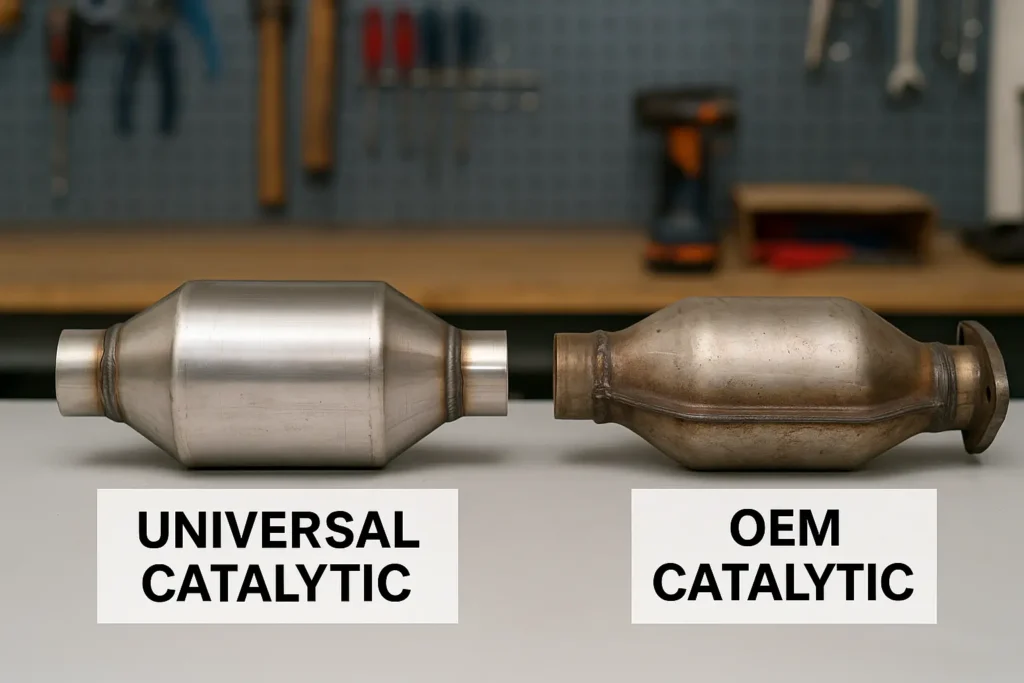
Unlike direct-fit catalytic converters, which are built to bolt directly into a specific exhaust system, universal converters require custom fitting during installation.
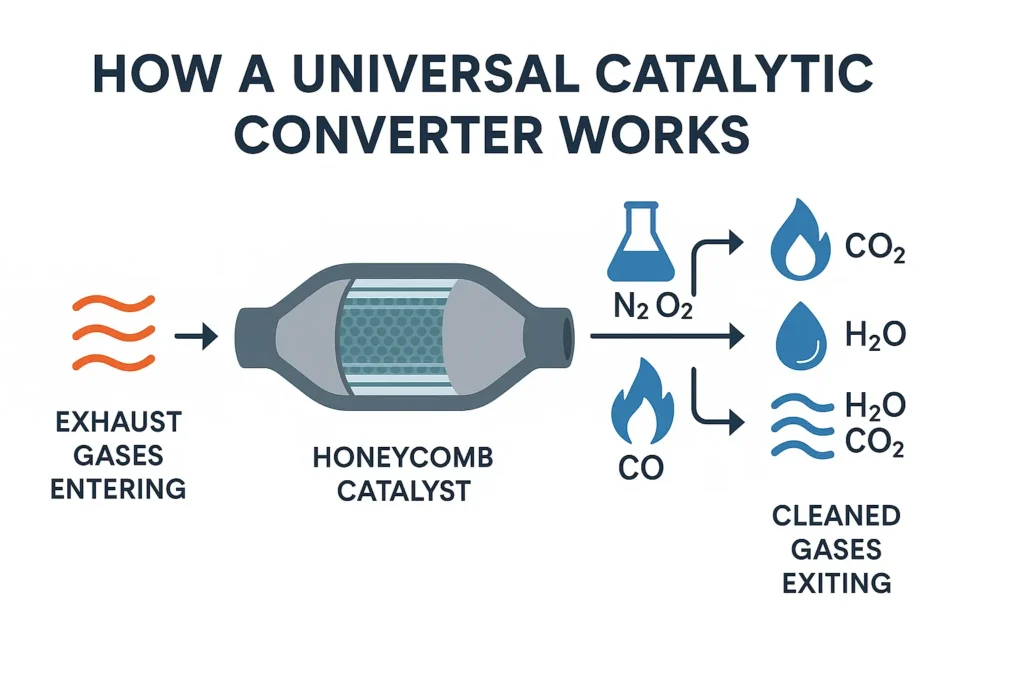
Like all catalytic converters, their job is to reduce harmful exhaust gases using a ceramic or metal honeycomb coated with platinum, palladium, and rhodium—precious metals that trigger chemical reactions to clean emissions.
How Does a Universal Catalytic Converter Work?
Whenever your engine burns fuel, it produces pollutants such as:
- Carbon monoxide (CO)
- Hydrocarbons (HC)
- Nitrogen oxides (NOx)
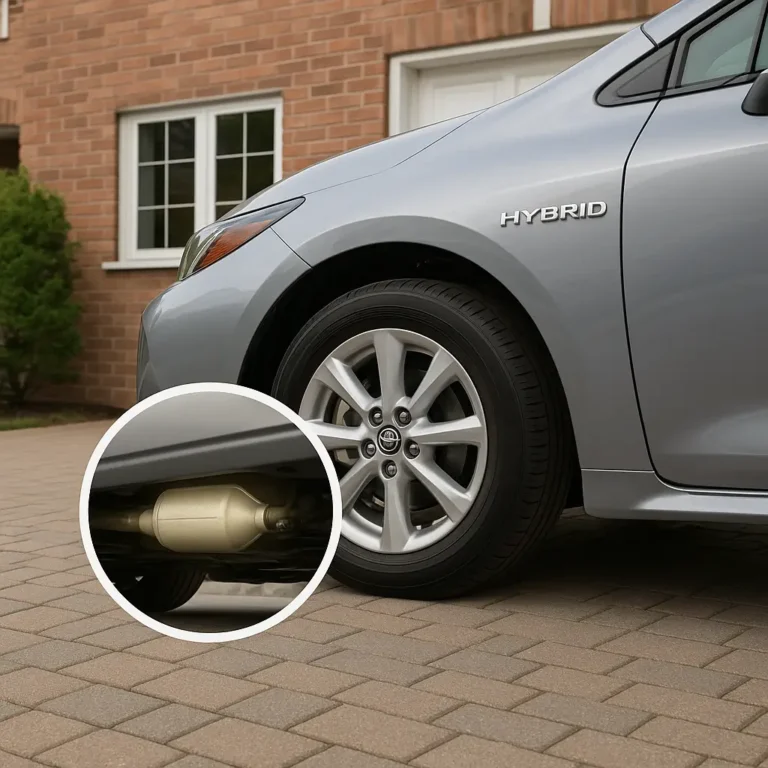
A universal catalytic converter sits in the exhaust system—typically between the engine and the muffler—and converts these harmful gases into safer byproducts before they exit the tailpipe.
Key Reactions Inside the Converter
- NOx reduction: Nitrogen oxides are broken into nitrogen and oxygen
- CO oxidation: Carbon monoxide is converted into carbon dioxide
- HC oxidation: Unburned fuel becomes water vapor and carbon dioxide
Oxygen sensors monitor this process and help the engine computer adjust fuel delivery for efficiency and emissions control. Problems in this system often show up as symptoms of a bad catalytic converter.
What Makes a Catalytic Converter “Universal”?
A catalytic converter is considered universal because it is not designed for a single vehicle platform.
Key characteristics include:
- Standardized sizes: Available in common pipe diameters and lengths
- Custom installation: Often requires cutting, welding, or clamping
- Multi-vehicle compatibility: Works on cars, SUVs, and light trucks
- Lower cost: Typically less expensive than direct-fit converters
Because fitment varies, professional installation is strongly recommended.
Why Choose a Universal Catalytic Converter?
Drivers and repair shops often choose universal converters for practical reasons:
- Lower price: Generally cheaper than direct-fit options
- Wide availability: Easier to find for older or discontinued vehicles
- Flexibility: Ideal for custom or modified exhaust systems
- Fast replacement: Useful after catalytic converter theft, a growing issue explained in catalytic converter theft prevention
For many older vehicles, a universal converter offers a cost-effective way to stay road-legal.
EPA vs CARB
This is one of the most important things to understand.
- EPA (Federal law): Universal catalytic converters must meet EPA emissions standards to be legal in most U.S. states.
- CARB states (California and others): These states require CARB-certified converters, which are more strictly regulated. Many universal converters are not legal in CARB states.
Installing the wrong converter can cause instant inspection failure, even if the car runs fine.
Universal vs Direct-Fit Catalytic Converters
| Feature | Universal Converter | Direct-Fit Converter |
|---|---|---|
| Fit | Adjustable, multi-vehicle | Exact vehicle-specific |
| Installation | Cutting or welding required | Bolt-on |
| Cost | Lower on average | Higher |
| Emissions legality | Must be verified | Designed to meet OEM specs |
| Best for | Older, custom, or budget vehicles | Newer, stock vehicles |
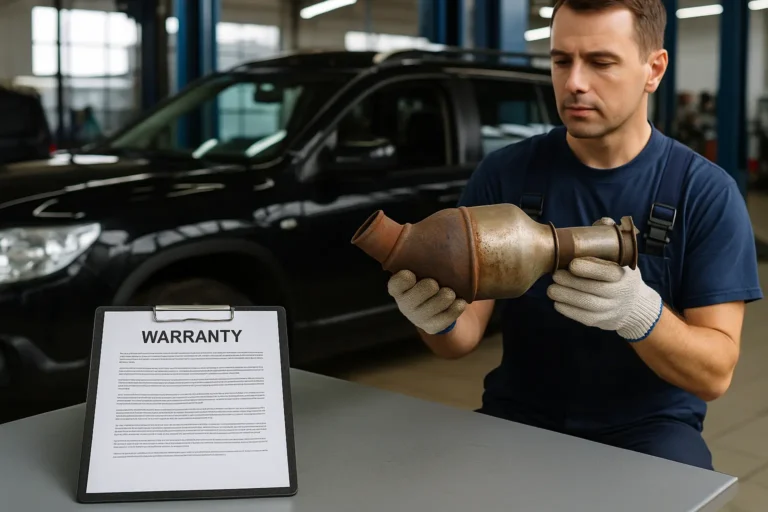
If your car is under warranty or you want plug-and-play installation, direct-fit is usually the safer choice. Warranty coverage is explained in are catalytic converters covered under warranty.
Who Should (and Should Not) Use a Universal Catalytic Converter?
Good choice if you have:
- An older vehicle
- A custom or modified exhaust
- A limited repair budget
- Difficulty finding a direct-fit part
Not ideal if:
- You live in a CARB-regulated state
- Your car is under factory warranty
- You want guaranteed bolt-on installation
Pros and Cons of Universal Catalytic Converters
Pros
- Lower purchase cost
- Broad compatibility
- Easy availability
- Effective when properly installed
Cons
- Requires professional installation
- Not always legal in all states
- Fitment quality depends on installer
- Warranty coverage may be limited
Common Problems With Universal Catalytic Converters
Universal converters can fail for the same reasons as any catalytic converter:
- Poor installation causing leaks
- Using the wrong size or rating
- Engine misfires overheating the catalyst
- Oil or coolant contamination
How Is a Universal Catalytic Converter Installed?
Professional installation is strongly recommended.
Typical steps include:
- Measuring pipe diameter and length
- Removing the old converter
- Cutting and fitting the universal unit
- Welding or clamping into place
- Reinstalling oxygen sensors
- Checking for leaks
⚠️ Improper installation is the #1 reason universal converters fail emissions tests.
How to Maintain a Universal Catalytic Converter
- Fix engine problems immediately
- Use only unleaded fuel
- Avoid oil or coolant leaks
- Address check-engine lights early
- Inspect the exhaust system regularly
Converter replacement costs and value are explained in why catalytic converters are so expensive.
Conclusion
A universal catalytic converter is a flexible and cost-effective solution for reducing emissions—especially for older vehicles, custom exhausts, or budget repairs. However, legality, installation quality, and emissions compliance are critical.
If you choose the right converter, install it correctly, and follow local laws, a universal catalytic converter can keep your vehicle clean, legal, and on the road for years.