How Much Does a Catalytic Converter Weigh?
A catalytic converter may look like a small metal can under your car, but its weight tells an important story. It affects emissions performance, recycling value, and even why some vehicles are more likely to be targeted for theft.
So, how much does a catalytic converter weigh?
Most weigh between 2 and 15 pounds, but the exact number depends on the vehicle type, engine size, fuel system, and whether the converter is OEM or aftermarket.
This guide breaks down average catalytic converter weights, explains why weight matters, and clears up common myths—so you know exactly what to expect.
Quick Answer
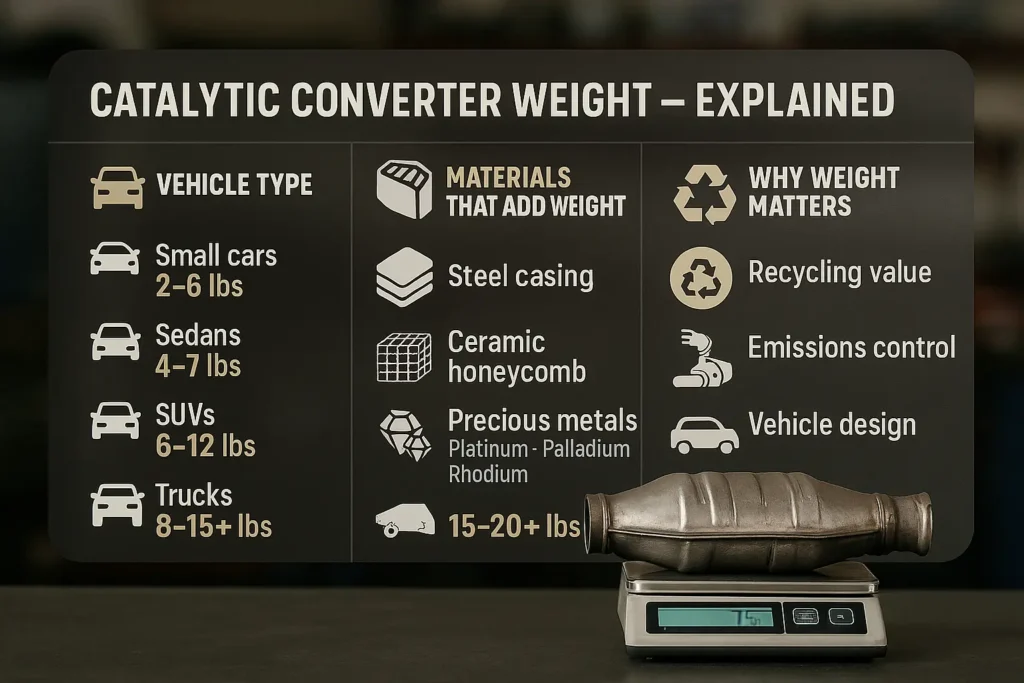
- Small cars: 2–6 lbs (0.9–2.7 kg)
- Sedans: 4–7 lbs (1.8–3.2 kg)
- SUVs & pickup trucks: 6–15 lbs (2.7–6.8 kg)
- Large diesel vehicles: 15–20+ lbs (6.8 kg and above)
What Makes a Catalytic Converter Heavy?
Several components contribute to the overall weight:
- Steel outer shell – Provides durability and heat resistance
- Ceramic honeycomb substrate – The largest contributor to weight
- Precious metal coating – Small in mass, but extremely valuable
The precious metals used—platinum, palladium, and rhodium—are known as platinum group metals (PGMs). Even though they weigh only a few grams, they account for most of the converter’s recycling value.
If you want a deeper explanation of why these metals matter so much, see our guide on why catalytic converters are so expensive.
How Much Does a Typical Catalytic Converter Weigh?
Most catalytic converters fall into a predictable range based on vehicle size and purpose.
- Compact cars: Lightweight converters designed for lower exhaust flow
- Mid-size sedans: Balanced size for efficiency and durability
- SUVs and trucks: Larger units to handle higher exhaust volume
- Diesel vehicles: Heavier systems with extra emissions components
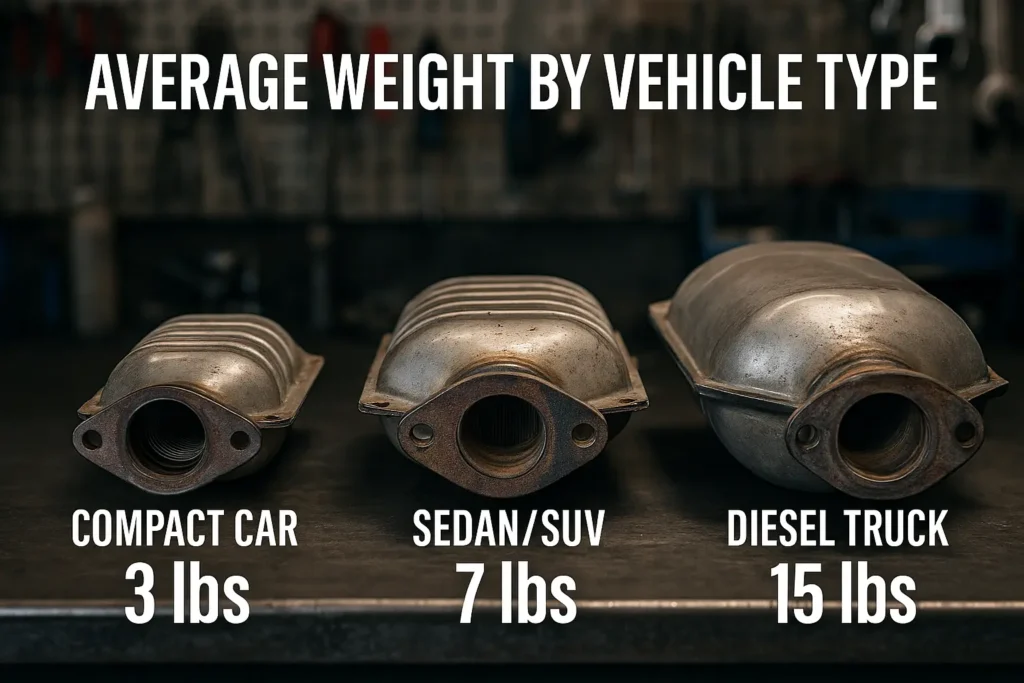
Average Catalytic Converter Weight by Vehicle Type
| Vehicle Type | Fuel Type | Average Weight | Why It’s Heavier |
|---|---|---|---|
| Compact Car (e.g., Honda Civic) | Gasoline | 2–5 lbs | Low exhaust output |
| Sedan (e.g., Toyota Camry) | Gasoline | 4–7 lbs | Balanced emissions control |
| SUV (e.g., Ford Explorer) | Gasoline | 6–12 lbs | Larger engine volume |
| Pickup Truck (e.g., Chevy Silverado) | Gasoline | 8–15 lbs | High torque and load demands |
| Heavy Diesel Vehicle | Diesel | 15–20+ lbs | DOC + DPF systems |
Why Does Catalytic Converter Weight Matter?
Catalytic converter weight isn’t just a number—it has real-world implications.
1. Recycling and Scrap Value
Heavier converters often contain larger ceramic cores and higher PGM loading, which can increase scrap value. However, weight alone does not determine price—metal content matters more.
2. Emissions Performance
Larger, heavier converters can process more exhaust gases, making them suitable for vehicles with bigger engines.
3. Vehicle Design
Manufacturers must balance converter weight with fuel efficiency, durability, and emissions compliance.
4. Legal Compliance
Stricter emissions standards often require larger or more complex converters, which increases weight.
Do All Catalytic Converters Weigh the Same?
No. Weight varies significantly depending on:
- Vehicle type: Small cars vs heavy-duty trucks
- Engine size: Bigger engines need larger converters
- Fuel system: Gasoline vs diesel
- OEM vs aftermarket: OEM converters are usually heavier and more valuable
Aftermarket converters are typically lighter because they contain less precious metal, which is why they also have lower recycling value. We cover this difference in more detail in our comparison of OEM vs aftermarket catalytic converters.
How Much of the Weight Is Precious Metal?
Despite weighing several pounds, a catalytic converter usually contains only:
- 3–7 grams total of platinum, palladium, and rhodium
That’s less than 0.02 pounds, yet these metals can be worth hundreds of dollars. Prices fluctuate, but rhodium alone has traded at extremely high levels in recent years—making even small quantities valuable.
Why Are Catalytic Converters Targeted for Theft?
Thieves aren’t after the weight—they’re after the precious metals inside. However, weight can give recyclers a rough idea of potential value.
- Lighter converters: Usually less metal
- Heavier OEM converters: Often higher payout
This is why vehicles like the Prius, Accord, and F-150 are frequently targeted. Learn more in our article on why catalytic converter theft is increasing.
How Do You Weigh a Catalytic Converter?
If you need the exact weight:
- Remove the converter only when legally replacing it
- Use a digital scale
- Expect minor variation due to rust or carbon buildup
Many aftermarket manufacturers also list converter weight in their specifications.
Does a Clogged Catalytic Converter Weigh More?
Not by much. A clogged converter may hold some soot or carbon, but the difference is usually less than half a pound. The real problem with clogging is restricted airflow, not added weight. If performance issues are your concern, see our guide on signs of a failing catalytic converter.
Recycling Value and Weight
Scrapyards consider both weight and metal content when pricing converters.
- Standard OEM converters: $100–$500
- High-value hybrid or luxury converters: $800–$1,200
- Large diesel units: Often even more valuable
👉 The key factor is how much platinum, palladium, and rhodium are inside, not just total weight.
Environmental Impact
Heavier and more effective catalytic converters reduce emissions more efficiently. However, mining precious metals has environmental costs. Recycling converters helps support a circular economy, reducing the need for new mining while keeping valuable materials in use.
Final Thoughts
So, how much does a catalytic converter weigh?
Most fall between 2 and 15 pounds, while large diesel units can exceed 20 pounds. The majority of that weight comes from steel and ceramic—not precious metals—but those few grams of PGMs are what make converters valuable.
For most drivers, weight matters less for performance and more for recycling value and compliance. If you’re replacing a converter, always use a licensed recycler to recover valuable materials responsibly and protect the environment.