Aftermarket vs OE Catalytic Converters: Which Is Right for Your Car?
If your catalytic converter fails, you’ll face an important decision: should you choose an aftermarket replacement, or stick with an original equipment (OE or OEM) catalytic converter? The wrong choice can lead to failed emissions tests, wasted money, or repeated repairs.
In simple terms, OE catalytic converters are built to factory standards for your exact vehicle, while aftermarket catalytic converters are cheaper alternatives that vary in quality, fit, and emissions compliance. This guide compares performance, price, legality, warranty, and lifespan—so you can choose what’s best for your car, your budget, and your peace of mind.
What Is a Catalytic Converter and Why Is It Important?
A catalytic converter is a critical part of your car’s exhaust system. It converts harmful pollutants—such as carbon monoxide (CO), nitrogen oxides (NOx), and hydrocarbons—into safer emissions before they leave the tailpipe.
Without a working catalytic converter, your vehicle may:
- Fail emissions tests
- Trigger the check engine light
- Pollute far more than allowed by law
- Risk engine damage or legal penalties
To understand how this component fits into the entire system, see our detailed guide on
👉 catalytic converter vs exhaust
What’s the Difference Between OE and Aftermarket Catalytic Converters?
OE (Original Equipment or OEM) catalytic converters are made by the vehicle manufacturer or an approved supplier to match your car’s original specifications exactly.
Aftermarket catalytic converters are produced by third-party manufacturers. They are usually cheaper and more widely available, but quality and compliance can vary significantly.
Key Differences at a Glance
| Feature | OE Catalytic Converters | Aftermarket Catalytic Converters |
|---|---|---|
| Fit and Compatibility | Guaranteed direct fit | May require adjustments |
| Materials & Build Quality | High, matches original | Varies by brand and price |
| Emissions Performance | Meets strict standards | Can be lower or inconsistent |
| Warranty Coverage | Usually longer | Often shorter |
| Price | Higher | Lower |
| Longevity | Typically longer | May wear out faster |
Why Do OE Catalytic Converters Cost More?
OE converters are engineered specifically for your vehicle’s make, model, and year. They use:
- Higher-grade ceramic or metallic substrates
- Greater amounts of precious metals (platinum, palladium, rhodium)
- Strict quality control standards
Because of this, OE converters almost always meet emissions requirements even after many years of use. The higher cost reflects reliability, longevity, and guaranteed compliance.
Are Aftermarket Catalytic Converters Legal?
Not all aftermarket catalytic converters are street legal.
In the United States:
- EPA rules apply nationwide
- CARB rules apply in California and certain other states
Key points:
- In CARB states, only CARB-certified converters are legal
- Non-compliant converters can cause failed inspections and fines
If you’re comparing legal alternatives, it’s also worth reading
👉 catalytic converter vs straight pipe
to understand why removal is rarely worth the risk.
Tip: Always check for EPA or CARB certification labels before buying an aftermarket converter.
Do Aftermarket Catalytic Converters Affect Performance?
Aftermarket catalytic converters can work well for daily driving, but quality matters.
Lower-quality units may:
- Use fewer precious metals
- Have lower cell density
- Wear out faster
- Trigger check engine lights
High-quality, certified aftermarket converters can perform close to OE units, but cheaper options often sacrifice durability and emissions efficiency.
How Long Do OE and Aftermarket Catalytic Converters Last?
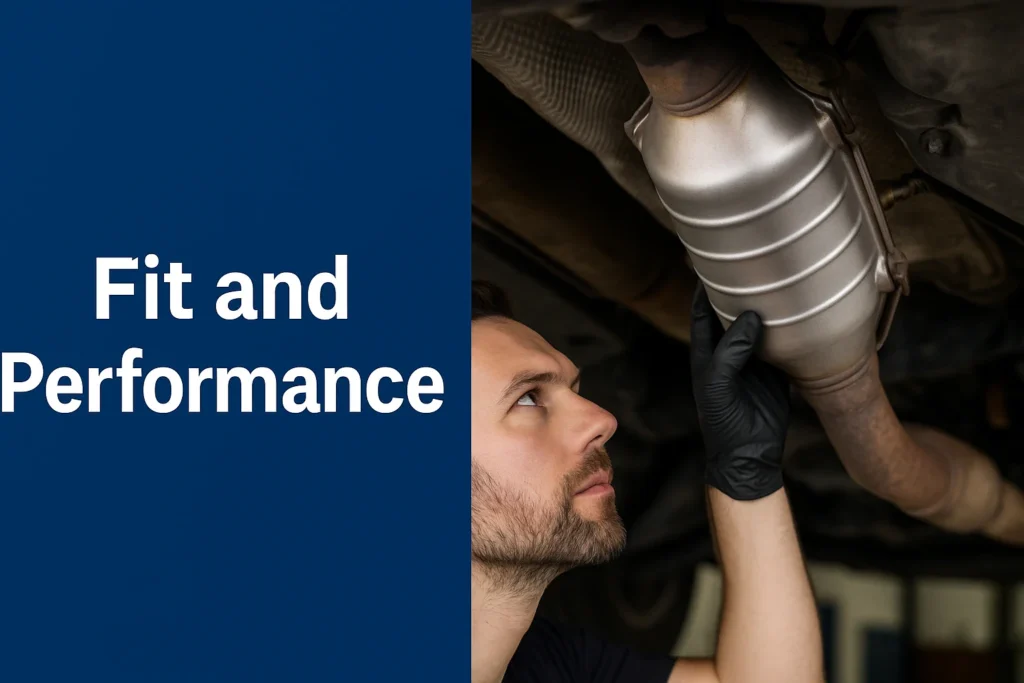
- OE catalytic converters: Often last 100,000 miles or more
- Aftermarket converters: Typically last 30,000–70,000 miles
⚠ Many premature failures are caused by engine misfires, oil burning, or coolant leaks, not the converter itself. These issues should be fixed before installing any replacement.
Are Aftermarket Catalytic Converters Worth It?
Pros of Aftermarket Converters
- Lower upfront cost
- Easier to find for older vehicles
- Useful for budget repairs or temporary fixes
Cons
- Shorter lifespan
- Higher risk of emissions failure if not certified
- Some require adjustments or trigger warning lights
Best choice depends on your situation:
- Long-term ownership, strict emissions laws → OE is safer
- Older vehicle, limited budget → Certified aftermarket can work
How Do I Choose the Right Catalytic Converter?
Use this checklist:
- ✔ Check local laws (CARB vs EPA states)
- ✔ Match your exact vehicle year, make, and model
- ✔ Buy from reputable brands or suppliers
- ✔ Confirm EPA or CARB certification
- ✔ Read real customer reviews
What About Warranties and Installation?
| Factor | OE Converter | Aftermarket Converter |
|---|---|---|
| Certification | Always meets OEM specs | Varies (EPA / CARB required) |
| Typical Lifespan | 100,000+ miles | 30,000–70,000 miles |
| Cost | $$$$–$$ | $$ |
| Warranty | Up to 8 years / 80,000 miles | 1–5 years |
| Emissions Compliance | High | Varies |
| Fit | Exact | May need adjustment |
Always have the converter installed by a qualified mechanic to avoid leaks, damage, or sensor issues.
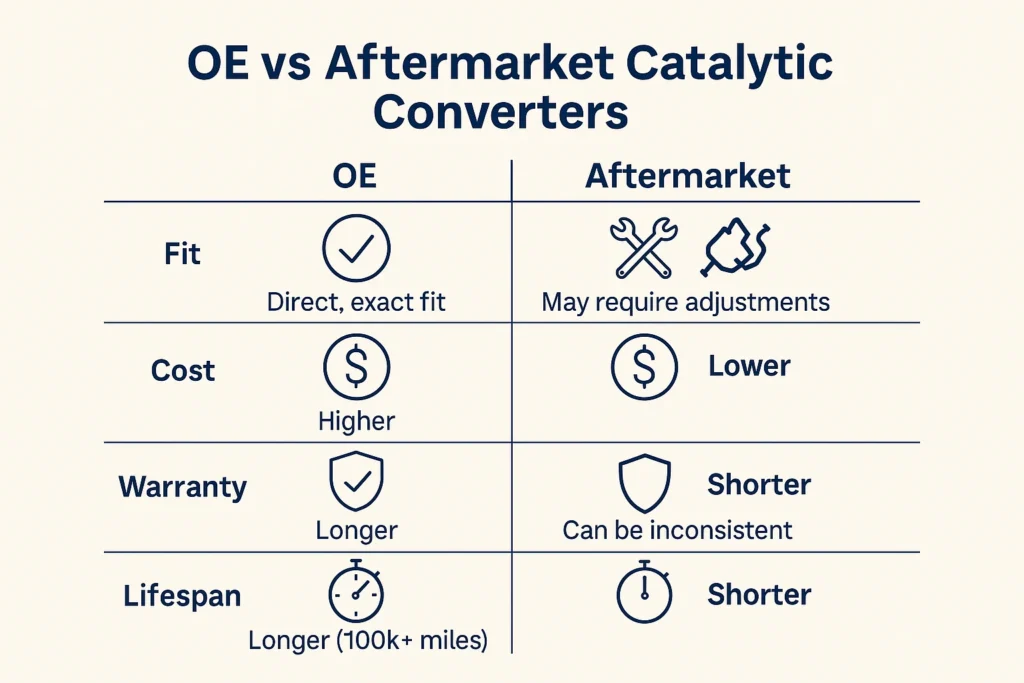
What About Warranties and Installation?
| Factor | OE Converter | Aftermarket Converter |
|---|---|---|
| Certification | Always meets OEM specs | Varies: Check EPA/CARB |
| Longevity | 100,000+ miles typical | 30,000–70,000 miles average |
| Cost | $$$ | $–$$ |
| Warranty | Up to 8 years/80k miles | 1–5 years |
| Emissions Compliance | High | Varies; some fail testing |
| Fit | Direct, exact fit | Sometimes needs adjustment |
Always have the converter installed by a qualified mechanic to avoid leaks, damage, or sensor issues.
For performance-focused exhaust decisions, you may also want to read catalytic converter vs downpipe to understand flow versus compliance trade-offs.
Final Thoughts
Choosing between OEM and aftermarket catalytic converters isn’t just about price. It’s about legality, durability, emissions compliance, and avoiding repeat repairs.
- Choose OE for peace of mind, long life, and strict emissions regions
- Choose certified aftermarket for budget repairs or older vehicles
Either way, always prioritize certified parts and proper installation. The right choice today can save you money, time, and frustration down the road.
To see where replacement converters fit into the full exhaust system, read our detailed guide on catalytic converter vs exhaust.


