
Catalytic Converter vs Straight Pipe: Which is Best for Your Vehicle?
Catalytic converter vs straight pipe is a popular topic among car owners, performance enthusiasts, and anyone considering exhaust modifications. Both options affect your car’s sound, emissions, performance, and legality, but in very different ways.
In simple terms, a catalytic converter cleans exhaust gases to meet emissions laws, while a straight pipe removes all restrictions for maximum sound and flow. Understanding these differences helps you avoid failed inspections, legal trouble, and costly mistakes.
To see how both fit into the complete exhaust layout, start with our system-level guide on
👉 catalytic converter vs exhaust
What Is a Catalytic Converter?
A catalytic converter is an emissions-control device found in the exhaust system of almost all modern vehicles. Its job is to convert harmful gases—such as carbon monoxide, nitrogen oxides, and unburned hydrocarbons—into less dangerous substances like carbon dioxide, nitrogen, and water vapor.
It uses a honeycomb structure coated with platinum, palladium, and rhodium to trigger chemical reactions as exhaust gases pass through.
Key points:
- Required by law in most countries for street vehicles
- Essential for passing emissions inspections
- Reduces air pollution and protects public health
What Is a Straight Pipe?
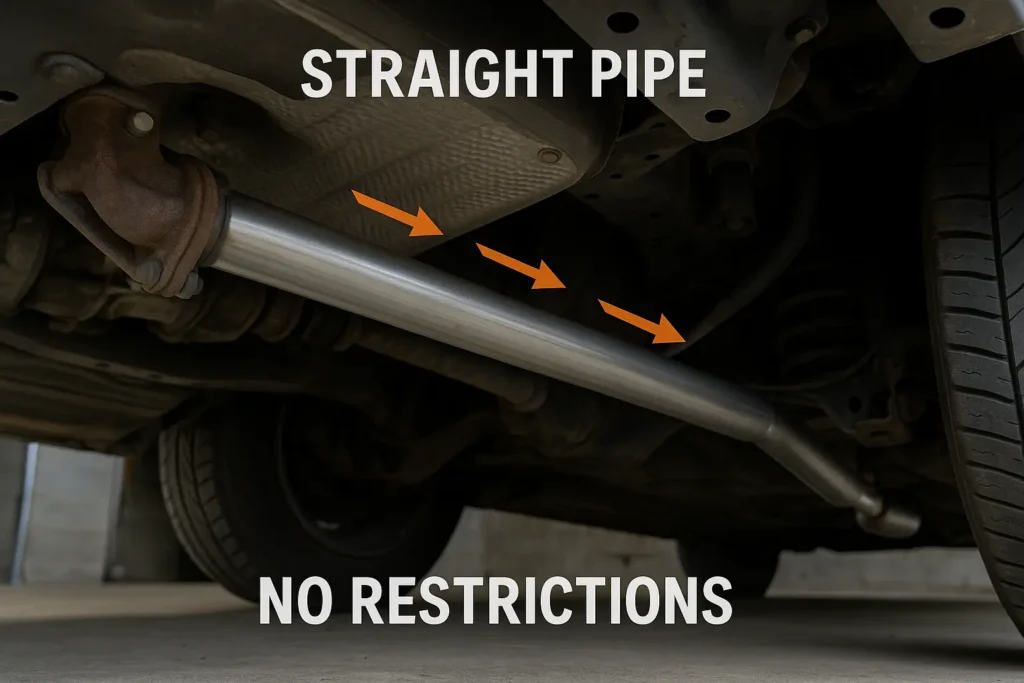
A straight pipe is an exhaust setup where gases flow directly from the engine to the tailpipe with no catalytic converter and usually no muffler.
This setup is commonly used on:
- Race cars
- Track-only builds
- Off-road or show vehicles
Key points:
Not legal for public road use in most regions
No emissions filtering
Extremely loud exhaust sound
How Does a Straight Pipe Work?
A straight pipe simply allows exhaust gases to exit the engine as fast as possible, without restriction or treatment. This can:
- Increase exhaust flow
- Slightly improve peak horsepower
- Dramatically increase exhaust noise
However, it also releases all pollutants directly into the air.
Pros and Cons of Each Option
Catalytic Converter
Pros
- Reduces harmful emissions
- Required for legal street driving
- Helps pass inspections
Cons
- Adds minor exhaust restriction
- Contains precious metals (theft risk)
Straight Pipe
Pros
- Maximum exhaust flow
- Loud, aggressive sound
- Fewer exhaust components
Cons
- Illegal for street use in most regions
- Fails emissions tests
- Extremely loud (noise complaints)
- Harmful to the environment
Catalytic Converter vs Straight Pipe
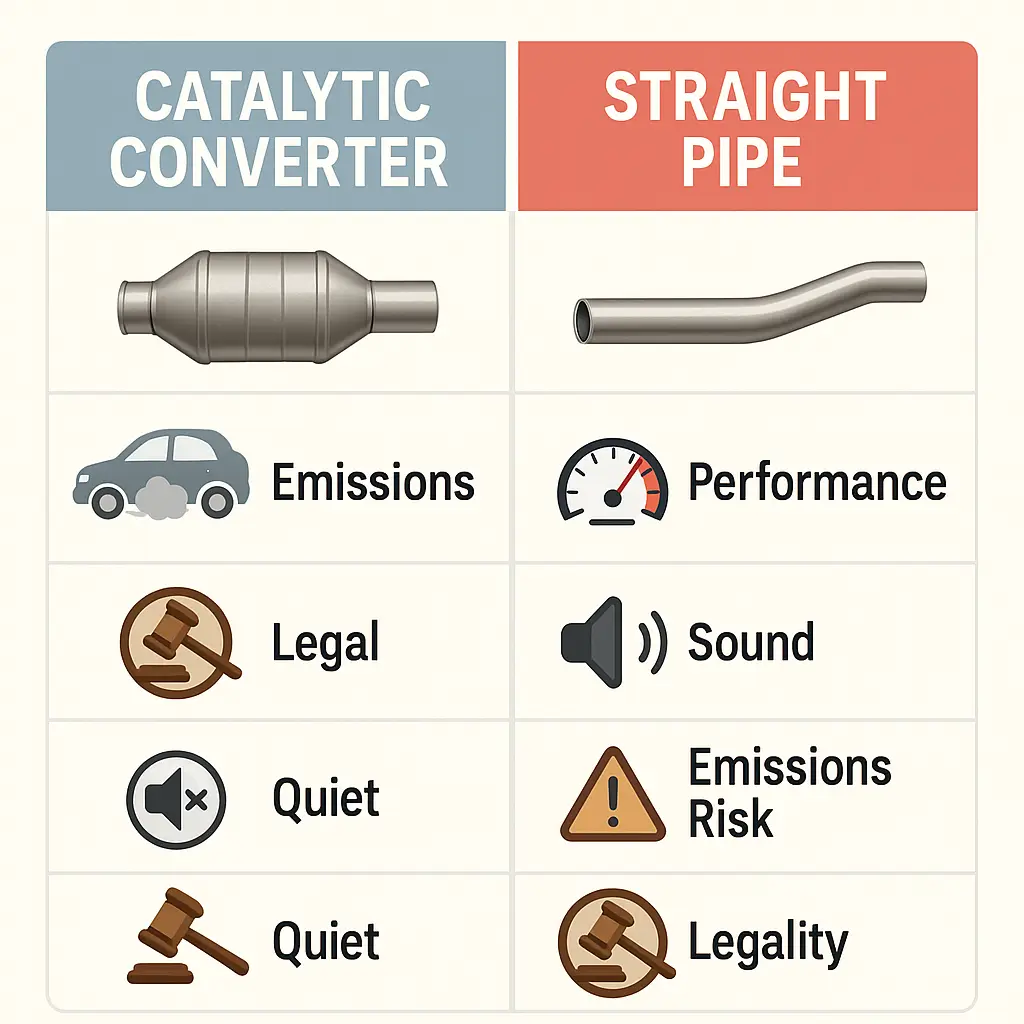
| Feature | Catalytic Converter | Straight Pipe |
|---|---|---|
| Emissions Reduction | Yes | No |
| Street Legal | Yes | No |
| Sound Level | Quieter, controlled | Very loud, aggressive |
| Performance Impact | Slight restriction | Maximum flow |
| Typical Cost | $900–$2,500+ | $100–$500+ (custom install) |
| Maintenance | Low | Low (may require tuning) |
Is a Straight Pipe Legal for My Car?
In most places, straight pipes are illegal for street use.
- United States: The EPA prohibits tampering with emissions equipment
- UK & EU: Straight-piped cars fail MOT and emissions inspections
- Local laws: Noise violations can result in fines or vehicle impoundment
For better exhaust flow without breaking the law, many drivers choose high-flow catalytic converters instead.
If you’re considering performance-focused exhaust changes, compare this with
👉 catalytic converter vs downpipe
How Does Each Affect Performance and Sound?
- Catalytic converters:
- Minimal restriction on modern cars
- Little to no impact on daily driving
- Straight pipes:
- Slight horsepower gains at high RPM
- Much louder exhaust with pops and crackles
- Possible loss of low-end torque due to reduced backpressure
Straight pipes often make street driving less comfortable and more attention-drawing.
Environmental Impact
- Catalytic converters significantly reduce smog-forming pollutants and health-damaging gases.
- Straight pipes release untreated exhaust directly into the air, increasing pollution and health risks.
Are There Any Legal Alternatives to a Straight Pipe?
Yes. High-flow catalytic converters are designed to:
- Reduce exhaust restriction
- Maintain emissions compliance
- Offer a balance between power and legality
Always confirm EPA or CARB certification before installing performance exhaust parts.
How Can You Tell If Your Car Is Straight-Piped?
- Visual check: Catalytic converters are bulky units; straight pipes are smooth tubes
- Sound: Straight-piped cars are extremely loud
- Smell: Strong raw exhaust odor
- Inspection: Straight-piped cars fail emissions tests
What’s the Risk of Catalytic Converter Theft?
Catalytic converters contain valuable metals, making them a target for thieves. Straight pipes don’t have this risk, but replacing a stolen converter is expensive and required by law.
Conclusion
When comparing catalytic converter vs straight pipe, the choice depends on how and where you drive.
- For legal, reliable, environmentally responsible driving, keep a catalytic converter.
- For track-only or off-road builds, a straight pipe offers maximum sound and flow—but never on public roads.
For most drivers, modern high-flow catalytic converters provide the best balance between performance, sound, and legality.