
Catalytic Converter vs Muffler: What’s the Real Difference?
Catalytic converter vs muffler is a common source of confusion for car owners, especially when exhaust repairs or inspections come up. These parts may sound related—and both sit under your vehicle—but they perform completely different jobs.
A catalytic converter cleans harmful exhaust gases to meet emissions laws, while a muffler reduces engine noise for comfort and legal compliance. Understanding the difference helps you diagnose problems early, avoid unnecessary repairs, and keep your vehicle running clean, quiet, and legal.
If you’re comparing different exhaust components, you may also want to read our detailed guide on catalytic converter vs carburetor to understand how fuel delivery and emissions control differ.
What Is a Catalytic Converter and Why Does It Matter?
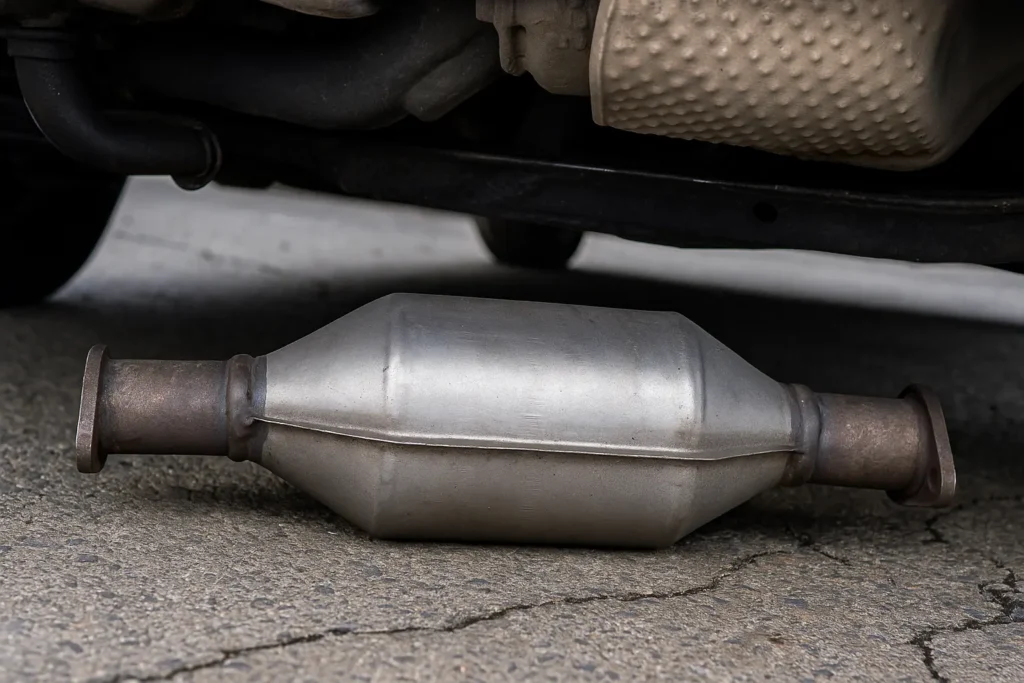
A catalytic converter is a critical emissions-control component found in the exhaust system of most modern vehicles. Its primary role is to reduce toxic gases produced during combustion.
When gasoline or diesel burns, it creates pollutants such as:
- Carbon monoxide (CO)
- Nitrogen oxides (NOx)
- Unburned hydrocarbons
Inside the converter is a ceramic or metallic honeycomb coated with precious metals like platinum, palladium, and rhodium. As hot exhaust gases pass through, chemical reactions convert dangerous pollutants into less harmful substances—mainly carbon dioxide (CO₂), nitrogen (N₂), and water vapor (H₂O).
Because of this process, vehicles can pass emissions tests and release far fewer pollutants into the air. In most countries, driving without a functioning catalytic converter is illegal and will result in a failed inspection.
For a broader look at emission control across engine types, see our comparison of diesel catalytic converter vs gas systems.
What Does a Muffler Do in Your Car’s Exhaust System?
A muffler has a completely different purpose: noise reduction.
As exhaust gases exit the engine, they create loud pressure waves. Without a muffler, your car would be extremely noisy. The muffler uses internal chambers, baffles, or perforated tubes to cancel and absorb sound waves before exhaust gases exit the tailpipe.
Some mufflers are designed for maximum quiet, while performance mufflers allow more sound for a sportier tone. Regardless of style, a working muffler makes driving more comfortable and helps your vehicle comply with local noise regulations.
A missing or damaged muffler can result in excessive noise, failed inspections, or traffic citations.
If you’re deciding between noise control and performance modifications, our guide on catalytic converter vs straight pipe explains the trade-offs clearly.
Where Are the Catalytic Converter and Muffler Located?
Both parts sit along the exhaust system but in different positions:
- Catalytic converter: Located closer to the engine, usually just after the exhaust manifold or under the vehicle floor. It needs high temperatures to function properly.
- Muffler: Located farther back, near the end of the exhaust system, just before the tailpipe.
Visually, the catalytic converter is a compact metal canister with heat shields, while the muffler is usually larger and oval- or cylindrical-shaped.
How Does a Muffler Quiet Down Exhaust Noise?
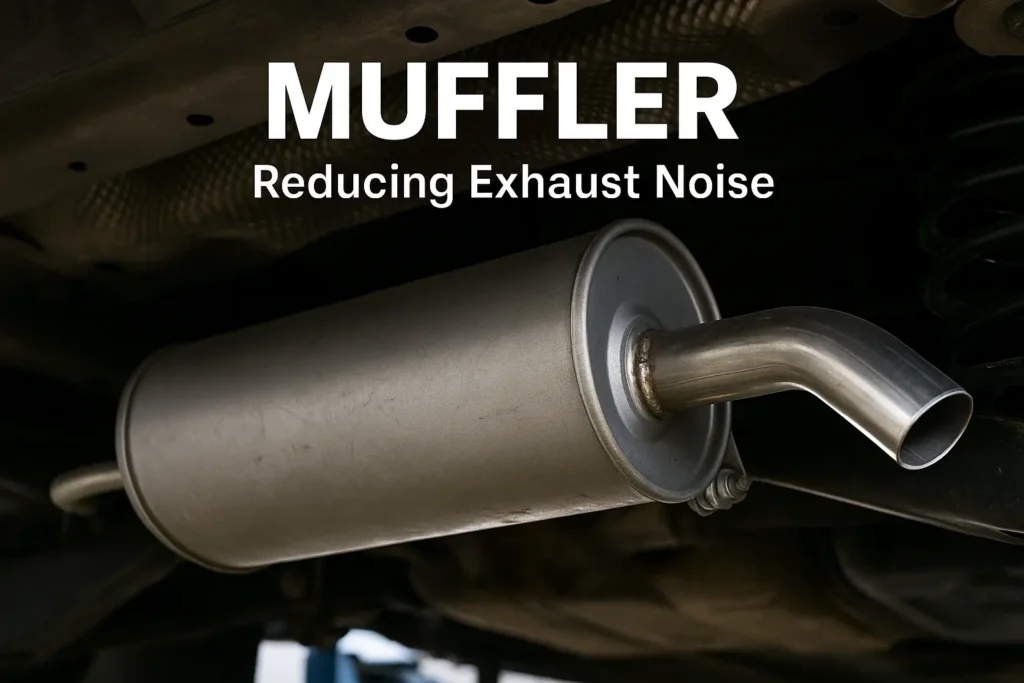
A muffler works using basic sound-wave physics. As exhaust gases pass through:
- Sound waves bounce off internal baffles and chambers
- Opposing sound waves cancel each other out
- Noise intensity is reduced before gases exit the tailpipe
Different muffler designs change how a car sounds. Performance mufflers may produce a deeper or louder exhaust note, but noise laws still apply.
A damaged muffler can cause excessive noise and may allow exhaust fumes to enter the cabin, which is a serious safety risk.
Do All Cars Have Both a Catalytic Converter and a Muffler?
Most gasoline and diesel vehicles built since the mid-1970s have both components:
- The catalytic converter for emissions control
- The muffler for noise control
Electric vehicles have no exhaust system, so they don’t use either part. Motorcycles and heavy trucks use similar components, but designs vary.
Signs of a Failing Catalytic Converter
Common symptoms of catalytic converter problems include:
- Check Engine Light (often code P0420)
- Rattling noises from broken internal material
- Rotten-egg or sulfur smell
- Loss of engine power or poor acceleration
- Failed emissions test
A clogged or damaged converter can restrict exhaust flow and eventually harm the engine if ignored.
Signs of a Bad Muffler
Muffler problems are often easy to notice:
- Sudden increase in exhaust noise
- Visible rust, holes, or hanging parts
- Exhaust leaks that may allow fumes into the cabin
- Failed safety or noise inspection
Mufflers are usually cheaper to replace than catalytic converters, but both are important for safety and legality.
Can You Replace Just the Catalytic Converter or Muffler?
Yes. Each component can be replaced independently if only one has failed.
- Catalytic converters are more expensive due to precious metals and emissions regulations.
- Mufflers are less costly, but labor charges vary by vehicle and exhaust design.
Some vehicles have more than one catalytic converter, so proper diagnosis is essential.
Catalytic Converter vs Muffler – Side-By-Side Comparison
| Feature | Catalytic Converter | Muffler |
|---|---|---|
| Main Purpose | Reduce harmful emissions | Reduce exhaust noise |
| Location | Near engine / under vehicle | Near end of exhaust |
| Core Materials | Honeycomb + precious metals | Steel or aluminum with baffles |
| Legal Requirement | Yes (emissions compliance) | Yes (noise compliance) |
| Failure Signs | Check engine light, odor, power loss | Loud noise, leaks, rust |
| Typical Replacement Cost | $800–$2,500+ | $150–$600+ |
How Do These Parts Affect Vehicle Performance?
A failing catalytic converter can restrict exhaust flow, causing sluggish acceleration, poor fuel economy, and engine warning lights.
A bad muffler usually doesn’t reduce power, but it can:
- Increase cabin noise
- Allow harmful fumes inside
- Cause legal trouble due to excessive noise
Some performance mufflers may offer slight gains, but changes are usually minimal without other modifications.
For components that directly affect drivability rather than exhaust flow, compare this with catalytic converter vs torque converter to see how power transfer differs from emissions control.
Can You Drive Without a Catalytic Converter or Muffler?
Technically, the car may still run—but it’s illegal in most regions.
- Without a catalytic converter: emissions rise sharply, inspections fail, and sensors may be damaged.
- Without a muffler: the car becomes extremely loud and may expose occupants to exhaust fumes.
Keeping both components in good condition is essential for safety, legality, and comfort.
Conclusion
When comparing catalytic converter vs muffler, remember that both are essential but serve very different roles. The catalytic converter keeps emissions clean and legal, while the muffler keeps your vehicle quiet and comfortable.
If you notice warning signs from either part, addressing the issue early can save money, prevent inspection failures, and protect your health. A clean exhaust and a quiet ride depend on both components working together.