Catalytic Converter vs Torque Converter

Catalytic converter vs torque converter is a common point of confusion for many car owners because the names sound alike. However, these two components serve completely different purposes in a vehicle.
Although their names are similar, a catalytic converter controls harmful exhaust emissions, while a torque converter transfers engine power inside an automatic transmission. Understanding the difference helps you maintain your car properly and avoid costly repairs when problems arise.
What Is a Catalytic Converter?
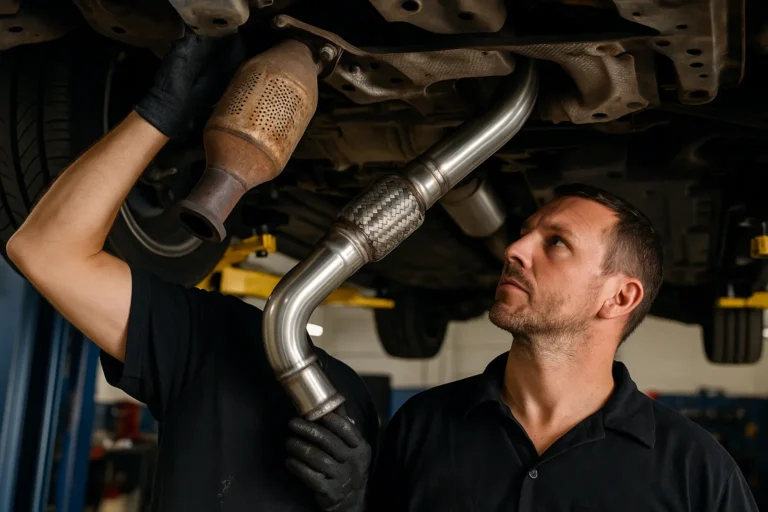
A catalytic converter is a device located in your car’s exhaust system, typically between the engine and the muffler. Its primary job is to reduce harmful emissions before they exit the tailpipe.
Inside the converter is a ceramic honeycomb coated with precious metals such as:
- Platinum
- Palladium
- Rhodium
As exhaust gases pass through, chemical reactions convert toxic pollutants into safer gases:
- Carbon monoxide (CO) → Carbon dioxide (CO₂)
- Nitrogen oxides (NOx) → Nitrogen + oxygen
- Hydrocarbons (HCs) → Water vapor (H₂O) + CO₂
👉 Without a catalytic converter, vehicles would release dangerous pollutants that contribute to smog, climate change, and serious health problems.
If you’re also comparing other exhaust components, you may find our guide on catalytic converter vs muffler helpful.
What Is a Torque Converter?
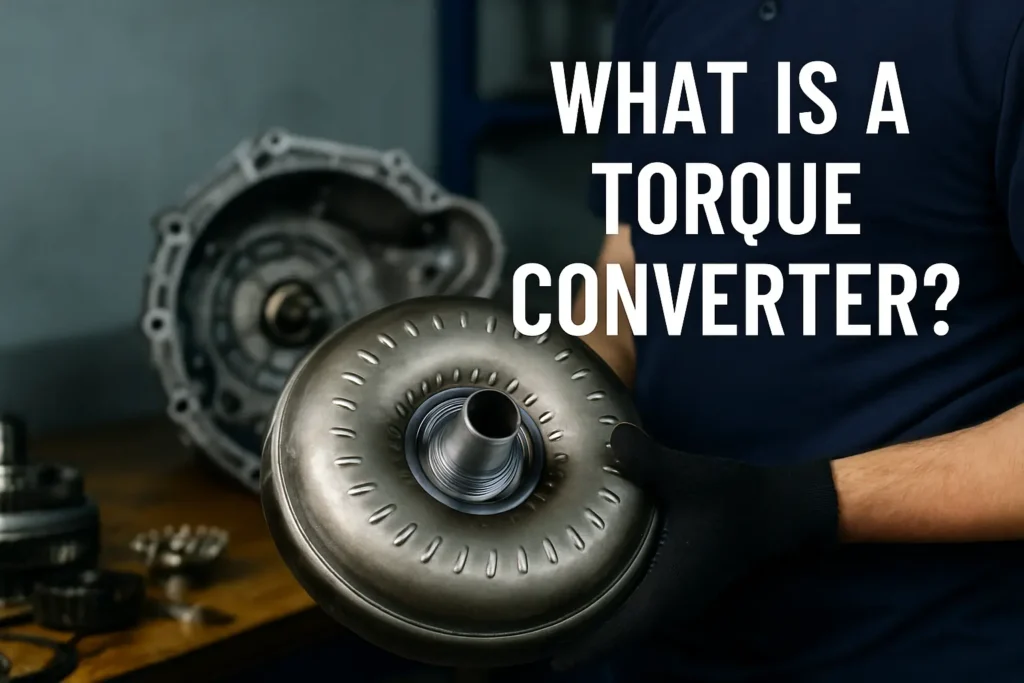
A torque converter is a key part of an automatic transmission. It transfers power from the engine to the transmission while allowing the engine to keep running when the vehicle is stopped.
Instead of a mechanical clutch, it uses hydraulic fluid dynamics. Its main components include:
- Pump (impeller): Spins with the engine and moves transmission fluid
- Turbine: Connected to the transmission and driven by fluid flow
- Stator: Redirects fluid to multiply torque at low speeds
👉 In simple terms, the torque converter allows your car to idle at traffic lights without stalling and provides extra torque during acceleration.
Manual transmission vehicles do not use torque converters; they rely on a clutch instead.
Why Is a Catalytic Converter Important?
The catalytic converter plays a critical role because it:
- Helps vehicles comply with emissions laws and standards
- Reduces air pollution and environmental damage
- Improves public health by lowering toxic exhaust exposure
According to the U.S. Environmental Protection Agency, catalytic converters can reduce vehicle emissions by up to 90%.uce vehicle emissions by up to 90%.
Why Is a Torque Converter Important?
The torque converter is essential for smooth driving in automatic cars. It:
- Allows the engine to run while the car is stationary
- Provides torque multiplication for better acceleration
- Enables seamless gear changes without a clutch pedal
Without a torque converter, automatic transmissions would not function properly.
Symptoms of a Failing Catalytic Converter
Common signs of catalytic converter problems include:
- Check Engine Light (often diagnostic code P0420)
- Poor acceleration or sluggish performance
- Reduced fuel efficiency
- Sulfur or rotten-egg smell from the exhaust
- Rattling noises from broken internal ceramic material
⚠ Ignoring these symptoms can lead to engine damage and expensive repairs.
Symptoms of a Failing Torque Converter
A failing torque converter may cause:
- Shuddering or slipping at certain speeds
- Transmission overheating
- Whining, clunking, or grinding noises
- Delayed or weak acceleration
⚠ Continued driving with these symptoms can damage the transmission.
Catalytic Converter Vs Torque Converter
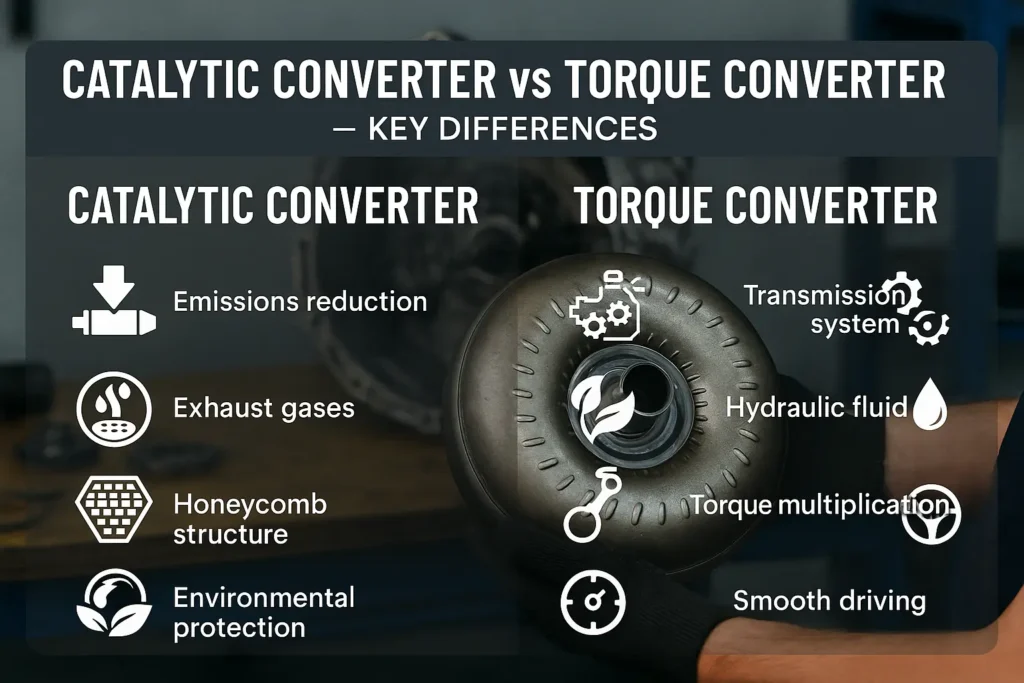
| Feature | Catalytic Converter | Torque Converter |
|---|---|---|
| Location | Exhaust system | Between engine and transmission |
| Main Function | Reduces harmful emissions | Transfers engine power |
| Technology | Chemical reactions using catalysts | Hydraulic fluid dynamics |
| Impact | Environmental protection | Driving performance |
| Key Components | Honeycomb + precious metals | Pump, turbine, stator |
If you’re comparing exhaust components rather than drivetrain parts, our catalytic converter vs exhaust article gives a complete system overview.
How Do You Maintain a Catalytic Converter vs Torque Converter?
Catalytic Converter Maintenance
- Always use unleaded fuel
- Fix engine misfires quickly
- Repair oil or coolant leaks to prevent contamination
- Drive long enough for the converter to reach operating temperature
Regular maintenance can prevent replacement costs that reach thousands of dollars.
Torque Converter Maintenance
- Check and replace transmission fluid regularly
- Avoid overheating the transmission
- Follow manufacturer-recommended service intervals
Good transmission care extends the life of the torque converter.
Can You Repair or Clean a Catalytic Converter?
- Mild clogging: Sometimes improved with fuel additives or professional cleaning
- Severe damage: Requires replacement
OEM catalytic converters typically cost $800–$2,500, but they ensure emissions compliance.
⚠ Removing or modifying a catalytic converter may be illegal in many regions.
If you’re deciding between options, our guide on Aftermarket vs OE Catalytic Converters can help.
Can You Repair or Replace a Torque Converter?
- Minor issues: Sometimes resolved with a transmission flush
- Major damage: Usually requires replacement, often during a transmission rebuild
Replacement costs commonly range from $600 to $1,000+, depending on the vehicle.
Which Affects Performance More?
- Catalytic Converter: Affects emissions and fuel efficiency; a clogged unit can reduce power
- Torque Converter: Directly affects acceleration, shifting, and smoothness
👉 For environmental impact, the catalytic converter is more critical.
👉 For drivability, the torque converter matters more.
For power-related discussions, see our catalytic converter vs straight pipe comparison.
Do All Cars Have Both?
- Catalytic Converter: Found in most gasoline and diesel vehicles since the 1970s
- Torque Converter: Found only in automatic transmission vehicles
Manual cars use a clutch instead of a torque converter.
Real-World Example
A Toyota Corolla (automatic) uses both a catalytic converter (emissions control) and a torque converter (automatic shifting).
A 1965 Ford Mustang (manual) has neither, as it predates emissions laws and uses a clutch instead.
Conclusion
Choosing between repairs or replacements for a catalytic converter vs torque converter depends entirely on your vehicle’s symptoms and transmission type. The catalytic converter keeps your car legal and environmentally responsible, while the torque converter makes automatic driving possible.
While they share a similar name, these two components perform completely different jobs. Recognizing the signs of failure and maintaining each system properly can save you money, prevent breakdowns, and keep your vehicle running safely.