Diesel Catalytic Converter vs Gas: Key Differences Explained
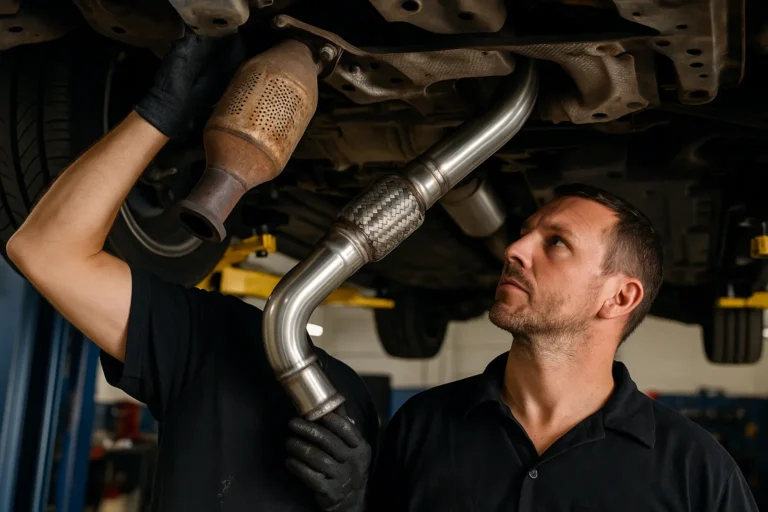
Diesel catalytic converter vs gas is an important comparison because diesel and gasoline engines produce very different types of emissions. While both systems aim to reduce pollution, they use different technologies to handle distinct exhaust challenges.
Gasoline vehicles rely on a single catalytic unit to control emissions, while diesel vehicles use a multi-stage after-treatment system to manage soot and nitrogen oxides. Understanding how these systems differ can help you maintain your vehicle properly and avoid expensive repairs.
What Is a Catalytic Converter?
A catalytic converter is a component installed in a vehicle’s exhaust system to reduce harmful emissions before they exit the tailpipe.
It targets pollutants such as:
- Carbon monoxide (CO)
- Hydrocarbons (HC)
- Nitrogen oxides (NOx)
- Particulate matter (PM) (primarily in diesel engines)
Using catalyst metals like platinum, palladium, and rhodium, the converter speeds up chemical reactions that turn toxic gases into safer byproducts such as carbon dioxide (CO₂), nitrogen (N₂), and water vapor (H₂O).
If you’re new to exhaust components, our comparison of catalytic converter vs muffler explains how these parts differ in function.
How Do Gasoline Catalytic Converters Work?
Gasoline engines typically produce higher amounts of carbon monoxide and hydrocarbons, but very little soot. To manage these pollutants, gasoline vehicles use a Three-Way Catalytic Converter (TWC).
A TWC performs three reactions at once:
- Converts CO into CO₂
- Oxidizes HC into CO₂ and H₂O
- Breaks NOx into nitrogen (N₂) and oxygen (O₂)
Most modern gasoline cars rely on this single unit because it efficiently controls all major gasoline exhaust pollutants.
How Do Diesel Catalytic Converters Work?
Diesel exhaust is chemically different. It contains more NOx and soot (particulate matter) but lower levels of CO and HC. Because of this, diesel vehicles use multiple emission-control components, not just one converter.
Diesel Oxidation Catalyst (DOC)
- Converts CO and HC into CO₂ and H₂O
- Reduces diesel odor and visible smoke
Diesel Particulate Filter (DPF)
- Traps soot (PM) from exhaust gases
- Burns off trapped particles during regeneration cycles
Selective Catalytic Reduction (SCR)
- Injects Diesel Exhaust Fluid (DEF/urea)
- Converts NOx into nitrogen (N₂) and water (H₂O)
👉 Unlike gasoline vehicles with a single TWC, diesel vehicles typically rely on a DOC + DPF + SCR system to meet emission standards.
For deeper diesel system comparisons, see catalytic converter vs DPF.
Diesel Catalytic Converter vs Gas: Main Differences
| Feature | Gasoline Catalytic Converter | Diesel Catalytic Converter |
|---|---|---|
| Primary Function | Reduce CO, HC, and NOx | Reduce CO, HC, NOx, and PM |
| System Type | Three-Way Catalyst (TWC) | DOC + DPF + SCR |
| Main Pollution Concern | CO & HC | NOx & soot (PM) |
| Maintenance Needs | Minimal | DEF refills, DPF regeneration |
| Cost | Lower | Higher due to multiple systems |
| Fuel Impact | Minimal | Slight efficiency loss during regeneration |
Why Are Diesel Catalytic Converters More Complex?
Diesel engines produce large amounts of NOx and microscopic soot particles. A single catalytic unit cannot effectively handle both.
That’s why diesel vehicles require:
- Filters to trap particulate matter
- Chemical reduction systems to neutralize NOx
According to the U.S. Environmental Protection Agency, modern diesel after-treatment systems can reduce:
- NOx emissions by up to 90%
- Particulate matter by up to 95%
when properly maintained.
Which Lasts Longer: Diesel or Gas Catalytic Converter?
- Gasoline catalytic converters often last the life of the vehicle with proper engine maintenance.
- Diesel systems may require DPF cleaning, sensor replacement, or DEF servicing over time.
Poor fuel quality, ignored warning lights, or short trips that prevent regeneration can shorten lifespan in both systems.
Can You Interchange Diesel and Gas Catalytic Converters?
No. Diesel and gasoline catalytic converters are designed for completely different exhaust chemistry.
Installing the wrong type:
- Will not control emissions properly
- Can damage the engine or exhaust system
- Is illegal under emissions regulations
Always use the correct emissions system for your engine type.
What Happens If a Diesel Catalytic Converter Fails?
When a diesel after-treatment system fails, you may notice:
- Reduced engine power (limp mode)
- Excessive black or white smoke
- Check Engine Light (often related to NOx sensors or DPF efficiency)
- Strong diesel exhaust odor
Ignoring these signs can lead to expensive repairs and failed inspections.
Pros and Cons of Diesel vs Gas Catalytic Converters
Gasoline Catalytic Converters (TWC)
Pros
- Simple design
- Lower cost
- Minimal maintenance
Cons
- Cannot handle diesel soot
Diesel Catalytic Converters (DOC + DPF + SCR)
Pros
- Excellent control of NOx and particulate matter
- Meets strict diesel emission laws
Cons
- More expensive
- Requires DEF and regeneration
- Higher maintenance complexity
Which Is Better for the Environment?
- Gasoline engines with TWCs:
- Lower NOx and PM
- Higher CO₂ emissions per mile
- Diesel engines with DOC/DPF/SCR:
- Very low NOx and PM
- Slightly higher CO₂ impact due to regeneration cycles
Both systems are essential for meeting EPA and Euro 6 emission standards, but effectiveness depends heavily on maintenance.
Final Words
When comparing diesel catalytic converter vs gas, the biggest difference lies in system complexity and emission targets. Gasoline vehicles use a three-way catalytic converter to manage CO, HC, and NOx. Diesel vehicles require a DOC, DPF, and SCR system to control soot and nitrogen oxides effectively.
While both systems aim to reduce pollution, they are engineered for very different engines. Using the correct system and maintaining it properly ensures cleaner emissions, better performance, and long-term reliability.