Why Are Catalytic Converters So Expensive?

Catalytic converters often surprise car owners with their high replacement cost. At first glance, they look like simple metal components hidden beneath a vehicle. In reality, catalytic converters are complex emissions-control devices made with rare materials, strict regulatory requirements, and advanced engineering.
The high price of a catalytic converter isn’t caused by just one factor. Instead, it’s the result of precious metals, environmental regulations, manufacturing complexity, supply shortages, and rising theft. Understanding these factors helps explain why replacement costs can range from a few hundred to several thousand dollars.These costs are driven by materials, regulations, and manufacturing realities found across the global automotive industry.
Main Reasons Catalytic Converters Cost So Much
Several factors work together to drive up the cost of catalytic converters.
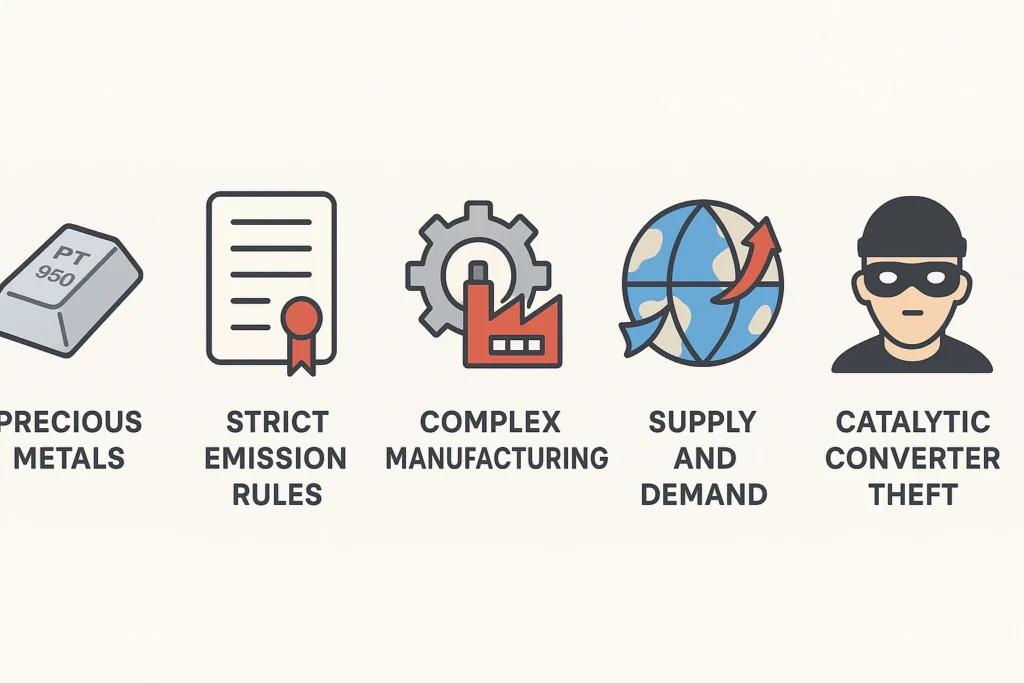
Precious Metals Inside Catalytic Converters
Catalytic converters contain platinum, palladium, and rhodium, known as platinum-group metals (PGMs). These metals act as catalysts that convert harmful exhaust gases into less dangerous emissions.
Among them, rhodium is the rarest and often the most expensive. Even small amounts can significantly increase the value of a catalytic converter. To understand this better, see our detailed guide on how much rhodium is in a catalytic converter.
Because these metals are scarce and difficult to mine, their market prices fluctuate sharply, directly affecting converter prices.These metals are used in extremely small amounts, but their high market value significantly affects overall cost.
Why Precious Metal Prices Make Catalytic Converters Expensive
The cost of a catalytic converter is heavily influenced by volatile precious metal markets. Prices for platinum, palladium, and rhodium can rise or fall sharply based on global supply, mining output, and industrial demand.
Rhodium, in particular, has experienced dramatic price swings in recent years due to its extreme rarity and limited mining locations. Even small changes in rhodium availability can cause noticeable increases in catalytic converter prices. Platinum and palladium prices also fluctuate depending on automotive demand and geopolitical factors.
Because manufacturers must purchase these metals at market rates, converter prices often rise when precious metal prices spike, even if the converter design itself remains unchanged. This volatility is one of the main reasons catalytic converter replacement costs can increase suddenly.
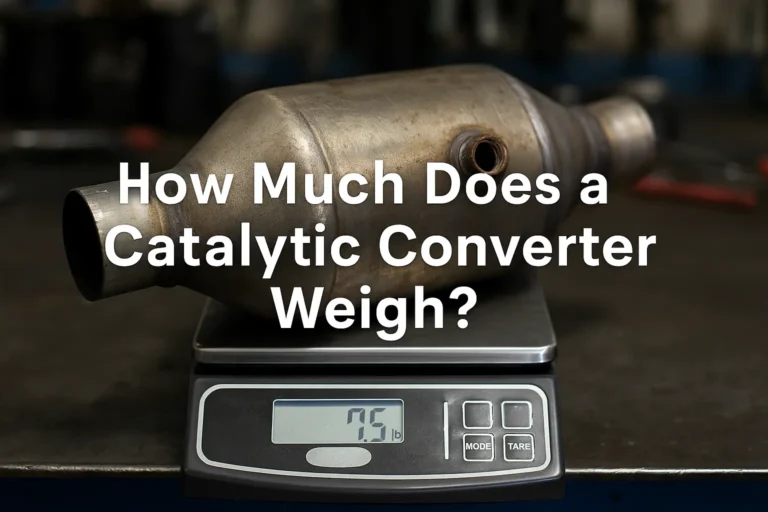
Another overlooked factor is the weight of a catalytic converter, since heavier units often require more material and larger ceramic cores, which can increase both production costs and recycling value.
Strict Emissions Regulations
Governments worldwide enforce strict emissions laws to reduce air pollution.
- In the United States, converters must meet EPA standards
- California requires even stricter CARB-compliant converters
- Europe follows Euro emissions standards
Meeting these rules requires extensive testing, certification, and precise metal formulations. Converters designed for stricter regions typically cost more, which is why CARB-approved converters are often the most expensive option.
Complex Manufacturing and Engineering
A catalytic converter is not just a steel casing. It must:
- Withstand extreme heat
- Last for many years and thousands of miles
- Fit precisely within different vehicle designs
- Maintain emissions efficiency over time
- Must maintain efficiency even as engine conditions change over time
Achieving this balance requires advanced engineering and high-quality materials. This complexity adds significantly to production costs, especially for OEM (original equipment manufacturer) parts.
Supply and Demand Pressure
Platinum-group metals are mined in very limited regions, mainly South Africa, Russia, and parts of North America. Any disruption—such as labor strikes, political instability, or trade restrictions—can limit supply and raise prices.
At the same time, millions of vehicles worldwide rely on catalytic converters, keeping demand consistently high. This imbalance between supply and demand plays a major role in rising costs.
How Global Trade and Supply Chains Affect Converter Costs
Beyond raw materials, global trade and supply chain factors also impact catalytic converter pricing. Many converters or their components are manufactured or assembled using materials sourced from multiple countries.
Import tariffs, shipping costs, and trade restrictions can increase production and distribution expenses. Delays in mining, refining, or transportation can further limit supply, causing manufacturers and suppliers to raise prices.
These supply-chain pressures mean that catalytic converter costs are not only tied to metal prices but also to global logistics and economic conditions.
Catalytic Converter Theft
Catalytic converter theft has become a global problem. Thieves target converters because recyclers pay for the valuable metals inside.
A stolen converter can be removed in minutes but may cost thousands of dollars to replace. This trend has increased insurance claims and replacement demand, indirectly pushing prices higher. Learn more in our guide to catalytic converter theft and prevention.
How Recycling Demand Influences Catalytic Converter Prices
Catalytic converters are valuable not only as vehicle components but also in the recycling market. Licensed recyclers recover platinum-group metals from used converters, which creates strong demand even after a vehicle reaches the end of its life.
Scrap prices are influenced by:
- Current precious metal market rates
- Converter size and design
- Vehicle make and model
- Regional recycling demand
When scrap values rise, stolen converters become easier to resell, and replacement demand increases. This recycling demand indirectly contributes to higher market prices for both new and replacement catalytic converters.
Are All Catalytic Converters Equally Expensive?
No. Prices vary depending on several factors.
Why Some Vehicles Have More Expensive Catalytic Converters
Not all catalytic converters are worth the same amount. Vehicle type plays a major role in determining both replacement cost and scrap value.
Converters from larger vehicles, such as SUVs and trucks, are often bigger and may contain higher overall amounts of precious metals. Hybrid vehicles can also use converters designed to operate more efficiently, which may affect metal composition.
Smaller passenger cars usually have smaller converters with lower precious-metal loading, making them less expensive to replace. This is why catalytic converter costs can vary significantly between two vehicles—even if they are from the same manufacturer.
OEM vs Aftermarket Converters
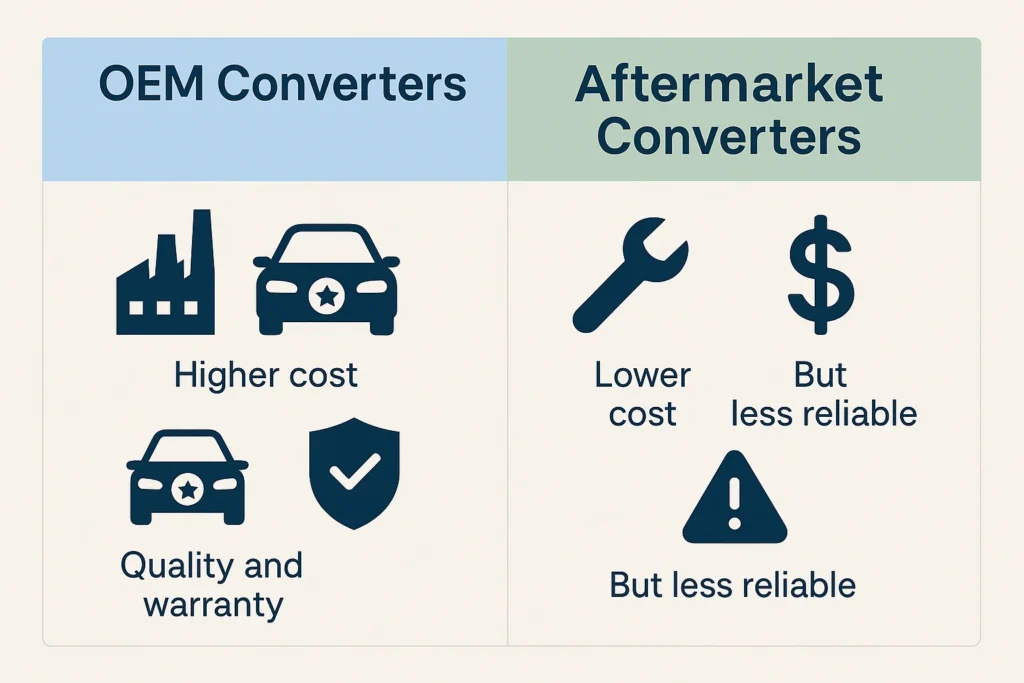
- OEM converters are designed to exact manufacturer standards and are usually the most expensive.
- Aftermarket converters cost less but may not meet emissions requirements in all states.
For a detailed breakdown, see our comparison of aftermarket vs OEM catalytic converters.
Vehicle Type
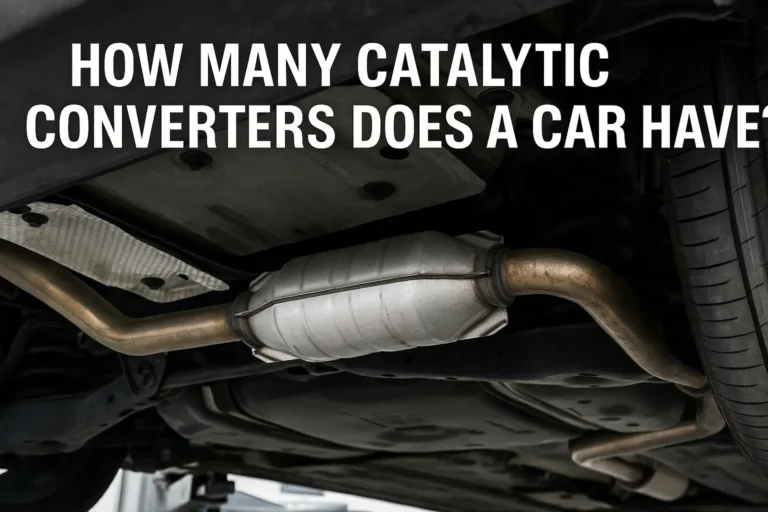
Larger vehicles and hybrids may use multiple converters or larger units, increasing cost.
Emissions Compliance
CARB-compliant converters cost more than federal standard units due to stricter certification requirements.
Average Cost Comparison (Parts Only)
| Type | Average Cost |
|---|---|
| OEM Converter | $1,200 – $2,500 |
| Aftermarket Converter | $300 – $900 |
| CARB-Compliant Converter | $1,500 – $3,000 |
| Federal Standard Converter | $800 – $1,200 |
How Can You Save Money or Protect Your Catalytic Converter?
While replacement is expensive, there are ways to reduce risk and costs:
Install Anti-Theft Protection
Shields, cages, or welded covers make theft more difficult.
Park Strategically
Use garages or well-lit areas whenever possible.
Maintain Your Engine
Misfires, oil leaks, and faulty oxygen sensors can damage converters over time. Regular maintenance helps extend lifespan.
Check Warranty Coverage
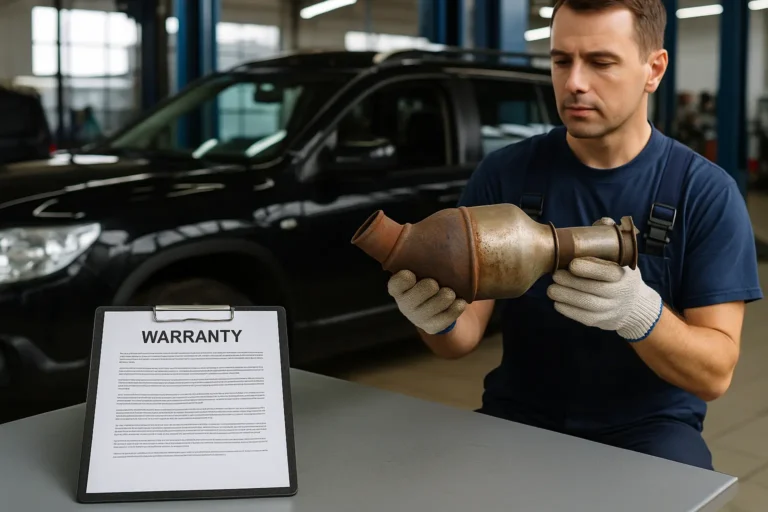
In the U.S., catalytic converters are covered by an 8-year / 80,000-mile federal emissions warranty. Learn more in are catalytic converters covered under warranty.
Consider Legal Alternatives
If replacement is unavoidable, review the cheapest way to fix a catalytic converter before choosing an option.
Always confirm local emissions laws before choosing lower-cost alternatives.
Improves legal clarity.
Global Regulations That Influence Converter Costs
Emissions rules differ by region:
- United States: EPA (federal) and CARB (California)
- European Union: Euro 6 standards
- Asia: Japan and China enforce increasingly strict limits
Converters built to meet stricter standards always cost more due to design, testing, and certification.
Supply Chain and Market Challenges
Converter prices often rise or fall with precious-metal markets. For example:
- Mining disruptions reduce platinum supply
- Sanctions affect rhodium exports
- Increased hybrid production raises demand for PGMs
These factors make catalytic converter pricing highly sensitive to global events.
The Future of Catalytic Converters
Electric vehicles do not use catalytic converters, but gasoline and hybrid vehicles will remain common for many years. During this transition:
- Automakers are reducing precious-metal loads
- Recycling is becoming more important
- Converters remain essential for emissions compliance
Despite long-term changes, catalytic converters will continue to be expensive in the near future.
Why Converter Prices Can Change Quickly?
Catalytic converter prices are not fixed. Changes in precious-metal markets, theft trends, or emissions regulations can cause prices to rise or fall in a short period of time.
This is why two identical vehicles may face very different replacement costs depending on when the repair is needed. Market timing plays a larger role than many car owners realize.
Conclusion
Catalytic converters are expensive because they combine rare precious metals, strict emissions laws, complex engineering, and supply-chain challenges. Their role in protecting air quality makes them essential, even when replacement costs feel overwhelming.
If replacement becomes unavoidable, reviewing legal and cost-effective options can help avoid unnecessary expense.
By understanding what drives these costs, car owners can make smarter decisions about maintenance, protection, and replacement options.