What is Catalytic Oxidation?

Every gallon of paint, every tank of gasoline burned, every solvent used in a factory releases compounds that — left alone — would poison the air we breathe. Catalytic oxidation is the chemistry that quietly stops that from happening. Inside your car’s exhaust, behind industrial smokestacks, and within high-end air purifiers, a thin coating of precious metal is turning toxic gases into harmless carbon dioxide and water vapor, often destroying 95–99% of pollutants in the process.
This guide breaks down how catalytic oxidation works, where it’s used, what it costs to run, and why it has become one of the most important pollution-control technologies of the last fifty years. Whether you’re an engineer specifying an emission-control system or simply curious about what’s happening under your car, you’ll find a clear, accurate answer here.
What Catalytic Oxidation Actually Is
Catalytic oxidation is a chemical reaction that uses a catalyst — typically a precious metal like platinum, palladium, or rhodium — to convert hazardous compounds into harmless ones. The targets are usually volatile organic compounds (VOCs), carbon monoxide (CO), and hydrocarbons. The end products are almost always carbon dioxide and water vapor.
Two things make the process special. First, the catalyst itself is never consumed — it speeds the reaction along without being used up, which is why a single catalyst bed can run for years. Second, the catalyst dramatically lowers the temperature required for oxidation. The same reaction that needs roaring 800 °C flames in a thermal incinerator can happen at 300 °C with the right catalyst.
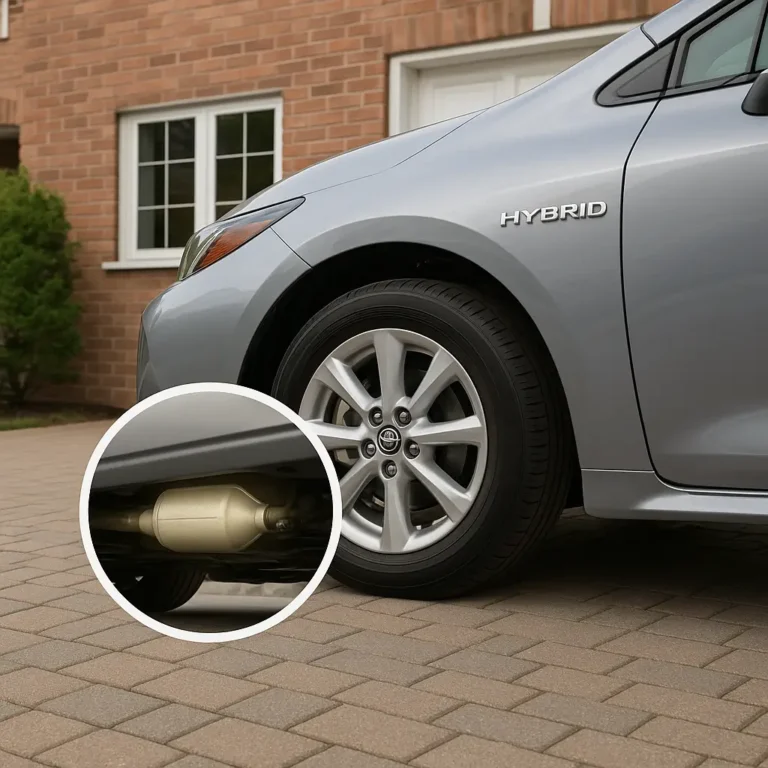
The everyday example most people already know is the catalytic converter in a car. Engine exhaust enters carrying carbon monoxide, unburned fuel, and nitrogen oxides; it leaves stripped of more than 90% of those pollutants, with the catalyst doing the work in a fist-sized ceramic honeycomb.
How the Reaction Works
At the molecular level, the catalyst’s surface acts as a meeting ground. Pollutant molecules and oxygen molecules both adsorb to that surface, where they’re held close enough — and oriented correctly — for the reaction to occur with much less energy than it would otherwise require. This is what chemists mean when they say a catalyst “lowers the activation energy.”
The two reactions you’ll see referenced in any emissions textbook are:
Carbon monoxide oxidation: 2 CO + O₂ → 2 CO₂
A representative VOC (propane shown): C₃H₈ + 5 O₂ → 3 CO₂ + 4 H₂O
Different VOCs balance differently depending on their carbon and hydrogen content, but the principle is identical: oxygen, accelerated by the catalyst, breaks complex hydrocarbons down into carbon dioxide and water. Without a catalyst, the same complete combustion would require temperatures of 750–1000 °C. With one, 250–500 °C is enough — and that temperature gap is where most of the technology’s cost savings come from.

Where Catalytic Oxidation Is Used
The applications stretch far beyond car exhaust.
In automotive emission control, every gasoline-powered vehicle sold in the United States since 1975, and nearly every one sold globally today, carries a catalytic converter. These units remove CO, nitrogen oxides, and unburned hydrocarbons from exhaust, and they are the primary reason urban air quality has improved over the last fifty years even as vehicle numbers have multiplied.
In industrial air pollution control, catalytic oxidizers handle the off-gas streams from chemical plants, printing presses, paint booths, semiconductor fabrication, food processing, and pharmaceutical manufacturing. Anywhere VOCs are released as part of production, a catalytic system is often the cheapest way to meet permit requirements.
In indoor air purification, premium consumer and commercial air cleaners increasingly use catalytic oxidation alongside HEPA filtration to neutralize odors, smoke, and chemical fumes that physical filters can’t capture. Hospitals, laboratories, and cleanrooms rely on similar systems to maintain strict air quality standards.
Finally, in waste treatment, incinerators and wastewater plants use catalytic oxidation to scrub the gases they would otherwise release directly into the atmosphere.

What Pollutants It Removes
Catalytic oxidation handles a broad range of contaminants. The most common targets are volatile organic compounds — the chemicals that evaporate easily from paints, solvents, fuels, and cleaning products. It’s also highly effective on carbon monoxide, on hazardous air pollutants regulated by environmental agencies, and on the strong organic odors that come from food processing, rendering plants, and wastewater treatment.
What it doesn’t handle well: chlorinated solvents (which require specialized catalysts), high-sulfur streams (which poison precious metals), and particulate matter (which must be pre-filtered out before it reaches the catalyst).
Inside a Catalytic Oxidation System
A complete industrial system has five working components:
| Stage | Component | What Happens | Typical Spec |
|---|---|---|---|
| 1 | Pre-filter | Removes dust and particulates that would coat the catalyst | HEPA or pleated media |
| 2 | Pre-heater | Brings inlet air to light-off temperature | 200–400 °C, electric or gas-fired |
| 3 | Catalyst bed | Pollutants oxidize on the precious-metal surface | Pt/Pd on ceramic or metal monolith |
| 4 | Heat exchanger | Recovers heat from clean outlet to pre-heat dirty inlet | Up to 70% energy recovery |
| 5 | Exhaust stack | Discharges treated air (mostly CO₂ and water vapor) | Continuous monitoring optional |
The heat exchanger is the unsung hero of the system. By capturing the thermal energy in the outgoing clean air and using it to warm the incoming polluted air, a well-designed exchanger can reduce auxiliary fuel use to near zero during steady-state operation.
CatOx vs RCO vs RTO: Which Oxidizer Fits Which Job
When engineers evaluate emission-control options, the choice usually comes down to three configurations.
A standard catalytic oxidizer (CatOx) is the simplest design. Air passes through a catalyst bed at 250–500 °C. It has the lowest capital cost and works best for clean exhaust streams with low to moderate VOC loadings.
A regenerative catalytic oxidizer (RCO) adds ceramic heat-recovery beds that capture outlet heat and use it to preheat the inlet. Energy recovery can exceed 90%, which makes RCOs the standard choice for continuous industrial processes where the system runs around the clock.
A regenerative thermal oxidizer (RTO) skips the catalyst entirely and relies on raw heat at 800 °C or higher. It tolerates dirty, sulfur-laden streams that would poison a catalyst, but burns substantially more fuel.
The rule of thumb is straightforward: clean stream and steady flow points toward a CatOx or RCO; dirty stream or known catalyst poisons points toward an RTO.
Why Catalytic Oxidation Matters
The case for the technology rests on four pillars. It reduces harmful emissions — smog precursors, greenhouse gases, and toxic air pollutants — by 90% or more in properly designed systems. It protects public health by lowering the concentration of compounds linked to respiratory illness, cancer, and developmental harm. It saves energy because the catalyst-enabled lower temperatures translate directly into lower fuel bills. And it supports regulatory compliance with Clean Air Act standards in the U.S. and equivalents in Europe and Asia.
The U.S. EPA’s Air Pollution Control Technology Fact Sheet on catalytic incinerators reports destruction efficiencies of 90–98% for typical VOC streams, with fuel costs roughly 40–60% lower than equivalent thermal oxidizers due to the lower operating temperature.
What Catalysts Are Made Of
Most commercial catalysts fall into two families. Precious metals — platinum, palladium, and rhodium — dominate the market. They are extraordinary at attracting and dissociating oxygen molecules, which is the rate-limiting step in most oxidation reactions. The trade-off is cost: precious-metal prices fluctuate dramatically, and a single industrial catalyst bed can contain tens of thousands of dollars’ worth of platinum-group metals.
Base metals like copper, manganese, and chromium oxides offer a lower-cost alternative for less demanding applications. They are more vulnerable to poisoning and less active at low temperatures, but for high-temperature or single-pollutant streams they can be highly cost-effective.
Both types are almost always supported on a high-surface-area substrate — typically a ceramic honeycomb (cordierite) or a metallic monolith. The substrate’s job is to maximize the contact area between the gas stream and the catalyst while keeping pressure drop low.
Advantages and Drawbacks
The strengths of catalytic oxidation are well established: destruction efficiencies of 95–99% on most common pollutants, operating temperatures less than half of what thermal oxidation requires, catalyst lifetimes of three to seven years, and minimal hazardous byproducts.
The drawbacks are equally real. Catalyst poisoning is the biggest operational concern — sulfur, lead, phosphorus, silicone, and heavy metals can all deactivate a precious-metal catalyst, sometimes permanently. Capital cost can be high, particularly for systems requiring large catalyst volumes or exotic alloys. Maintenance is ongoing: filters need changing, catalyst surfaces eventually foul, and temperature monitoring must be continuous to avoid runaway reactions.
How It Compares to Other Air Purification Methods
| Method | Operating Temp | Efficiency | Byproducts | Typical Use |
|---|---|---|---|---|
| Catalytic oxidation | 250–500 °C | 95–99% | CO₂, H₂O | Vehicles, industry, premium air purifiers |
| Thermal oxidation | 750–1000 °C | 95–99% | CO₂, H₂O, NOx | Heavy industry, hazardous waste |
| Activated carbon | Room temp | 80–90% | Spent carbon (waste) | Homes, light industrial |
| Biofiltration | Room temp | 70–90% | CO₂, water, biomass | Wastewater, composting |
Catalytic oxidation is typically preferred when you need high destruction efficiency without the energy penalty of thermal systems and without producing nitrogen oxide byproducts.
What’s New in the Technology
Research is pushing the field in three directions. Nanostructured catalysts are achieving the same activity with far less precious metal — sometimes 70% less — by maximizing the surface area available for reaction. Low-temperature catalysts designed to work below 200 °C are opening up applications in residential air purifiers and small commercial spaces where heating costs previously made the technology impractical. And hybrid systems combine catalytic oxidation with UV photocatalysis or non-thermal plasma to broaden the range of pollutants a single unit can handle.
The U.S. Department of Energy and several research universities are funding work on catalysts that resist sulfur poisoning, which would expand catalytic oxidation into applications currently restricted to thermal systems.
Maintaining a Catalytic Oxidation System
A well-maintained system will run reliably for years. The essentials are quarterly inspection of pre-filters and catalyst surfaces, scheduled cleaning to remove accumulated dust and contaminants, continuous monitoring of inlet and outlet temperatures to confirm the reaction is proceeding as expected, and catalyst replacement at the end of its service life — typically every three to seven years, depending on duty cycle and pollutant load.
The most common cause of premature failure is letting catalyst poisons reach the bed unchecked. A good pre-treatment regime — sulfur scrubbing, particulate removal, and moisture control — extends catalyst life dramatically.
Frequently Asked Questions
What temperature does catalytic oxidation operate at?
Most systems run between 250 °C and 500 °C, well below the 750–1000 °C required for thermal incineration. This temperature gap is the main reason catalytic systems use significantly less fuel.
How long does a catalyst last?
Typical service life is three to seven years, depending on pollutant load, presence of poisons like sulfur or silicone, and operating temperature. Regular inspection and proper pre-treatment can extend life substantially.
Can catalytic oxidation handle chlorinated VOCs?
Standard precious-metal catalysts perform poorly on chlorinated compounds. Specialized catalysts containing chromium or vanadium, or higher-temperature thermal systems, are typically required.
What’s the difference between catalytic oxidation and a catalytic converter?
A catalytic converter is one specific application of catalytic oxidation, engineered for vehicle exhaust. The broader technology is deployed across dozens of industries from semiconductor fabrication to commercial baking.
Is catalytic oxidation safe for indoor air purifiers?
When properly designed, yes. The concern with consumer-grade units is incomplete reactions that can produce formaldehyde or ozone as byproducts. Look for third-party certified products from established manufacturers.
How much does an industrial catalytic oxidizer cost?
Capital costs vary widely with size and complexity, but a mid-sized industrial RCO typically runs in the low to mid six figures USD installed. Operating costs are dominated by electricity and natural gas for the pre-heater, both of which are minimized by efficient heat recovery.
The Bottom Line
Catalytic oxidation isn’t glamorous technology, but it’s quietly responsible for cleaner skylines, lower-emission vehicles, and breathable industrial workplaces. The combination of high destruction efficiency, modest operating temperatures, and decades of refinement has made it the default emission-control choice across most industries that emit VOCs.
If you’re evaluating whether catalytic oxidation fits your application, the three questions that matter most are: what pollutants are in the stream, are any catalyst poisons present, and how continuous is your operating cycle? Get those right, and the technology pays for itself in fuel savings within a few years.