Do Motorcycles Have Catalytic Converters? (Quick Facts)

Do motorcycles have catalytic converters? It’s a common question among new riders, experienced bikers, and anyone curious about motorcycle emissions. Motorcycles may be smaller than cars, but some models can release surprisingly high levels of pollution for their size. As environmental rules become stricter around the world, many riders are wondering how modern motorcycles clean their exhaust gases—and whether catalytic converters are now standard equipment.
Short answer: most modern, street-legal motorcycles do have catalytic converters. Older bikes and off-road-only models usually do not. Understanding why catalytic converters are used, how they work, and what the law requires can help you stay compliant, protect the environment, and make smarter choices about your motorcycle.
Do All Motorcycles Have Catalytic Converters?
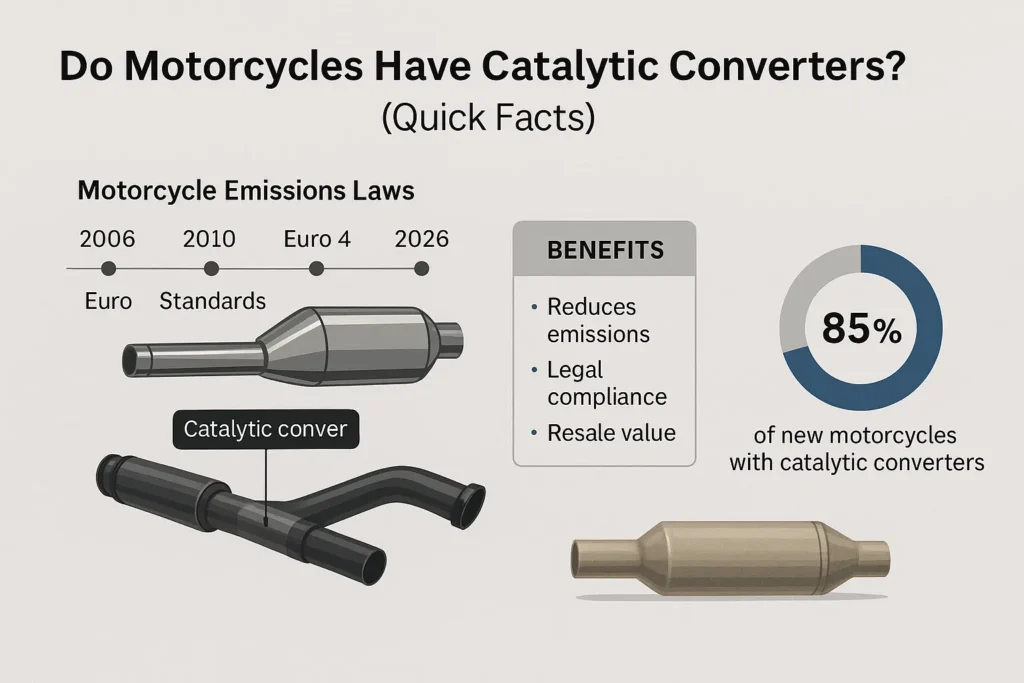
Not all motorcycles have catalytic converters, but they are becoming increasingly common, especially on newer models. Here’s how the trend has shifted:
- Pre-2000s motorcycles: Most older bikes don’t have catalytic converters, since emissions rules were more relaxed.
- 2000s and later: Stricter emissions laws (like Euro 3 and above in Europe, or EPA standards in the US) have pushed manufacturers to add catalytic converters to most new bikes.
- Modern motorcycles: The majority of street-legal motorcycles sold today in the US, EU, Japan, and many other regions have catalytic converters as standard equipment.
Why does it matter?
Motorcycles are smaller than cars, but they can still emit high levels of pollutants for their size. Catalytic converters help make motorcycles cleaner and more environmentally friendly.
Why Are Catalytic Converters Being Added to Motorcycles?
Government agencies worldwide have set limits on how much pollution vehicles can emit. Two of the strictest are:
- Euro Emission Standards (Europe): From Euro 3 (2006) onward, motorcycles need to meet lower emission targets. The latest standard, Euro 5 (from 2021), is very tough, so almost every new motorcycle sold in Europe must have a catalytic converter.
- EPA Emissions Standards (United States): The Environmental Protection Agency (EPA) enforces limits for motorcycles. Since 2006, these have required significant reductions in emissions, prompting manufacturers to use catalytic converters.
Other regions—such as Japan, India, and Australia—have similar laws. In all these markets, most new motorcycles have catalytic converters.
How Do Motorcycle Catalytic Converters Work?
A motorcycle catalytic converter operates much like the one in your car. Here’s what happens:
- Placement: The converter is usually installed in the exhaust header or muffler section.
- Process: As exhaust gases flow through, the converter’s catalyst triggers a chemical reaction. This reaction turns toxic carbon monoxide, hydrocarbons, and nitrogen oxides into safer gases like carbon dioxide, water vapor, and nitrogen.
- Efficiency: Motorcycles, especially high-performance or small-displacement models, have converters specifically designed for their unique engine characteristics.
Which Motorcycles Have Catalytic Converters and Which Don’t?
- Street bikes (sport, naked, touring, cruiser): Most new models from brands like Honda, Yamaha, Suzuki, Kawasaki, Harley-Davidson, BMW, Ducati, and Triumph include catalytic converters.
- Scooters and mopeds: Increasingly required by emissions regulations, especially in cities with strict air quality rules.
- Dual-sport and adventure bikes: Most modern versions have them.
Exceptions: Which Motorcycles May Not Have Them?
- Older motorcycles: Most bikes manufactured before the mid-2000s don’t have catalytic converters.
- Off-road only motorcycles: Motocross and competition-only dirt bikes are often exempt, though some newer trail models may include them.
- Custom or modified motorcycles: Owners sometimes remove catalytic converters for performance or sound, but this is illegal in many regions.
Are Motorcycle Catalytic Converters Different from Car Converters?
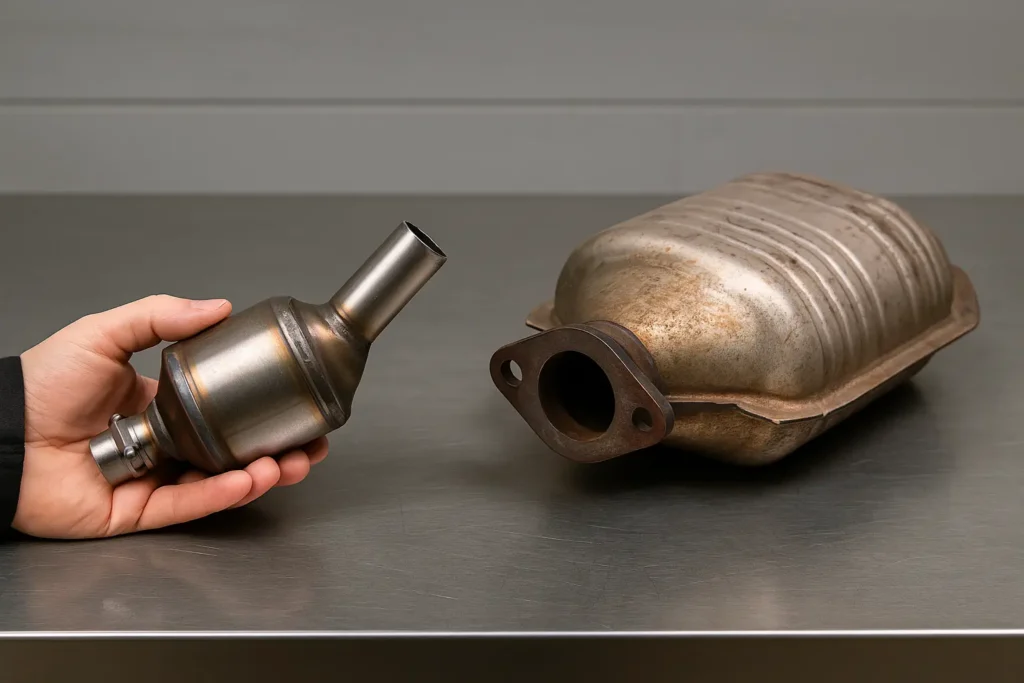
Yes, there are some differences:
| Feature | Motorcycle Catalytic Converter | Car Catalytic Converter |
|---|---|---|
| Size | Smaller, lighter | Larger, heavier |
| Placement | Often inside exhaust/muffler | Usually undercarriage |
| Engine Type | Tuned for smaller engines | Tuned for larger engines |
| Heat Management | Needs rapid warm-up; bikes cool quickly | More consistent heat |
| Emissions Standards | Different regulatory limits | Usually stricter, but gap is closing |
Motorcycle converters must work in tighter spaces and under different riding conditions. This presents unique engineering challenges.
Can You See the Catalytic Converter on a Motorcycle?
On most motorcycles, the catalytic converter is hidden inside the exhaust system or muffler. Sometimes it looks like a bulge or larger chamber in the exhaust pipe near the engine. You may spot heat shielding or a slightly different material, but the actual catalyst is not usually visible.
Tip: If you see a “honeycomb” structure inside the exhaust with a metallic or ceramic appearance, that’s likely the catalyst.
Are There Downsides to Motorcycle Catalytic Converters?
Does a Catalytic Converter Affect Motorcycle Performance?
Some riders worry that a catalytic converter might:
- Restrict exhaust flow
- Add weight
- Affect throttle response or power
Reality:
For most riders, the difference is minimal—modern converters are designed to balance emissions and performance. Manufacturers tune engines and exhausts to work with the converter, so you probably won’t notice any negative effects during regular riding. Many riders are surprised by their price, but there are clear reasons why catalytic converters are so expensive, especially due to precious metals inside.
However, removing a catalytic converter (sometimes called a “cat delete”) may change exhaust sound and slightly increase horsepower. This is illegal in many places, increases emissions, and can cause engine problems or check engine lights.
Can You Remove or Replace a Motorcycle Catalytic Converter?
Legally, removing or tampering with a motorcycle’s catalytic converter is prohibited in many regions, especially where emissions testing is required. Riding without one can lead to:
- Fines and legal trouble
- Failed vehicle inspections
- Increased pollution
- Voided manufacturer warranties
Performance aftermarket exhausts often include high-flow catalytic converters, which improve performance while still reducing emissions. If you’re considering an upgrade, look for exhaust systems certified for street use in your area.
How Can You Tell if Your Motorcycle Has a Catalytic Converter?
- Check your owner’s manual: Manufacturers usually list emissions equipment.
- Look for labels: Many motorcycles have an emissions label under the seat or on the frame.
- Examine the exhaust: A bulge, chamber, or heat shield in the exhaust header or muffler could house the converter.
- Ask your dealer: They can confirm whether your model is equipped with a catalytic converter.
Why Does It Matter if Your Motorcycle Has a Catalytic Converter?
Knowing whether your bike has a catalytic converter is important for several reasons:
- Emissions testing: Required in many cities and states for annual registration.
- Legal compliance: Removing or altering emissions equipment is illegal in most regions.
- Environmental impact: Motorcycles without converters produce more pollution.
- Resale value: Bikes with emissions equipment in place are easier to sell, especially as regulations tighten.
How Are Motorcycle Emissions Standards Changing?
Recent years have seen a big shift in emissions standards for motorcycles:
- Euro 5 standards (Europe): Took effect in 2021. Almost all new motorcycles sold in the EU must meet these stricter rules.
- California Air Resources Board (CARB): Sets strict rules for motorcycles in California. Many manufacturers build all US models to meet California specs.
- India BS6 standards: Since 2020, all new motorcycles sold in India must meet Bharat Stage 6 standards, similar to Euro 6.
As rules continue to tighten, expect even more motorcycles—large and small—to use catalytic converters.
How Effective Are Motorcycle Catalytic Converters?
Studies show that adding catalytic converters to motorcycles can cut harmful emissions by 60–90%, depending on engine type and riding style. According to the International Council on Clean Transportation (ICCT), motorcycles without converters can emit up to 16 times more hydrocarbons per kilometer than those with converters.
Conclusion
So, do motorcycles have catalytic converters? For most modern street-legal motorcycles, the answer is yes. Bikes manufactured in the last decade and sold in regions with strict emissions laws almost always include a catalytic converter as standard equipment. While many older motorcycles and off-road-only machines still run without one, the overall direction of the industry is clear.
As emissions standards continue to tighten worldwide, catalytic converters are becoming essential for motorcycles of all sizes. They play a key role in reducing harmful exhaust gases, meeting legal requirements, and improving air quality. Knowing whether your motorcycle has a catalytic converter—and why it matters—helps you ride responsibly, avoid legal issues, and keep your bike compliant in a rapidly changing regulatory environment.