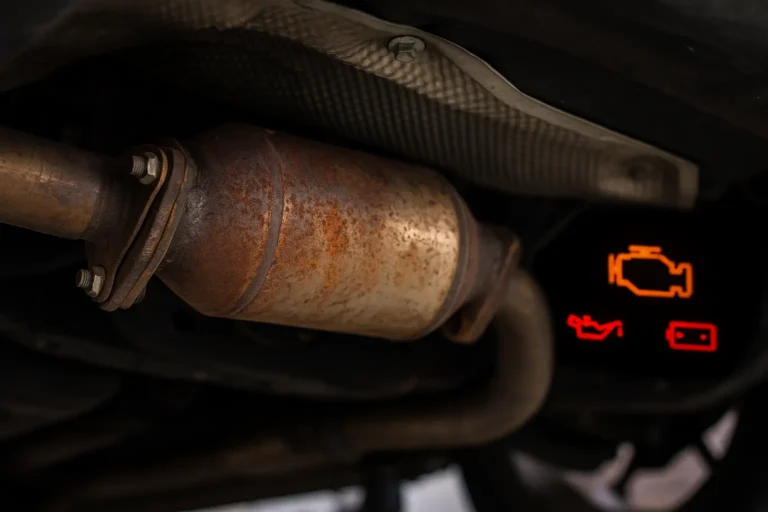
Rotten Egg Smell from Exhaust

A rotten egg smell from exhaust is a noticeable and unpleasant odor emanating from a car’s exhaust system, often indicating a problem within the emission control system. This smell, similar to sulfur, is usually caused by the presence of hydrogen sulfide in the exhaust gases. Determining the cause of this smell is important for maintaining vehicle health and preventing potential damage. Identifying the source, whether it’s the catalytic converter, fuel system, oxygen sensors, or a leaking exhaust system, can prevent further issues. It’s crucial to address this problem promptly by inspecting the relevant components and seeking professional auto repair services in Virginia or Nashville if needed.
The Role of the Catalytic Converter
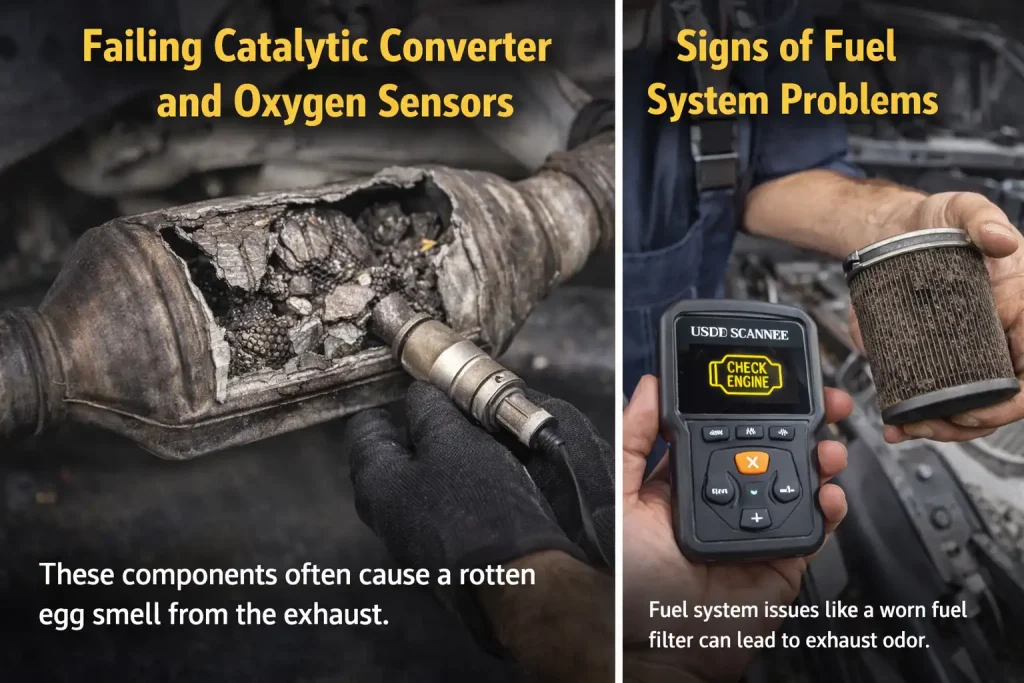
The catalytic converter plays a crucial role in reducing harmful emissions from your car’s exhaust. It’s designed to convert pollutants like carbon monoxide, hydrocarbons, and nitrogen oxides into less harmful substances such as carbon dioxide, water, and nitrogen. A properly functioning converter uses a chemical process to oxidize these gases. However, when the catalytic converter malfunctions, it can lead to the production of hydrogen sulfide (H2S), which is responsible for the distinctive rotten egg smell. This can happen if the converter is damaged, clogged, or simply worn out. A broken catalytic converter isn’t just unpleasant; it also reduces your car’s efficiency and increases harmful emissions. When converter efficiency drops enough to produce sulfur odors, it commonly coincides with other symptoms listed in our signs of a bad catalytic converter guide.
Issues with the Fuel System
The fuel system delivers fuel to the engine for combustion. Problems within this system can contribute to the rotten egg smell in your car’s exhaust. If the fuel contains high levels of sulfur or if the engine is running rich (meaning it’s receiving too much fuel and not enough air), the catalytic converter may struggle to process all the sulfur compounds, resulting in hydrogen sulfide being released. Identifying and resolving these fuel system issues is crucial for eliminating the odor and maintaining optimal engine performance.
Worn Out Fuel Filter or Failing Fuel Pressure Sensor
A worn-out fuel filter or a failing fuel pressure sensor can disrupt the fuel-air mixture, leading to a rich-running engine. A clogged fuel filter restricts fuel flow, while a faulty fuel pressure sensor can provide incorrect data to the engine control unit (ECU), causing it to inject too much fuel. Either of these issues can overwhelm the catalytic converter, resulting in the release of hydrogen sulfide and the associated rotten egg smell. Regular maintenance, including replacing the fuel filter and testing the fuel pressure sensor, is essential.
Faulty Oxygen Sensors
Oxygen sensors monitor the amount of oxygen in the exhaust gases and send this information to the engine control unit (ECU). The ECU uses this data to adjust the fuel-air mixture to achieve optimal combustion. When oxygen sensors malfunction, they can provide inaccurate readings, leading to an imbalanced fuel mixture. If the mixture is too rich, the catalytic converter becomes overloaded, producing hydrogen sulfide. Replacing faulty oxygen sensors is necessary to restore proper engine function and eliminate the rotten egg smell. Faulty oxygen sensors may also trigger dashboard alerts, which are explained further in our article on the catalytic converter warning light.

Leaking Exhaust System
A leaking exhaust system allows exhaust gases to escape before they reach the catalytic converter. This can happen due to corrosion, damage, or loose connections in the exhaust pipes, muffler, or other components. When exhaust gases bypass the converter, they don’t undergo the necessary chemical reactions to remove hydrogen sulfide, resulting in the rotten egg smell being noticeable outside the vehicle. Addressing exhaust leaks promptly is vital for both reducing emissions and ensuring passenger safety. Contacting a Virginia Auto Repair or Nashville European Auto Repair service is recommended. Exhaust leaks can sometimes cause both sulfur smells and excessive noise, an issue covered in our guide on why a catalytic converter becomes loud.
Old Transmission Fluid
Although less common, old transmission fluid can sometimes contribute to a rotten egg smell. If transmission fluid leaks into the engine, it can burn and release sulfurous compounds that make their way into the exhaust system. This is especially true if the transmission fluid is severely degraded. Regularly checking and replacing the transmission fluid can prevent this issue and maintain the overall health of your car.
What Should You Do If You Smell Rotten Eggs in Your Car’s Exhaust
If you notice a rotten egg smell in your car’s exhaust, it’s essential to take action promptly.
- Check for Obvious Issues: Inspect the exhaust system for any visible leaks or damage. Look for signs of corrosion or loose connections.
- Consider Fuel Quality: If you recently filled up at a new gas station, the fuel may have a higher sulfur content. Try using a different brand of fuel to see if the smell goes away.
- Monitor Engine Performance: Pay attention to how your car is running. Are there any signs of poor performance, such as reduced fuel efficiency, rough idling, or hesitation during acceleration?
- Seek Professional Help: If the smell persists or if you notice any performance issues, take your car to a trusted auto repair shop like a Virginia Auto Repair or Nashville European Auto Repair. A qualified mechanic can diagnose the problem accurately and recommend the appropriate repairs.
Final Word
A rotten egg smell from your car’s exhaust isn’t just unpleasant; it’s a sign that something is wrong within the emission control system or fuel system. Whether it’s a failing catalytic converter, faulty oxygen sensors, or a fuel system issue, addressing the problem promptly is crucial for maintaining your car’s health, reducing emissions, and preventing further damage. Regular maintenance and timely repairs can help keep your car running smoothly and smelling fresh.